

Pantang water-chestnut cake 泮塘马蹄糕
A Cantonese water-chestnut starch cake associated with Guangzhou’s historic Pantang area, prized for its translucent set, gentle sweetness and fresh water-chestnut aroma.
Tap any red Chinese text to hear it in Mandarin.
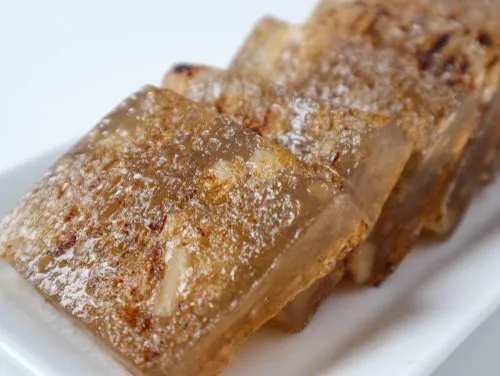
A Cantonese cake made from water-chestnut starch and sugar, Pantang-style versions are known for a clear, smooth set, gentle sweetness and the fresh, lightly fragrant taste of water chestnut. The name links the cake to Guangzhou’s historic Pantang area in Liwan; it is a local association, not a guarantee that every shop uses one identical recipe.
From starch to texture
Water chestnut (马蹄, also called 荸荠) is ground into a slurry, or water is mixed with dried water-chestnut flour. The local account describes straining the slurry, boiling the sugar liquid, then pouring the hot liquid into the flour mixture and stirring it into a paste before steaming. That setting process gives the cake its translucent appearance and smooth, lightly springy bite; the flavor is sweet but restrained, with a delicate water-chestnut aroma.
The same account lists several styles, including clear, freshly ground, pan-fried, two-tone and three-colour cakes. A steamed slice emphasizes the soft, smooth texture; choose a pan-fried version if you would like a cooked-surface contrast. Recipes and sweetness can vary by kitchen, so the name does not specify every ingredient or preparation detail.
Pantang and the name
Pantang is a historic area of Liwan associated with the “Five Delicacies” (泮塘五秀), a group of local crops that includes water chestnut. A 2024 local report describes Pantang as a former growing area and records a resident’s view that the traditional local cake should use fresh flour; it also notes that residents no longer grow water chestnuts there. The place-name therefore carries a connection to local produce and memory, even though current ingredients may come from elsewhere.
Water-chestnut cake is also part of Guangzhou’s broader festive food culture: a local report describes it alongside radish cake as one of the cakes commonly steamed around Lunar New Year. That seasonal context does not mean it is available only during the holiday.
Ordering
Show or say 泮塘马蹄糕 (pàn táng mǎ tí gāo). If the menu distinguishes preparations, ask whether it is steamed or pan-fried. If you have dietary restrictions, ask the vendor about the actual batch and any added ingredients; appearance alone cannot establish that a serving is vegetarian, halal or free of allergens. No single shop or current menu is specified here, so confirm availability where you order.
More dishes to compare
Explore related local specialties and compare their names, preparation notes and ordering guidance.
Cantonese radish cake 萝卜糕 →
Shredded white radish is mixed with rice flour and savory additions, steamed into a slab and cooled. Slices are often pan-fried before serving. The center is soft and radish-sweet, while browned surfaces provide a crisp savory edge. Dried shrimp, sausage or other additions can make the flavor much richer.
Double-skin milk 双皮奶 →
Milk is heated to form a skin, then combined with egg white and gently steamed beneath another skin. Careful heating creates a tender center rather than a firm baked custard. The dessert is creamy, smooth and milk-forward, with delicate surface layers and restrained sweetness in a traditional version.
Sources & reading
Recipes and servings vary between kitchens.
Image credits & notes (1)
- Pan-fried water-chestnut cake, photographed on 11 April 2007; an illustrative dish reference only. The photo does not establish a Guangzhou or Pantang location. Photo: tissue_fleurPhoto: CC BY-SA 2.0