

Wonton Noodles 云吞面
A Cantonese bowl of thin-skinned pork wontons, springy egg noodles and savory broth; in Guangzhou, bamboo-pole-pressed noodles and a documented Xiguan family noodle shop give the dish a particularly local story.
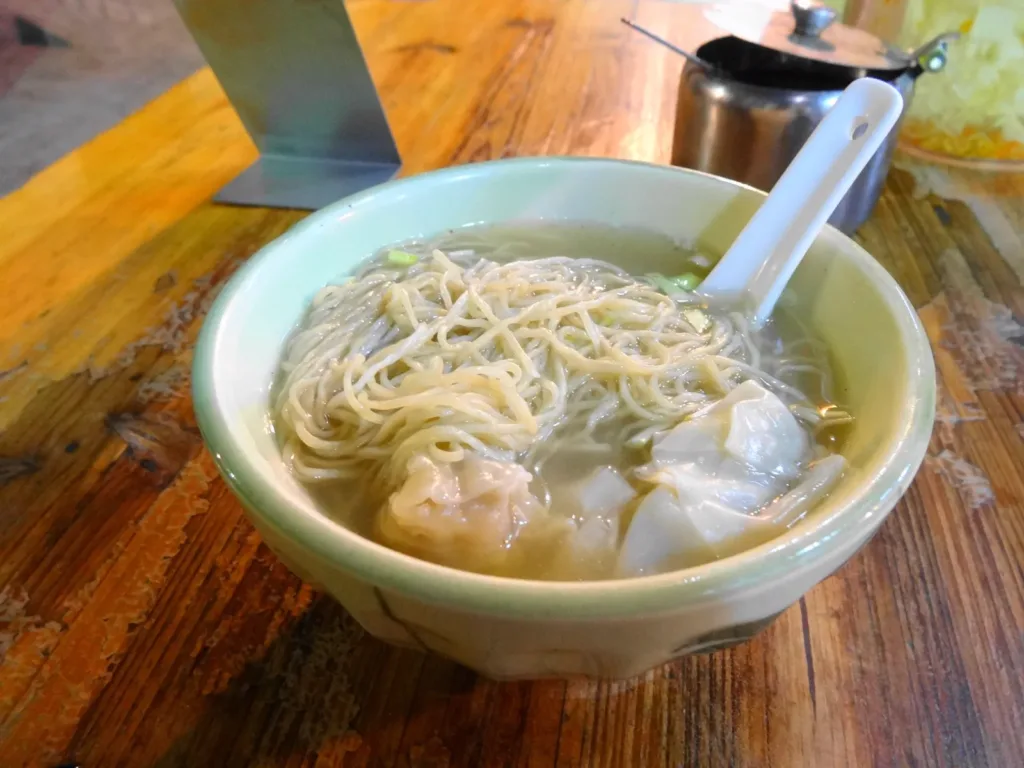
Wonton noodles are part of a wider Cantonese food tradition, rather than a dish found only in Guangzhou. The city’s own food guide describes the local version as a familiar Guangzhou snack, with thin wrappers and a generous filling; pork, egg and shrimp are among the ingredients it names. The same guide describes egg noodles as springy and aromatic.
The broth is what ties the bowl together. A Guangzhou government account describes a traditional base of pork bones, dried flatfish (大地鱼) and shrimp roe (虾子). A report on the Xiguan noodle house Wu Cai Ji (吴财记) gives one shop’s more specific version: freshwater shrimp roe, dried shrimp, Jinhua ham, pork bones and dried flatfish simmered for about three hours, with the fish roasted first to release its aroma. That is a documented house method, not a universal recipe; ingredients and proportions differ by shop.
The noodles can be made as bamboo-pole noodles (竹升面): the dough is pressed with a bamboo pole, a traditional technique still used by the Wu family, who make their noodles and wontons themselves. The district’s heritage profile places their work in Helongli (和隆里), a lane in Xiguan; this is a cultural example, not a current visit recommendation. The combination of firm, springy noodles, soft wonton wrappers and a deeply savory broth gives the bowl its contrast of textures. In Wu Cai Ji’s version, the wonton filling is pork without added shrimp or abalone; other Guangzhou-style wontons may include shrimp, so the filling is not fixed.
Guangzhou recognizes wonton-noodle making and bamboo-pole noodle making as separate items on its eighth municipal intangible cultural heritage list, approved in 2022. The listing is a useful sign of the techniques’ local cultural standing, not a claim that every bowl follows one prescribed recipe.
Dietary note: Common ingredients include wheat, egg, pork, shrimp and dried fish. Broth and fillings vary, and a clear-looking soup is not evidence that it is vegetarian or free of allergens. Ask the restaurant directly about ingredients and cross-contact if you have dietary restrictions.
Sources & reading
Image credits & notes (1)
- A bowl of wonton noodles at Wu Cai Ji in Guangzhou, photographed on 28 December 2013; a historical dish photograph, not a claim about current restaurant status. Photo: DragonSamYUPhoto: CC BY-SA 4.0