

Guilin rice noodles 桂林米粉
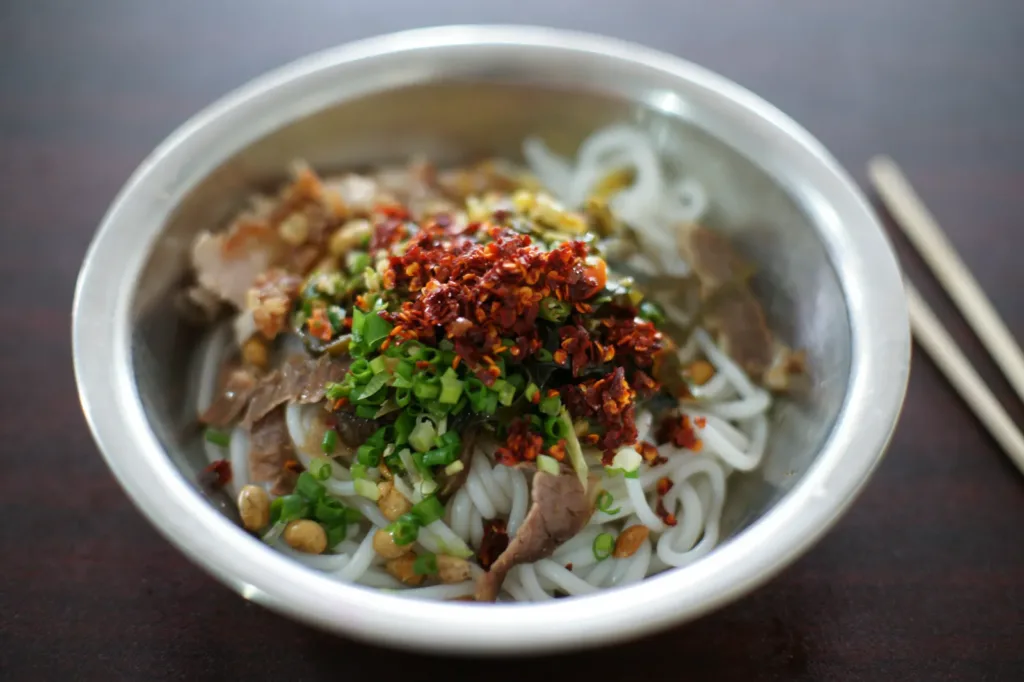
Fresh rice noodles are briefly blanched, drained and dressed with aromatic, savory lu shui (卤水), then finished with braised meats, crunchy legumes and tangy pickles. Mix the bowl to taste, with chilli and soup adjusted to preference.
Tap any red Chinese text to hear it in Mandarin.
Guilin rice noodles are a familiar everyday meal in Guilin, rather than a dish tied to one restaurant or a single fixed recipe. The national intangible-heritage record for the Guilin noodle-making craft describes its roots in Guilin’s old town and its spread across the city’s six urban districts and eleven counties or county-level cities, as well as beyond the city. It is now widely known elsewhere, too, so the name describes a Guilin style and tradition—not a guarantee that a bowl is made only in Guilin.
What goes into the bowl
The noodles are made from rice. In the recorded Guilin craft, a blend of early indica rice, late indica rice and aged rice is soaked, milled, drained and fermented, then kneaded and pressed into strands. A shop briefly warms fresh noodles in hot water, drains them, and dresses them with lu shui (卤水), the concentrated seasoned braising liquid that gives the classic bowl its savory aroma. The exact spice blend is a house secret; the heritage description names star anise, fennel and cinnamon among common spices, with local dried monk fruit used to add fragrance and sweetness.
A classic lu cai fen (卤菜粉) is usually served first as a dressed, relatively dry bowl. Braised beef or beef tripe and crisp pork called guo shao (锅烧) are familiar toppings; peanuts or soybeans, chopped aromatics and pickled vegetables add crunch, freshness and a tart counterpoint. Pickled long beans, radish or bamboo shoots, scallions, cilantro and chilli are common options, but the selection and seasoning differ from shop to shop. The heritage record describes the finished noodles as aromatic and glossy, savory without being excessively salty, and rich without feeling greasy.
How to eat and order
Taste a little of the dressed noodle before adding every condiment. Then mix the bowl and add pickles or chilli to your liking. Many shops offer a light soup separately, or can serve a soup-style bowl; ask which style they make before ordering. The noodles may be round or flat, and extras such as a braised egg or tofu skin depend on the shop. These are common choices, not a standardized citywide menu.
To order, show 桂林米粉 Guìlín mǐfěn. For less heat, say 少放辣椒 shǎo fàng làjiāo (“less chilli”) or 不放辣椒 bú fàng làjiāo (“no chilli”). Because the broth, lu shui and meat toppings are often animal-based, ask the individual shop about ingredients if you have dietary restrictions. A bowl of Guilin rice noodles should not be confused with Liuzhou’s luosifen (螺蛳粉) or Nanning’s laoyoufen (老友粉): these are distinct Guangxi noodle traditions associated with different cities.
Where to eat it
You can find Guilin rice noodles all over Guilin, so there is no need to seek out one particular restaurant. To find one near you, search for “桂林米粉” in Meituan (美团) or Amap (高德地图) and check recent reviews, distance and opening hours.
More dishes to compare
Explore related local specialties and compare their names, preparation notes and ordering guidance.
Nanning freshly pressed rice noodles 南宁生榨米粉 →
A fermented rice mixture is pressed into fresh noodles, cooked and served with savory toppings and broth. The fermentation is part of the noodle-making process and contributes to the flavor. The noodles are soft and smooth with a noticeable sour, fermented character, balanced by meat and other toppings.
Guangxi rolled rice sheets 卷筒粉 →
A thin rice-batter sheet is steamed, filled with a savory mixture and rolled into a cylinder before being cut or served whole. Minced meat, vegetables and preserved ingredients vary by stall. The wrapper is soft and slippery, enclosing a more textured filling and absorbing the finishing sauce. It is tender rather than crisp like a fried spring roll.
Sources & reading
Recipes and servings vary between kitchens.
Image credits & notes (1)
- A photographed bowl of Guilin rice noodles with meat, chopped aromatics, legumes and chilli; toppings vary by shop. Photo: Popo le ChienPhoto: CC0 1.0