

Seafood Congee 海鲜粥
Seafood Congee is featured among the local specialties of Guangxi.
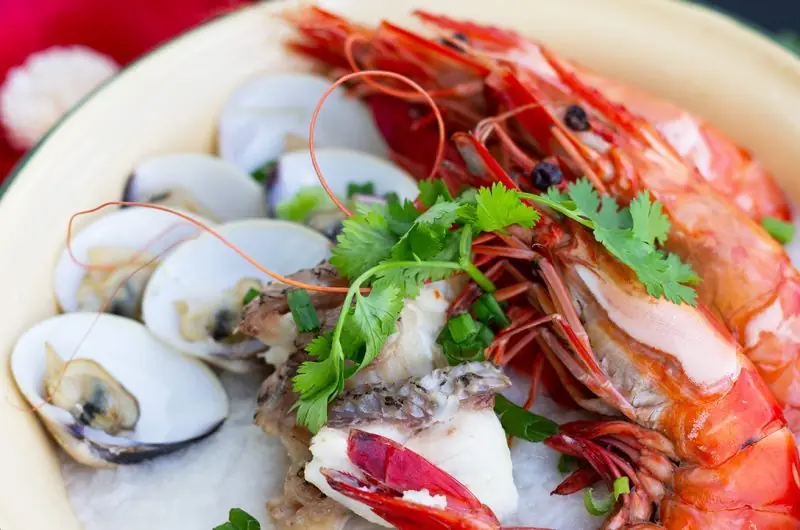
Photo adjustments
EXIF orientation normalized; resized without changing aspect ratio; converted to WebP. No subject edits.
Seafood Congee (海鲜粥) is a seafood rice porridge recorded for Beihai, Guangxi: rice cooked to a soft, thickened porridge with the day's catch stirred in near the end.
How it is made
粥, as the encyclopedia defines it, is a thick dish made by cooking rice — or millet, or corn — with water, and the same entry notes that it can be varied freely by adding different ingredients. A seafood version follows that logic: the rice is cooked with plenty of water until the grains break down and the liquid thickens, then fish, prawn, crab or shellfish are added in order of how long they take, so nothing is overcooked. Some kitchens use a stock instead of plain water, and a beaten egg, ginger or white pepper often goes in at the end.
Flavour and texture
The porridge should be loose enough to spoon but thick enough to hold a piece of fish on top, and it should taste of the sea rather than of heavy seasoning. Rice cooked this way releases starch, so the mouthfeel is soft and slightly gluey, which is what carries the sweetness of shellfish. Ginger and white pepper are there to lift it, and spring onion, coriander or a little fried shallot go on last. Adding chilli is optional; in a coastal bowl, tasting before seasoning is the better route.
Local roots
The dish belongs to Beihai on the Guangxi coast, where rice porridge is both an everyday breakfast and the standard late-night meal after a seafood dinner. On this coast the porridge is built from what was landed the same day, and neighbouring towns have their own named bowls, which is why the exact contents change with the season. What is on record is the name and the city rather than a fixed recipe, so asking what is fresh is the practical approach.
Ingredients and dietary questions
Ask the kitchen about ingredients and shared cooking equipment if you need to avoid a particular food. Ask 有什么海鲜 (what seafood is in it), 有虾吗 (is there shrimp), 有螃蟹吗 (is there crab), 可以不要姜吗 (no ginger) and 有味精吗 (is there MSG). If you avoid alcohol, check whether wine is added during cooking.
How to order
Say 一锅海鲜粥 (one pot) or 一碗 (one bowl) — a pot is usually shared between two or three — and ask 今天有什么海鲜 (what seafood is fresh today), 可以加鱼片吗 (add fish slices), 要加蛋吗 (add egg) and 要不要葱 (spring onion or not). Useful extras are 姜丝 (shredded ginger), 胡椒 (pepper) and 香菜 (coriander). Because the pot is cooked to order, expect a short wait.
How to eat it and plan a meal
Serve it hot in small bowls so it does not cool before you finish, and add pepper at the table rather than in the pot if you are sharing with people who want it mild. One pot with a plate of greens is a complete meal for two; a single bowl works as a late supper. Kept overnight, the rice will thicken, so reheat it with a little water or stock rather than dry.
More dishes to compare
Explore related local specialties and compare their names, preparation notes and ordering guidance.
Sand Worm Congee 沙虫粥 →
Sand Worm Congee (沙虫粥) is the directory's entry for porridge made with the local sipunculid worm that coastal Guangxi prizes. Compared with 海鲜粥, the format is identical — rice cooked down and seafood added late — and the difference is the star ingredient: one uses a mixed catch, the other is built around a single item with a sweet, firm texture.
Questions before you order
How thick should the porridge be?
Loose but not watery: the rice breaks down into the liquid rather than staying as separate grains, so a spoonful holds together. Ask 稀一点 or 稠一点 if you have a preference.
Is it served for breakfast?
Yes, plain porridge is standard breakfast food in southern China, and on the coast the seafood version also serves as a late supper after a seafood dinner.
Source introduction: Wikipedia contributors: 粥(维基百科条目原文,API 抓取) · CC BY-SA 4.0. English guide adapted from the cited material, with additional preparation and ordering guidance.
Sources & reading
The supplied food list supports this name and regional association. The culinary terms below are explained as menu vocabulary; a local recipe, origin story and venue availability have not been independently verified.