

Lingshui sour noodles 陵水酸粉
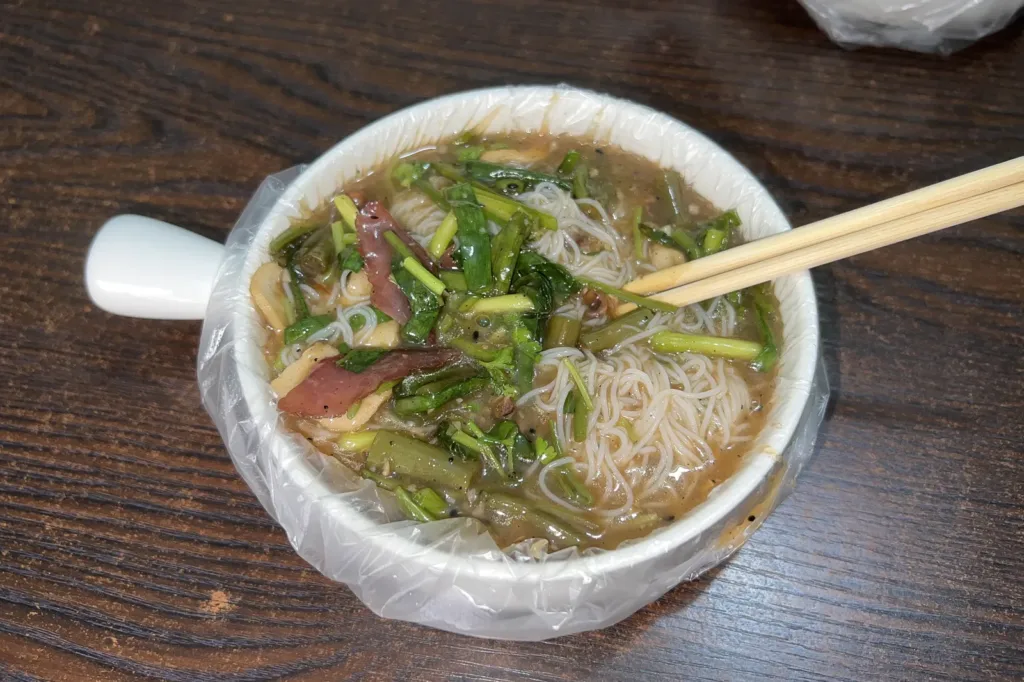
Lingshui sour noodles are a Lingshui, Hainan specialty of fine rice noodles tossed with sour dressing and a changing mix of fish, beef jerky, peanuts, herbs and other toppings. The appeal is the contrast between a slippery, springy noodle and a sauce that can be sour, sweet, savory and spicy.
Tap any red Chinese text to hear it in Mandarin.
What is in the bowl?
The name points to Lingshui Li Autonomous County rather than to a fixed restaurant or a single standardized recipe. The making technique for Lingshui sour noodles is listed as a third-batch provincial intangible cultural heritage project in Hainan.
A typical bowl starts with cooked, fine rice noodles and a sour dressing. Descriptions from Hainan and Sanya list combinations such as fried or dried fish, fish cake, dried sandworm, squid strips, beef jerky, peanuts, chives and coriander. These are common choices, not a compulsory formula: the toppings and sauce vary between kitchens.
How the flavour is built
A traditional preparation described by a Lingshui inheritor begins with rice that is soaked and repeatedly washed or fermented, then pressed into round strands in boiling water. At serving, the noodles are mixed with a sour dressing and a thicker starch-based gravy. One account describes rice vinegar, garlic, soy seasoning and sour fruit or sour-plum juices in the sauce; a Sanya tourism guide describes rice vinegar with calamondin. Read these as examples of the local flavour system, not a promise that every bowl uses the same recipe.
The result is not a soup noodle. The dressing coats soft, springy strands, while peanuts and fried seafood add crunch and dried or cured toppings add chew. The flavour can move from bright acidity to sweetness, savouriness and chilli heat in the same mouthful.
Ordering it in Sanya
Sanya’s tourism authority includes 陵水酸粉 in its guide to the island’s everyday noodles, while identifying Lingshui as its source.
Show 陵水酸粉 Língshuǐ Suānfěn when ordering. Ask which toppings are available that day, especially if you avoid peanuts, fish, shellfish or other seafood. The bowl is normally mixed before eating; if you want chilli, ask for it separately or add only a little of the local yellow-chilli sauce first. Do not assume that a bowl is vegetarian or free of allergens just because the noodles themselves are plain.
Where to eat it
You can find Lingshui sour noodles all over Hainan, so there is no need to seek out one particular restaurant. To find one near you, search for “陵水酸粉” in Meituan (美团) or Amap (高德地图) and check recent reviews, distance and opening hours.
More dishes to compare
Explore related local specialties and compare their names, preparation notes and ordering guidance.
Hainan rice noodles 海南粉 →
Fine rice noodles are combined with a savory dressing and additions such as peanuts, pickles and herbs. Some shops also offer soup versions, so the serving format should be chosen explicitly. The dressed noodles are soft and lightly chewy, with salty-sour pickles and crunchy peanuts providing contrast to the moist base.
Wuzhishan sour fish soup 五指山酸鱼汤 →
Fish pieces are simmered in a broth made tangy with local sour leaves and other seasonings. The leaves' contribution makes the acidity different from a straightforward vinegar soup. The liquid is bright and sour, balancing tender fish and a savory base; the exact herbal note depends on the leaf used.
Sources & reading
Recipes and servings vary between kitchens.
Image credits & notes (1)
- A bowl of Lingshui suanfen photographed at a Tanka bistro in Chiling Village, Lingshui, Hainan. Photo: N509FZPhoto: CC BY-SA 4.0