

Liangping Duck Stewed with Pomelo Tea 梁平柚茶炖鸭
A Liangping-named duck, pomelo and tea stew. The district’s pomelo has a distinctive honeyed fragrance, but the exact recipe and current restaurant availability for this named dish are not documented in the sources below.
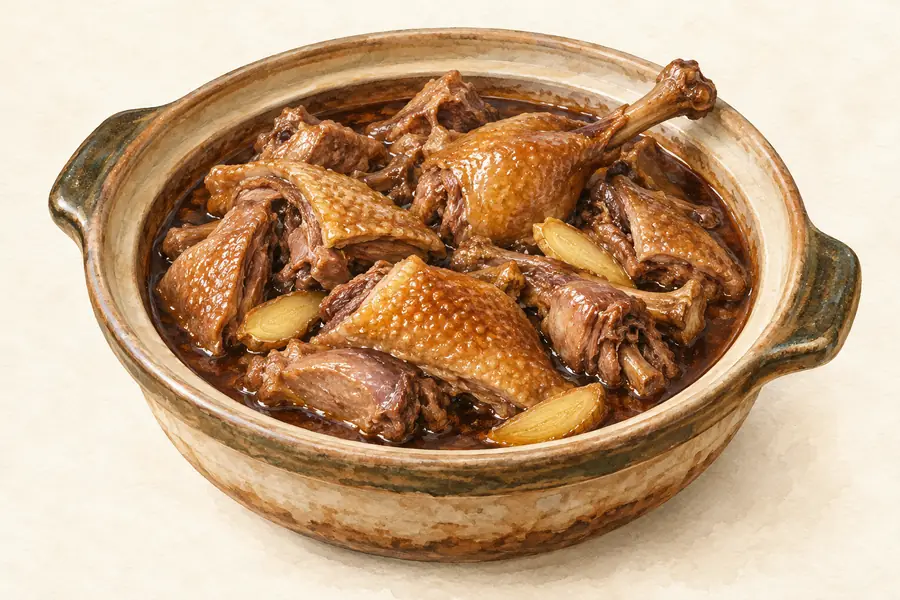
A Liangping name, built around pomelo
梁平柚茶炖鸭 names three ingredients—duck, pomelo and tea—and a cooking method, 炖 (dùn), a moist, slow stew. The name is listed as a Liangping District specialty, within Chongqing. It is a useful clue to the dish, not a standardized recipe: no opened recipe or current menu specifies the cut of duck, type of tea, part or form of pomelo, seasoning, or cooking sequence.
There is good local context for the pomelo. Liangping pomelo is a registered geographical-indication product. Chongqing’s Intellectual Property Administration describes its flesh as sweet, tender and crisp, with a mild tingling quality, and its peel as notably aromatic. Local reporting also documents pomelo tea and other pomelo products in the district. Those facts help explain the name’s regional appeal; they do not establish that this stew uses a particular tea product or a specific pomelo part.
Local food reporting offers one concrete comparison: CCTV describes Liangping cured meat as using pomelo in smoking and cooking. That is evidence of pomelo’s place in local food practice, not a recipe for this duck stew.
What the name suggests—and what to ask
The cooking word 炖 points to a moist, gently cooked duck dish rather than a dry roast. The named ingredients suggest a contrast between savory, rich duck and the fragrant, bright character associated with Liangping pomelo. If peel is used, its aromatic oils may stand out and its white pith can bring bitterness; if tea leaves or an infusion go into the pot, the tea may add a leafy aroma and some astringency. These are ingredient-based possibilities, not a verified tasting description of this particular dish. The balance depends on the kitchen’s recipe, which has not been documented.
Ask the cook whether “柚茶” means pomelo-flavoured tea, tea leaves, or brewed tea; whether the pomelo is fruit, zest or peel; and whether the broth is sweetened. Recipes can vary in the ingredients and their form, but no dependable local variants for this exact duck dish were found. A 2025 report on a Liangping food-selection list names other documented local dishes, including Liangping braised-roast duck, without providing a recipe for this stew; the list is not a complete inventory of everything cooked locally.
Ordering and eating
If you see it on a menu, ask for 梁平柚茶炖鸭 (Liángpíng yòuchá dùnyā) and confirm that the kitchen actually prepares it. Ask whether the tea is caffeinated and whether the broth contains sugar if either matters to you. If served as a shared braise, take duck and sauce with rice; taste the broth first, then adjust how much you spoon over the rice to suit its sweetness or bitterness.
Where to eat it
You can find Liangping Duck Stewed with Pomelo Tea all over Chongqing, so there is no need to seek out one particular restaurant. To find one near you, search for “梁平柚茶炖鸭” in Meituan (美团) or Amap (高德地图) and check recent reviews, distance and opening hours.
More dishes to compare
Explore related local specialties and compare their names, preparation notes and ordering guidance.
Fang Zhu Sun Dun Ji 方竹笋炖鸡 →
Fang Zhu Sun Dun Ji (方竹笋炖鸡) is another Chongqing stew whose name lists a local ingredient and a protein, and it is the closest match in Chongqing to this entry: both are 炖 dishes built from produce the district is known for. The difference is that the bamboo-shoot chicken is a long-established dish while 梁平柚茶炖鸭 is known here only as a name, so ordering it means asking the kitchen to describe what it does.