

Hecheng Mutton Rice Noodles 荷城羊肉粉
Hecheng Mutton Rice Noodles is featured among the local specialties of Guizhou.
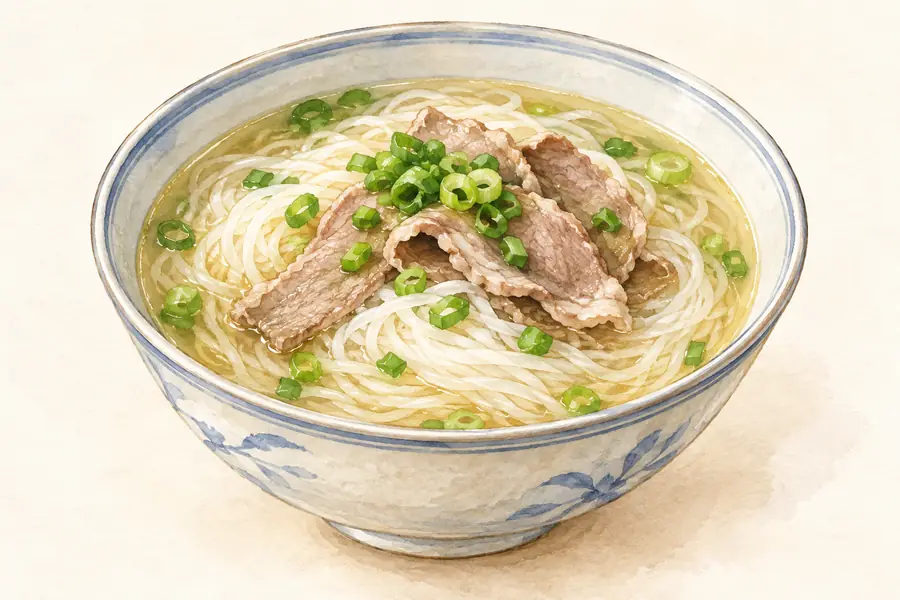
Hecheng Mutton Rice Noodles (荷城羊肉粉) is the Shuicheng (水城) style of mutton rice noodles from Liupanshui (六盘水) in Guizhou, sold under the Hecheng name: a clear black-goat broth over thin rice noodles, finished with a spoonful of chunky chilli oil.
How it is made
Guizhou Daily's Tianyan News (天眼新闻) describes cooks in Shuicheng getting up at one or two in the morning to put goat bones and mutton into a large pot and simmer them over a low fire for seven or eight hours. The broth comes out clear rather than cloudy but tastes rich and savoury, with a slight sweetness at the finish.
The chilli oil is made separately; Tianyan News names it, together with the broth, as what sets the bowl apart. Instead of chilli powder or chilli sauce, selected local chillies are pounded by hand and left slightly coarse, then tipped into very hot rapeseed oil with a dozen or more spices and cooked slowly over a low flame until the pieces open out and turn a glossy red.
In a finished bowl, evenly sliced mutton lies over the noodles, bright red chilli oil spreads across the soup, and green coriander is scattered on top.
Ingredients
Shuicheng black goats are mostly free-range. Tianyan News says they grow slowly, feed on wild grass, drink from mountain streams and springs, and climb the steep slopes all day, which gives them firm, springy meat; their gamey smell is light.
The Hecheng shop in Guiyang's Guanshanhu (观山湖) district, open there since 2015, has its noodles, mutton and chillies brought directly from Liupanshui every day. Its owner specifies Liupanshui's thin rice noodles, which he says have more bite and take up more flavour; local black goat for its mild smell and tender meat, with bones and meat from the same goats for the broth; and chillies such as erjingtiao (二荆条) and Dafang wrinkled chilli (大方皱椒).
Flavour and texture
The chilli pieces float on the soup. Bitten into, they are toasty and crisp first, and then a rounded heat spreads and mixes with the savoury goat broth. A diner at the Guiyang shop told Guizhou Daily that its noodles are thinner than Guiyang's and taste different, that the mutton is good, and that the best part is the chilli oil.
Where it comes from
Tianyan News dates Shuicheng mutton rice noodles to the early 1980s, which makes them young beside the century-old mutton noodles elsewhere in Guizhou, and lists them as one of the province's five mutton-noodle styles, alongside Zunyi (遵义), Xingyi (兴义), Jinsha (金沙) and Bijie (毕节) clay-pot noodles.
In Shuicheng the dish is breakfast. The paper describes Liupanshui mornings starting to the call of "Laoban, dawan jia rou!" (老板,大碗加肉, "Boss, a large bowl with extra meat!"), and says that buying a friend a bowl is the plainest greeting and serving one to a visitor from out of town the warmest welcome.
More dishes to compare
Explore related local specialties and compare their names, preparation notes and ordering guidance.
Zunyi lamb rice noodles 遵义羊肉粉 →
Tianyan News separates the two styles by their chilli: Zunyi's is rendered with mutton fat and cracklings and often paired with plant-ash chilli powder, while the Shuicheng bowl uses coarse hand-pounded chilli fried in rapeseed oil.

Sources & reading
Written from the linked sources and checked sentence by sentence against quoted extracts by a separate reviewer on 2026-09-24. Recipes and servings vary between kitchens.