

Shuangbai Tuodian Soy Sauce Chicken 双柏妥甸酱鸡
Shuangbai Tuodian Soy Sauce Chicken is featured among the local specialties of Yunnan.
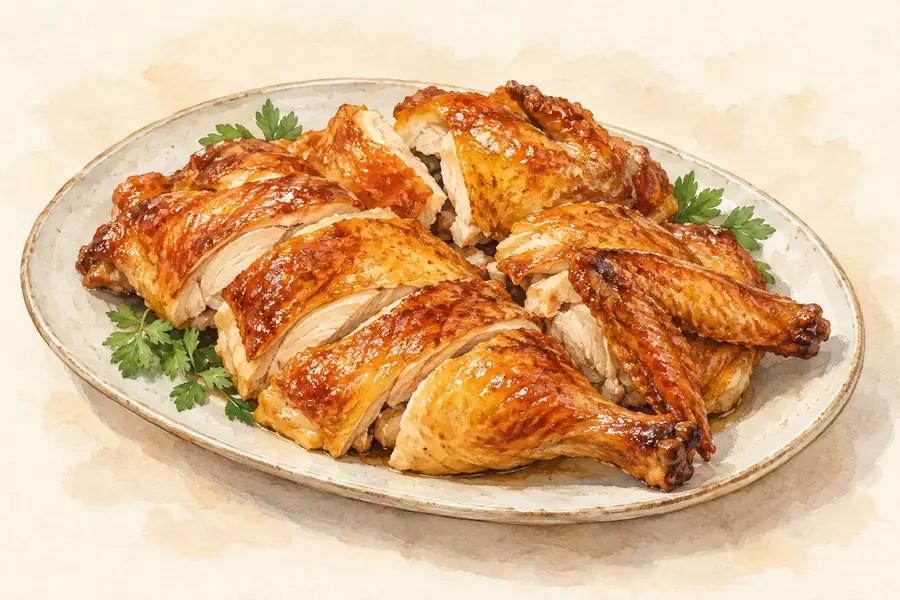
Shuangbai Tuodian Soy Sauce Chicken (双柏妥甸酱鸡) is a Chuxiong chicken dish whose name carries a place, a town and a seasoning: 双柏 and 妥甸 are places in Yunnan, 酱 is fermented bean or soy paste, and 鸡 is chicken.
The paste does the work first
In a 酱 braise the seasoning is not poured on at the end; it is fried first. A spoonful of fermented bean or soy paste goes into hot oil and is stirred until the raw, beany smell cooks off and the paste darkens and sweetens, and only then does the chicken follow. Liquid goes in to just cover or half-cover the bird, the heat drops to a simmer, and the pot is left until the meat loosens and the sauce thickens enough to cling. The same paste that seasons the meat also colours it, which is why these dishes arrive dark rather than golden.
Salty, savoury, faintly sweet
Expect the savoury, slightly fermented edge of bean paste before any chilli. Good versions balance salt with a touch of sugar and rice wine, so the sauce tastes round rather than merely salty, and the meat stays moist because it has been cooked through in liquid rather than dry-fried. The paste also thickens the sauce as it reduces, so the last spoonful over a bowl of rice is usually the most concentrated. If the kitchen adds chilli, it tends to arrive as a background warmth rather than a front-of-mouth burn.
A name written on a map
This chicken is one of the specialities of Chuxiong Yi Autonomous Prefecture, and both parts of the name are real places there: 双柏 is the surrounding area and 妥甸 is the town where its government sits. That is enough to say the dish is named for a place rather than a family, but it is not evidence for a founding story, an inventor or a date. Treat the name as a geography lesson and the recipe as something to confirm with the kitchen.
What goes in, what to ask about
The core is chicken plus a fermented paste, usually with ginger, garlic, rice wine and a little sugar, and sometimes dried chilli, star anise or a cinnamon-like bark. The paste is the ingredient to interrogate: soybean pastes may contain wheat flour, and some versions are finished with sesame oil or crushed peanuts. Say 有花生吗 (is there peanut), 有芝麻吗 (is there sesame) and 有小麦吗 (is there wheat) if those matter, and ask 酱是什么酱 (which paste is it) to find out whether the kitchen makes its own.
How to order Shuangbai Tuodian Soy Sauce Chicken
Give the full name 双柏妥甸酱鸡 rather than just 酱鸡, because a shorter order may pull a different chicken dish from the menu. Then ask 半只还是一只 (half a bird or a whole one) and 一份多少 (how much is one portion), since pot-braised chicken is often sold by weight or by the half bird. 辣不辣 settles the chilli, and 带汤吗 tells you whether you are getting a shallow braise or a bowl with sauce.
Eating it and planning around it
This is a rice dish in spirit: spoon the paste-thickened sauce over plain rice and let a vegetable or a clear soup handle the rest of the meal. Served as a cold cut, the same chicken turns up sliced with the sauce set around it, which is a different experience from a hot pot braise. Because the paste is salty and concentrated, one chicken feeds more people than the size of the bird suggests, so order a half portion first when your table is small and add later if you need to.
More dishes to compare
Explore related local specialties and compare their names, preparation notes and ordering guidance.
Jianshui steam-pot chicken 建水汽锅鸡 →
建水汽锅鸡 (Jianshui steam-pot chicken) is the neighbouring Yunnan entry: chicken cooked in a 汽锅 steam pot, where steam condenses into a clear broth. Tuodian paste chicken moves in the opposite direction — dark, thick and paste-driven rather than clear and delicate — so a guest who wants a light broth should order one and a guest who wants a sauce should order the other.
Questions before you order
Is 酱鸡 just chicken with soy sauce?
Not exactly. 酱 points to a fermented bean or soy paste that is fried in oil before the chicken goes in, which gives a darker, thicker sauce than plain soy sauce. Ask 酱是什么酱 if you want to know which paste the kitchen uses.
Does the dish contain wheat or peanuts?
Possibly. Some bean pastes are made with wheat flour, and sesame oil or crushed peanuts are common finishing touches. Ask 有小麦吗 and 有花生吗 before ordering if either matters to you.

Sources & reading
The supplied food list supports this name and regional association. The culinary terms below are explained as menu vocabulary; a local recipe, origin story and venue availability have not been independently verified.