

Pipa Cured Pork 琵琶肉
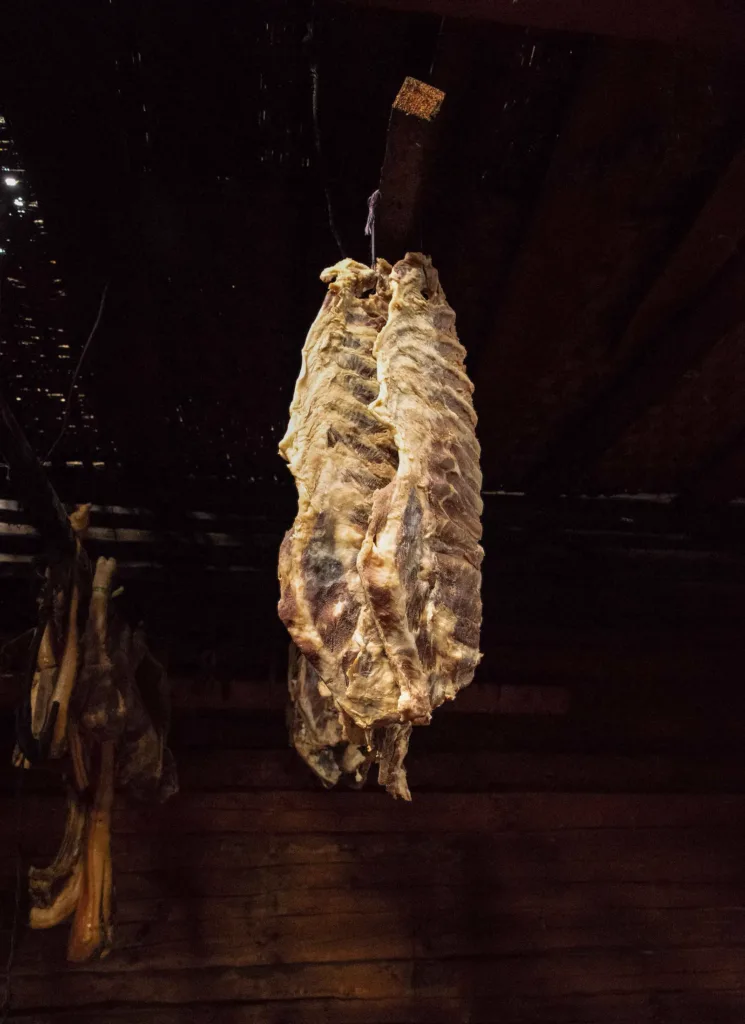
Pipa cured pork (琵琶肉) is a traditional Diqing preserved-pork dish made with a boned, stitched pig, then seasoned and pressed to cure; its pipa-like shape and flexible cooking methods make it a useful way to taste Tibetan food traditions without treating one restaurant's recipe as the standard.
Why it belongs on a Diqing food itinerary
Diqing’s prefectural government lists 琵琶肉 among the region’s signature foods and calls it one of the best-known local flavours, alongside yak meat. That establishes a clear Diqing connection, but not an exclusive claim that the prefecture invented the dish. English Yunnan tourism material also presents pipa meat as a Shangri-La specialty associated with Tibetan pork.
The most interesting part for a visitor is the preserved-meat technique and how it still appears in seasonal cooking. A 2025 report from Diqing Daily describes藏香猪琵琶肉 being used with spring morels after the New Year curing season. This is a regional food tradition, not a fixed restaurant dish with one compulsory recipe.
How the pipa shape is made
The local government description says that the pig’s organs and bones are removed, salt, Sichuan pepper and cao guo are put inside, and the opening is stitched closed. The prepared meat is then pressed under a stone while it cures. Its flattened form resembles a pipa, the Chinese lute, which gives the dish its name.
A separate Yunnan food account similarly describes a boned pig seasoned with salt and pepper, stitched and wind-cured as a complete cured piece. It is useful corroboration for the broad method, but household recipes and curing periods can differ, so the description should not be read as a single mandatory formula.
How to eat it
Diqing’s official description lists boiling, stewing and frying as possible preparations. Ask which method the kitchen is serving and whether the meat is presented on its own or used to add cured pork flavour to another dish. The morels-and-pipa-pork combination reported in spring is one example of how the preserved meat can meet seasonal ingredients; it is not a year-round promise.
Because salt is part of the curing process, ordering a small portion first is sensible if you are unfamiliar with preserved pork. The cooking method, thickness of the pieces and length of curing all affect the final texture and saltiness.
Finding it without turning the dish into a restaurant recommendation
Search for “琵琶肉” on Meituan (美团) or Amap / Gaode Maps (高德地图) to find nearby places serving this dish. Check menus, recent reviews, opening information and today’s availability before choosing.
Pipa cured pork has no single visitor entrance, address or dedicated transport route. Treat a map listing as a current lead, not proof of quality or authenticity, and do not assume that a result will still be serving it on the day you visit.
Dietary notes
This is pork, so it is not suitable for vegetarian or pork-free diets. The official description names salt, Sichuan pepper and cao guo, but other kitchens may add different seasonings or cooking ingredients. If you have an allergy or avoid alcohol, ask the staff what is in that day’s preparation; do not rely on appearance or on a brief reheating step to establish that a dish is allergen-free or alcohol-free.
Sources & reading
Image credits & notes (1)
- A hanging piece of salted pork photographed in Yunnan, China; an illustrative regional preserved-pork context, not a verified image of Diqing pipa cured pork. Photo: Rod WaddingtonPhoto: CC BY-SA 2.0