

Chindu Yogurt 称多酸奶
Chindu Yogurt is featured among the local specialties of Qinghai.
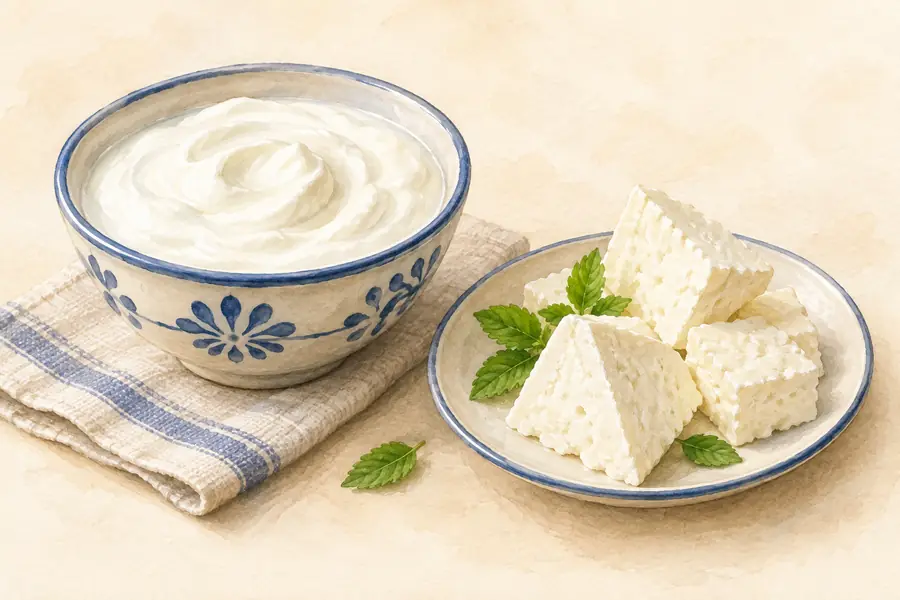
Chindu Yogurt (称多酸奶) is a county-named yogurt eaten in Qinghai: 称多 is the county in the name and 酸奶 is yogurt, which Tibetan cooking treats as one of the region's staples.
How it is made
Milk is boiled, cooled to a temperature the culture can work at, inoculated and left to set in a cool place until it thickens and turns tart. Nothing needs to be added beyond the culture and time, which is why a yogurt of this kind tastes of the milk it came from.
Tibetan cooking uses milk from yak and goat as well as butter and yogurt, and dairy of this sort is a staple rather than an occasional treat, so the fat content and the tang vary with the herd behind each batch.
Flavour and texture
Expect a firm set and a clean sourness rather than the sweeter, looser yogurt sold in supermarkets. The article's account of dairy in the region — including a hard cheese made from solidified yogurt — shows how far the same ingredient is pushed, and it explains why this bowl is eaten as food rather than as dessert.
Local roots and menu reading
Tibetan cooking is framed around the plateau and the animals that live on it, and 称多酸奶 belongs to Qinghai, which sits inside that landscape. The county name is the local attribution, and the dairy tradition is the background.
Ingredients and dietary needs
Milk and a live culture are the whole product, with sugar, honey or roasted barley offered separately in most kitchens. Ask 什么奶 (which milk), 加糖吗 (is sugar added) and 加糌粑吗 (is roasted barley added) if any of those matter to you.
How to order Chindu Yogurt
Show 称多酸奶 and ask 原味的还是加糖的 (plain or sweetened) and 一碗多少 (how much for a bowl). If you prefer it less sour, ask 少酸; if you want it firmer, ask 稠一点.
How to eat it and plan a meal
Eat it cold and in small spoonfuls, adding sugar or roasted barley a little at a time so the sourness stays in view. It works best after a rich meat dish rather than before, and plain tea alongside is a better companion than anything else sweet.
More dishes to compare
Explore related local specialties and compare their names, preparation notes and ordering guidance.
Qinghai yogurt 青海老酸奶 →
Qinghai yogurt (青海老酸奶) is the general provincial name for the same style of set, tart yogurt, sold across the region. 称多酸奶 narrows that to one county, which is how a staple becomes a local speciality — the difference is the attribution and possibly the herd, not the method.
Questions before you order
Is the yogurt sweet?
Usually not as sold: yogurt is a staple food rather than a dessert here, and sugar or roasted barley is added by the eater. Ask 原味的还是加糖的 before it is served.
What kind of milk is used?
Yak and goat milk are among the dairy animals of the region, and yogurt is described as coming from animals adapted to the climate. Which milk a particular shop uses is worth asking with 什么奶.
Source introduction: Wikipedia contributors: Tibetan cuisine · CC BY-SA 4.0. English guide adapted from the cited material, with additional preparation and ordering guidance.
Sources & reading
The supplied food list supports this name and regional association. The culinary terms below are explained as menu vocabulary; a local recipe, origin story and venue availability have not been independently verified.