

Datong copper hotpot 大同铜火锅
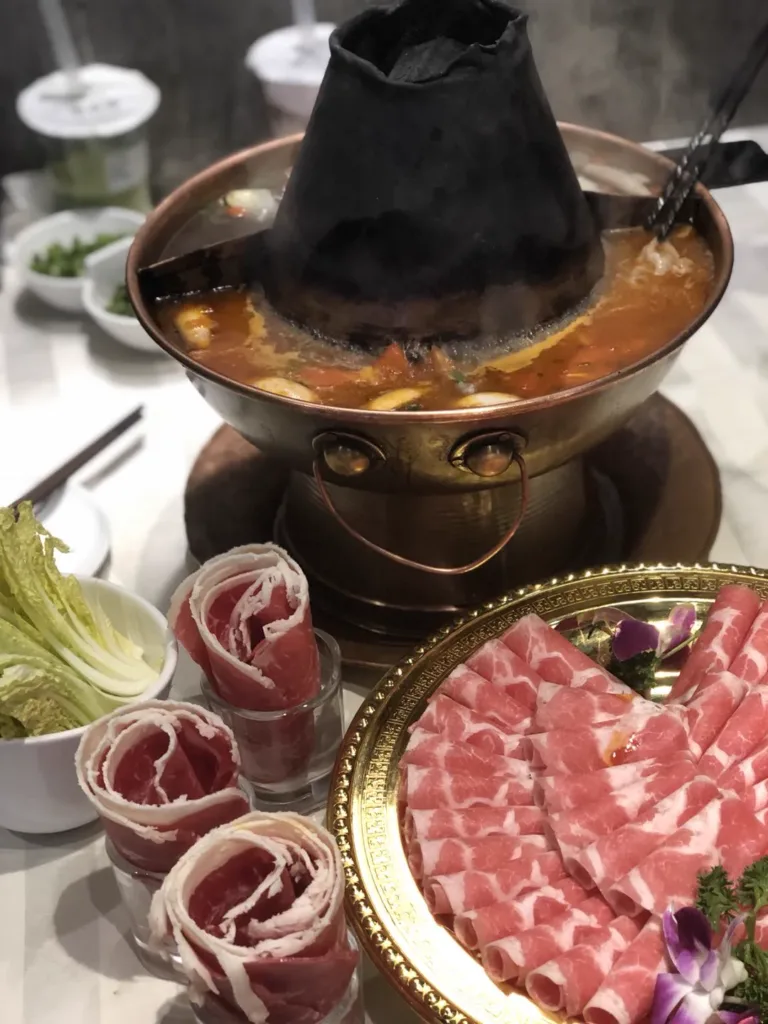
Datong copper hotpot (大同铜火锅) is a shared Datong dish built around a traditional copper vessel, often served as a stacked shijincai assorted hotpot (什锦火锅). Meat, vegetables, dried ingredients and noodles share one broth, while the hand-worked, tin-lined pot is part of the experience—not just cookware.
Tap any red Chinese text to hear it in Mandarin.
What makes it a Datong meal
The version to look for is usually the old Datong assorted hotpot, or shijincai huoguo (什锦火锅): a large copper pot placed in the middle of the table, with ingredients arranged in layers and cooked together. A local account describes the traditional vessel as charcoal-fired and says that the dish is served in many Datong restaurants, while stressing that each kitchen has its own approach.
The pot is part of the story. A traditional Datong copper hotpot has a base plate, fire base, pot body, lid, central chimney and chimney lid. Its tower-like shape leaves the heat source in the middle and the food around it. The national intangible-heritage register describes the hotpot as made from purple copper with a tin-lined interior; the lining helps resist corrosion and is intended to preserve the taste of the food.
What may be in the pot
There is no single fixed filling. One detailed Datong food report lists braised pork strips, meatballs, chicken, ribs and beef among the meats, alongside dried green beans, dried gourd strips, daylily, wood ear, cabbage, carrot, kelp, fried tofu, fried yam and starch noodles. It also mentions prawns, squid and sea cucumber in some versions.
That report describes cabbage heart and fine noodles at the bottom, followed by meatballs, seafood, braised pork strips, fried tofu and vegetables arranged by colour and alternated between meat and plant ingredients. Hot broth is added before the charcoal fire brings the pot to a simmer. Treat this as a local template rather than a universal recipe: the same report records chicken-and-bone, beef and other broths at different restaurants.
The result is a broth-led, warming shared meal. Dried and fried ingredients take on the cooking liquid, while meat and seafood make the pot substantially different from a vegetarian hotpot. If you have allergies or avoid meat, seafood or animal stock, ask the restaurant to identify every ingredient and the broth before ordering; the copper pot itself does not make a dish vegetarian or allergy-safe.
The food and the craft together
Datong copperware is a living craft as well as a serving tradition. The national heritage entry describes repeated heating and hammering during forming, followed by grinding, welding and decorative work; a 2025 report on a Datong inheritor summarises the wider sequence as selecting and melting copper, forging, welding, chiselling, tin lining, polishing and assembly. Decorative copper hotpots can therefore be objects to examine as well as vessels for dinner.
A 2025 report also recounts the often-mentioned 1973 story in which a decorated Datong copper hotpot was presented to French President Georges Pompidou during his visit to Datong. The report identifies the “Nine Dragons Ascending to the Moon” pattern as drawing on the Nine-Dragon Wall in Datong. This is useful cultural context for the craft, not a claim that a restaurant meal uses that particular commemorative pot.
Practical tips
On a menu, look for 大同铜火锅 Dàtóng Tóng Huǒguō, 什锦火锅 Shíjǐn Huǒguō or 老大同火锅 Lǎodà Tóng Huǒguō; the old Datong assorted hotpot is also described under the latter names in local food coverage. Show 大同铜火锅 Dàtóng Tóng Huǒguō to a server, then confirm the number of diners, pot size, broth and contents. Ask whether the pot is charcoal-fired or electrically heated if that matters to you; modern electric versions also exist alongside traditional charcoal vessels.
Where to eat it
You can find Datong copper hotpot all over Shanxi, so there is no need to seek out one particular restaurant. To find one near you, search for “大同铜火锅” in Meituan (美团) or Amap (高德地图) and check recent reviews, distance and opening hours.
More dishes to compare
Explore related local specialties and compare their names, preparation notes and ordering guidance.
Shanxi mixed stew 大烩菜 →
Vegetables, tofu and other available ingredients are simmered together, often with pork and noodles or starch noodles. The mixture is allowed to share one savory cooking liquid rather than being plated as separate stir-fries. Soft cabbage, absorbent tofu and chewy noodles give the stew its varied, filling texture. Meat content and seasoning change between households.
Oat-dough kaolaolao 莜面栲栳栳 →
Oat dough is worked with hot water, rolled into very thin pieces and curled into upright cylinders. These are packed closely in a steamer, creating the characteristic honeycomb-like arrangement. The rolls are soft but substantial, with a nutty grain flavor and enough structure to hold a dip. Their taste depends heavily on the accompanying sauce.
Sources & reading
Recipes and servings vary between kitchens.
Image credits & notes (1)
- A copper hot pot with its central chimney and simmering broth; regional illustrative photograph, not documented as a Datong restaurant serving. Photo: BbbzhuPhoto: CC BY-SA 4.0