

Salt and Pepper Mantis Shrimp 椒盐濑尿虾
Salt and Pepper Mantis Shrimp is featured among the local specialties of Hong Kong.
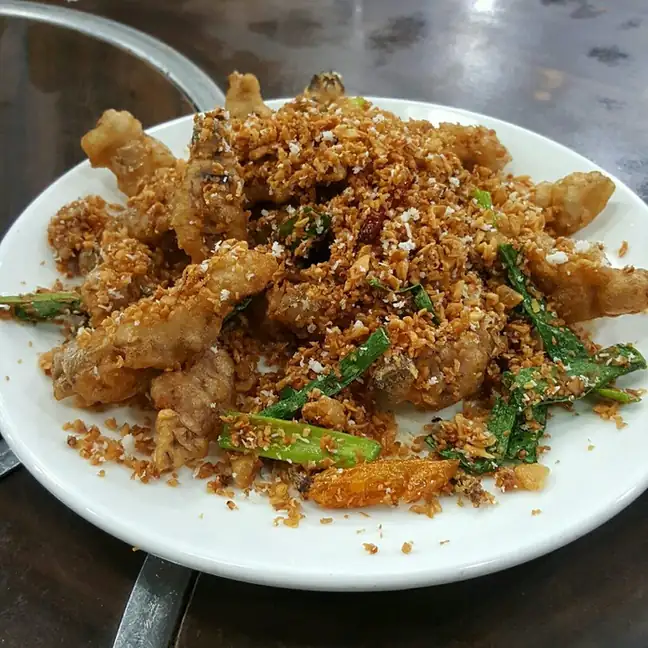
Photo adjustments
EXIF orientation normalized; resized without changing aspect ratio; converted to WebP. No subject edits.
Salt and Pepper Mantis Shrimp (椒盐濑尿虾) is a Hong Kong seafood dish of mantis shrimp that are deep-fried and then tossed in a very hot wok with fried chilli, minced garlic and salt. The shells come out crisp and coated with the chilli salt, while the meat inside stays sweet and juicy. It is a well-known dish of Hong Kong's typhoon shelter (避风塘) style of cooking.
How it is made
The shrimp are usually dusted with cornflour so the shells turn crisp in the oil. After a first deep-frying they are lifted out, chopped chilli, minced garlic and salt are fried in hot oil until fragrant, and the shrimp go back into the wok for a quick toss over a fierce flame until the chilli salt coats the shells. A 2014 Hong Kong Commercial Daily report noted that mantis shrimp caught near Hong Kong are small with little meat, and that the seafood restaurant Nam Tai Mun (南大门) at Lei Yue Mun (鲤鱼门) in Kowloon uses large ones imported from Thailand and Vietnam, about 10 inches long and over half a catty each. Nam Tai Mun stir-fries them with pepper salt, where ordinary restaurants deep-fry them crisp.
Flavour and texture
Most Hong Kong seafood dishes follow Cantonese habits: the natural taste is kept, strong seasonings are used sparingly, and steaming is the main method. This dish goes the other way, in typhoon shelter fashion: fast, fierce stir-frying gives a fragrant, punchy flavour while the seafood keeps its sweetness, and it also works as a dish to go with drinks.
Where it comes from
The Hong Kong Commercial Daily credits Tai Fat Hau (大佛口食坊), the predecessor of Nam Tai Mun, which took its present name in 2006, as the birthplace of the dish, which the paper says can now be found in every restaurant serving Cantonese food and seafood. It is a standard dish at the seafood restaurants of Aberdeen (香港仔), Lei Yue Mun, Sai Kung (西贡) and Lamma Island (南丫岛), and it is also served at dai pai dong (大排档, open-air food stalls) in Jordan (佐敦) and at eateries in municipal services buildings.
Sources & reading
Written from the linked sources and checked sentence by sentence against quoted extracts by a separate reviewer on 2026-09-24. Recipes and servings vary between kitchens.