

Preserved Radish Omelette 菜脯蛋
Preserved Radish Omelette is featured among the local specialties of Taiwan.
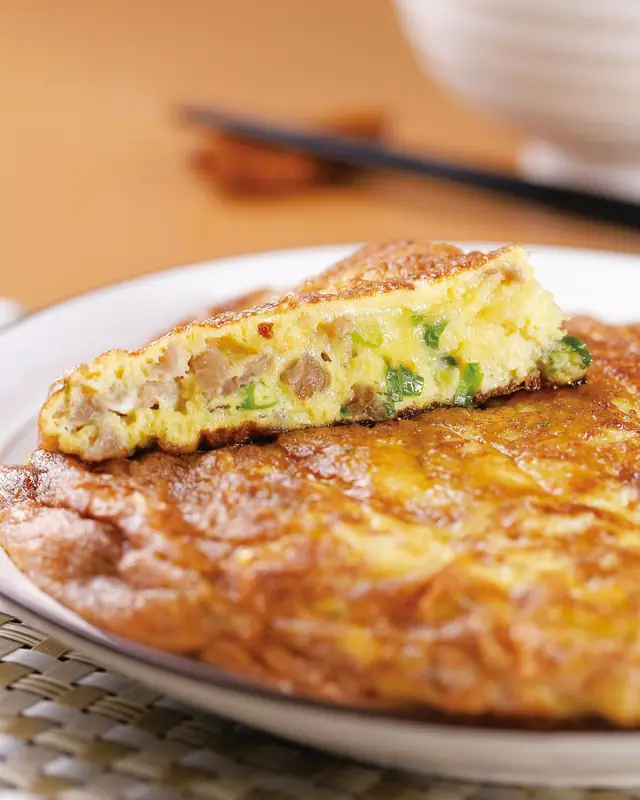
Image notes
Resized for the web; the photo itself has not been edited.
Preserved Radish Omelette (菜脯蛋) is egg cooked with chopped caipu (菜脯), salted and sun-dried radish, sometimes with spring onion. It is a home dish in Taiwan and also in Fujian and the Chaoshan (潮汕) area of Guangdong. The name comes from Hokkien: the radish is called caitou (菜頭), and dried or pickled foods are called pu (脯).
How it is made
In the recipe of Huang Te-chung (黃德忠), known as A-Chung (阿忠師), who cooked state banquets for three heads of state, the radish is chopped, but not too finely so that it keeps its crunch, then soaked to draw off salt and squeezed dry. It is fried slowly with garlic for about two minutes, mixed into the beaten egg, and the mixture is cooked slowly in a hot, oiled wok until golden on both sides. For two people he uses one hen's egg and one duck's egg, because the duck egg holds together and is easier to fry. No salt is added: the radish brings both saltiness and sweetness.
Where it comes from
The United Daily News (聯合報) health site describes it as the most common way to cook caipu and, in earlier years, a regular in school lunch boxes. It moved onto banquet menus in the 1940s: after goods controls came into force across Taiwan in 1941, restaurants whose banquets had been 'mainland cooking' by chefs from Fuzhou, Guangdong or Sichuan brought in home dishes made from local ingredients, such as preserved radish omelette and milkfish, and banquet food took on a 'Taiwanese flavour'. With the economic take-off that began in the 1960s, Taiwanese restaurants such as Ching Yeh (青葉) and Shin Yeh (欣葉) turned it into a thick, perfectly round baked omelette.
Ingredients
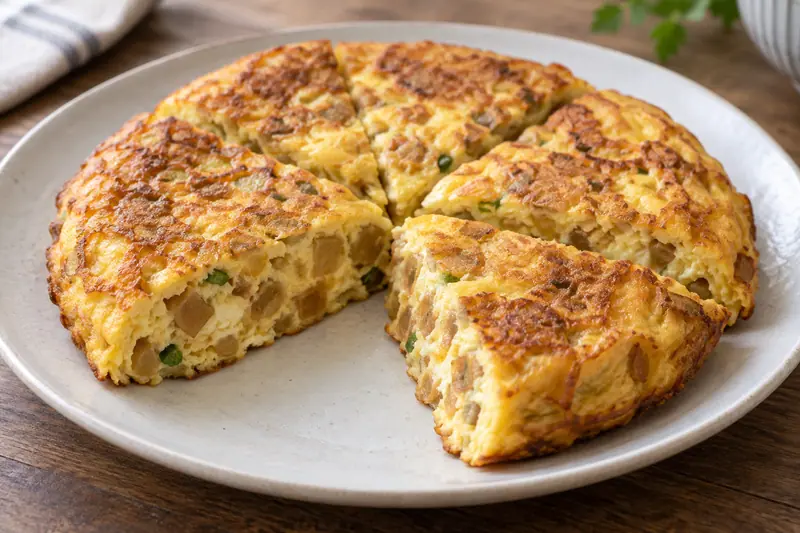
Caipu differs across Taiwan. According to the same column, caipu in Taoyuan, Hsinchu and Miaoli in the north and Pingtung in the south is mostly Hakka-style, while Changhua, Nantou, Yunlin and Chiayi in the centre mainly make Hokkien-style caipu. All of it is salted and sun-dried, and it comes as whole radishes, as split and cut pieces, or in small dice.
Sources & reading
Written from the linked sources and fact-checked against them on 2026-09-25. Recipes and servings vary between kitchens.