

Yuanli Ba-Wan Dumplings 苑里肉圆
Yuanli Ba-Wan Dumplings is featured among the local specialties of Taiwan.
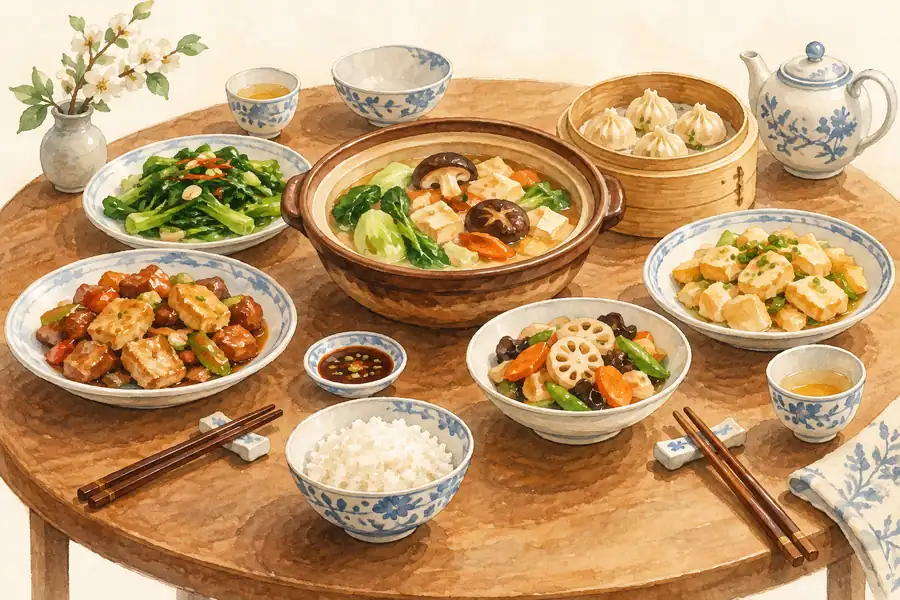
Yuanli Ba-Wan Dumplings (苑里肉圓) is the bahwan of Yuanli in Miaoli: a translucent, round dumpling of starch skin wrapped around a pork filling, steamed or oil-warmed and eaten with a sweet-savoury sauce.
A skin made of starch, not wheat
The reference describes the shell as a semi-transparent skin made from sweet-potato starch, potato starch, rice flour or tapioca starch — no wheat gluten, which is why the dumpling is slippery and chewy rather than doughy. Finished pieces are typically six to eight centimetres across and flattened round.
Cooking splits by geography. North of Changhua, Chinese-language Wikipedia says, rou yuan are mostly fried or oil-bathed; south of Changhua they are mostly steamed. Yuanli sits in Miaoli, north of Changhua, so the oil-treated style is the local expectation, and the skin should arrive glossy and slightly blistered rather than pale and steamed.
The filling and the sauce
The filling is documented as pork and minced pork at the core, with bamboo shoot, mushroom, egg, dried scallop or chestnut appearing depending on the shop. That list is the practical guide to what a traveller will meet: the pork is constant, and everything else is the shop's signature.
At the table the dumpling is dressed with both a sweet sauce and a savoury one, plus a little minced garlic and coriander, per the reference. The result is a snack that is sweet, salty, garlicky and bouncy at once, and the sauce is not optional.
Where bahwan comes from
Chinese-language Wikipedia traces the dish to Beidou township in Changhua, dated to the end of the nineteenth century, and tells the story of a temple medium who fed flood victims steamed sweet-potato cakes; his son added meat to the cakes, and the finger marks left by shaping them became the Beidou style's signature.
According to the same account the third generation switched the skin to sweet-potato starch and rice paste, replaced cabbage with bamboo shoot and settled the pork filling, after which Beidou had more than twenty rou yuan shops, nearly all trained in that family. From there the dish spread across Taiwan and became regional. Yuanli's version belongs to that later dispersal, and the article does not describe it specifically.
Ingredients and dietary questions
The skin is starch-based, but it is not automatically gluten-free: rice flour and tapioca are safe for most wheat-avoiders, while some shops blend in wheat starch or flour, and soy sauce in the dressing usually carries wheat. If gluten matters, ask before ordering.
Pork is the one constant in the filling, so a meat-free version is a different dish rather than a variation; coriander, garlic and shellfish (dried scallop) also appear in the documented ingredient list.
Ordering it
Ask for 肉圓 — in this part of Taiwan the same word is sometimes written 肉丸 — and expect one or two pieces rather than a bowl of many. In some shops the leftover sauce is topped up with clear soup after the dumpling is finished, a habit the reference mentions.
Useful questions are 蒸的還是炸的 to find out how the shop cooks it, and 有沒有筍子 or 有沒有干貝 if you want to know what is inside before it arrives.
How it is eaten
Rou yuan is street food eaten standing or at a counter, usually in the afternoon rather than as a formal meal, and it is one of the island's most ordinary pleasures — Chinese-language Wikipedia calls it a 庶民小吃, a commoner's snack.
Because the skin is delicate when hot, the piece is eaten with the sauce spooned over it rather than cut apart and shared, so order your own.
More dishes to compare
Explore related local specialties and compare their names, preparation notes and ordering guidance.
Shuili Ba-Wan Dumplings 水里肉圆 →
Shuili Ba-Wan Dumplings (水里肉圆) is the rou yuan of Shueili in Nantou county, a place-named version from the central mountains. 苑里肉圓 comes from Miaoli on the northern side of the island. Both use the same translucent starch skin and pork filling, so the difference is in the cooking and the sauce: north of Changhua the dumpling is typically oil-treated and its skin blistered, while southern and central shops lean to steaming, which leaves the skin smoother and paler.
Questions before you order
What is the skin of 苑里肉圓 made from?
It is a semi-transparent skin of sweet-potato starch, potato starch, rice flour or tapioca starch depending on the shop, which is why the dumpling is bouncy rather than bread-like.
Why are some rou yuan fried and others steamed?
The reference records a rough dividing line at Changhua: shops north of it mostly fry or oil-bathe the dumpling, while shops to the south mostly steam it.
Source introduction: Wikipedia contributors: 肉圓 (台灣) · CC BY-SA 4.0 (https://creativecommons.org/licenses/by-sa/4.0/). English guide adapted from the cited material, with additional preparation and ordering guidance.
Sources & reading
The supplied food list supports this name and regional association. The culinary terms below are explained as menu vocabulary; a local recipe, origin story and venue availability have not been independently verified.