

Mailiao Milkfish Belly 麦寮虱目鱼肚
Mailiao Milkfish Belly is featured among the local specialties of Taiwan.
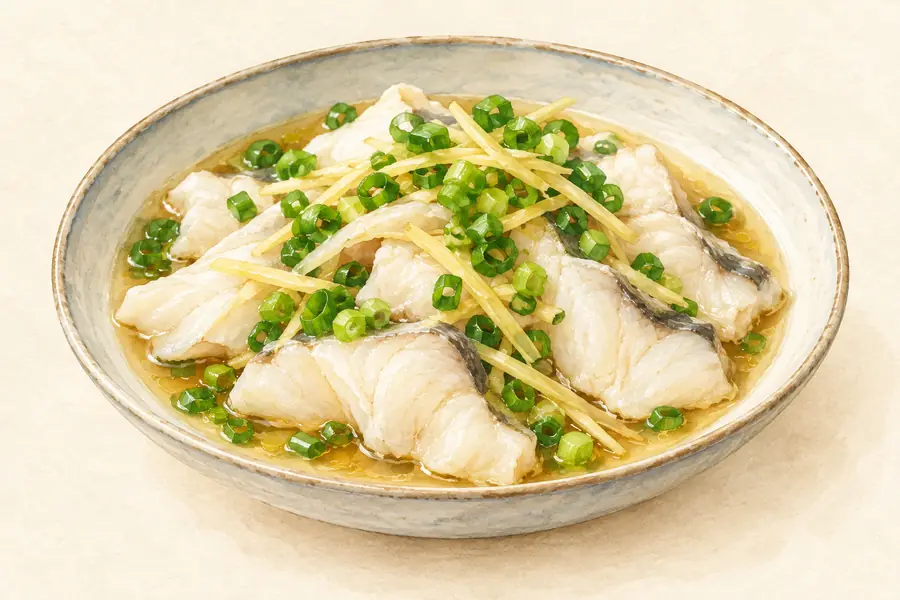
Mailiao Milkfish Belly (麦寮虱目鱼肚) is milkfish belly from Mailiao: the fattiest cut of a fish that Taiwan has farmed along its south-west coast since the seventeenth century.
How it is prepared
The cut is the underside of the milkfish, the belly flap that carries the most oil in the whole fish. The reference notes that shops normally remove the fish's small bones first, because the belly comes threaded with them.
From there the kitchen has several ordinary routes: pan-fried, deep-fried or steamed as a piece, or simmered into a belly soup or a belly rice porridge. The belly is soft enough that long cooking breaks it up, so the quick methods dominate.
What it tastes like
Milkfish is summed up in the source in four characters, 刺多肉味美 — many bones, fine eating. The belly is the oily end of that: rich, faintly sweet and much softer than the leaner back meat, which is why it is served as its own cut rather than as a filler.
The fish and the place
虱目魚 is Chanos chanos, the milkfish, a warm-water species fished and farmed across subtropical and tropical seas. The article collects its many names — 海草魚, 安平魚, 國姓魚, 麻虱目, 遮目魚, 狀元魚 and 牛奶魚, the last matching the English milkfish — and states that Taiwan's milkfish farming is thought to have been introduced in the seventeenth century by the Dutch from Indonesia.
Mailiao is a coastal township in the north-west corner of Yunlin County, at the mouth of the Zhuoshui River, with about 49,000 residents and a landscape the article describes as typical windward-water's-end terrain: flat, seaward and exposed. It is the third most populous township-level unit in Yunlin.
Ingredients and dietary questions
The cut itself is only fish, but the dish around it is not: soup bases, marinades and frying batters vary by stall, and milkfish is bony enough that the boning work matters to the eating. Travellers avoiding gluten, soy or shellfish should ask how the belly is cooked and what the stock is made from, and anyone who dislikes picking bones should ask for 無刺, boneless.
Ordering it
Ask for 麦寮虱目鱼肚, or simply 虱目魚肚. Menus usually distinguish the cooking method rather than the cut, so the useful questions are 煎, pan-fried; 湯, in soup; and 粥, in rice porridge. If bones are a concern, say 無刺魚肚 and confirm that the kitchen has removed them.
How it is eaten
Belly soup or belly porridge is the usual frame — a piece of fish in a light broth, eaten with rice or noodles in the morning or at lunch. Because the belly is the oily part, it is normally served with something plain and slightly sour rather than with a heavy sauce.
More dishes to compare
Explore related local specialties and compare their names, preparation notes and ordering guidance.
Oyster omelet 蚵仔煎 →
Oyster omelet (蚵仔煎) is the other great Taiwanese coastal seafood snack: shellfish set in a starch batter and cooked on a griddle. Milkfish belly takes the opposite route, keeping the fish as a plain piece in soup or pan rather than binding it in batter. Reading them together shows how the same coast produces both a bound, chewy snack and a soft, oily cut of fish.
Questions before you order
What fish is 虱目魚?
It is the milkfish, Chanos chanos, also called 牛奶魚 in Chinese; the current record's gloss of 目鱼 as cuttlefish is an error and has been corrected.
Is the belly boneless?
Not by default. The reference says shops usually remove the fine bones first, so ask for 無刺 and confirm at the counter if you want it boneless.
Source introduction: Wikipedia contributors: 虱目魚 · CC BY-SA 4.0 (https://creativecommons.org/licenses/by-sa/4.0/). English guide adapted from the cited material, with additional preparation and ordering guidance.
Source introduction: Wikipedia contributors: 虱目魚肚 · CC BY-SA 4.0 (https://creativecommons.org/licenses/by-sa/4.0/). English guide adapted from the cited material, with additional preparation and ordering guidance.
Source introduction: Wikipedia contributors: 麥寮鄉 · CC BY-SA 4.0 (https://creativecommons.org/licenses/by-sa/4.0/). English guide adapted from the cited material, with additional preparation and ordering guidance.