

Seafood Congee 海鲜粥
Seafood Congee is featured among the local specialties of Taiwan.
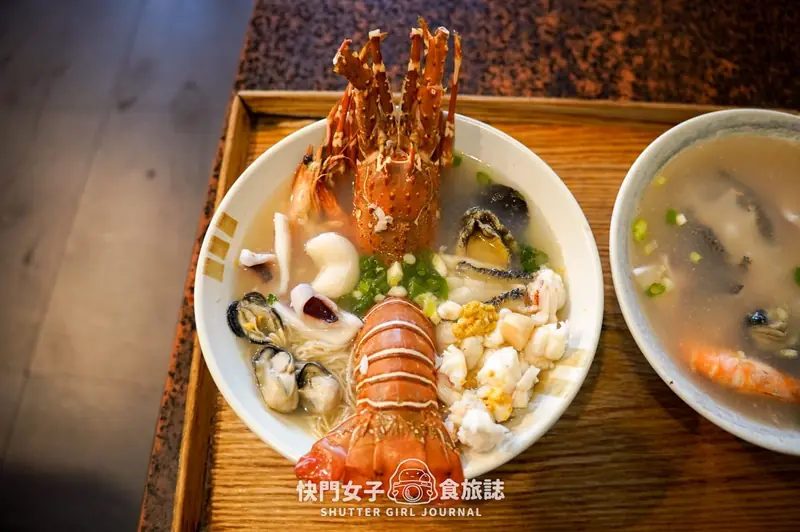
Image notes
Resized for the web; the photo itself has not been edited.
Seafood Congee (海鲜粥) is a Penghu County rice porridge in which local seafood is cooked into the grain, so the bowl is a single dish rather than rice served beside fish.
How it is cooked
Rice is simmered in stock or water until the grains soften, and the seafood goes in near the end so it does not overcook: small shellfish, fish slices, squid or shrimp are stirred through and cooked by the heat of the pot. Ginger and white pepper are the usual seasoning, and some kitchens add a beaten egg or a little pork. Because the rice keeps absorbing liquid, the pot is served soon after the seafood goes in.
Flavour and texture
The congee is soft and slightly thickened, and it tastes of the seafood that cooked in it. The shellfish give salt and sweetness, fish gives body, and ginger keeps the bowl from tasting flat. Texture depends on timing: seafood left in the pot too long turns rubbery, while rice left too long becomes gluey. It is a light, warm bowl rather than a rich one, and white pepper at the table is part of the flavour.
Local roots
Penghu County is the region in the record, and on an island group a seafood porridge is the natural way to use a mixed catch: whatever came off the boat that morning goes into the pot. It is breakfast food in practice, sold from early morning near harbours and markets, and it reappears late at night in shops that stay open after the fishing day.
Ingredients and dietary questions
Expect rice, stock, ginger, white pepper and seafood such as clams, small fish, squid or shrimp, with egg, pork or spring onion in some versions. Shellfish is common, so ask whether the bowl contains shrimp and whether a vegetarian version exists rather than assuming. Because the seafood is cooked into the rice, a shellfish allergy makes the whole bowl unsuitable, and cross-contact in a small kitchen is normal.
How to order it
Show 海鲜粥 and ask 裡面有什麼 (what is in it), 一碗多少錢 (how much is a bowl) and 可以加蛋嗎 (can I add an egg). Prices move with what is in the pot, so ask whether the bowl is sold at a fixed price or by the day's catch. Say 內用 or 外帶; congee holds its heat well, so it travels better than most takeaways.
How to eat it
Stir the bowl once, add white pepper if you like, and eat it with a spoon while it is hot. It works as a light breakfast or as a late bowl after a long day, and a plate of greens or a fried dough stick completes it. One bowl is enough for one person; order a shared plate of seafood if you want more.
More dishes to compare
Explore related local specialties and compare their names, preparation notes and ordering guidance.
Milkfish Congee 虱目鱼粥 →
Milkfish Congee (虱目鱼粥) is built around one fish, milkfish, often with the grains kept visible in a light broth, while 海鲜粥 uses a mix of whatever local shellfish and fish are available, cooked into a softer porridge so the bowl tastes of several kinds of seafood at once.
Questions before you order
Is the rice cooked in fish stock?
Usually yes, or in water with the seafood added near the end. Ask 湯是什麼做的 if you want to know exactly what the base is.
Why does the price change?
Because the seafood inside follows the catch and the season. Ask 一碗多少錢 and whether the price is fixed before ordering a large bowl.
Sources & reading
The supplied food list supports this name and regional association. The culinary terms below are explained as menu vocabulary; a local recipe, origin story and venue availability have not been independently verified.