

Sorghum Liquor Sausage 高粱香肠
Sorghum Liquor Sausage is featured among the local specialties of Taiwan.
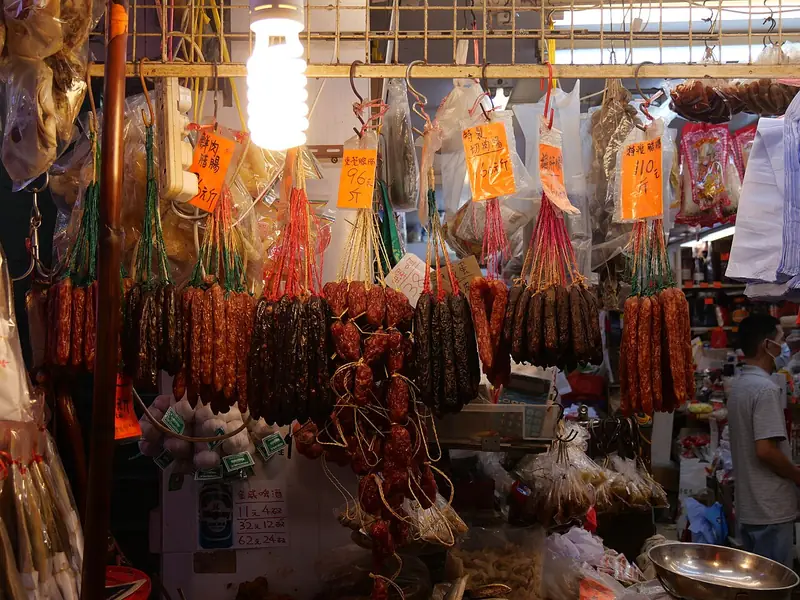
Sorghum Liquor Sausage (高粱香肠) is a Kinmen County sausage in which sorghum liquor is mixed into the pork before casing, a cured product that carries the island's signature spirit into everyday food.
How it is made
Pork is minced or diced with fat, seasoned with salt, sugar, soy and spices, and blended with sorghum liquor before being packed into a casing. The sausages are then dried or air-cured so they firm up and keep, which is why they are sold as a preserved product rather than as fresh meat. To eat them they are grilled, pan-fried or steamed whole, then sliced. Some kitchens also use the slices in fried rice or with sticky rice.
Flavour and texture
The sausage is dense and firm rather than soft, with a sweet-savoury balance and a grain aroma from the liquor that sits behind the pork. Grilling crisps the casing and renders some fat; steaming keeps it softer and juicier. Because sugar is part of the cure, the slices caramelise quickly in a pan and can burn if the heat is too high. The liquor flavour is mild in most versions rather than overpowering.
Local roots
Kinmen County is the region in the record, and sorghum liquor is what the island is famous for, distilled from grain grown on dry fields. Using it as a seasoning in cured pork is a natural extension: the spirit is already in the kitchen, and the alcohol and aroma help the seasoning spread through the meat. Sausages like this are sold as gifts and eaten at home, often grilled as a snack rather than as part of a formal meal.
Ingredients and dietary questions
Pork, pork fat, salt, sugar, soy sauce, spices and sorghum liquor are the core, with some makers adding garlic, chilli or a curing agent. Because the product is cured, it is salty and often sweet, and it is not a low-sodium food. Ask 有加酒嗎 (does it contain liquor), 會甜嗎 (is it sweet) and 可以試吃嗎 (can I taste before buying). Sausage is a pork product, so it is not suitable for anyone avoiding pork.
How to order it
Show 高粱香肠 and ask 怎麼賣 (how is it sold – by weight or by the piece), 一條多少錢 (how much each) and 可以煎嗎 (can you grill or pan-fry it for me). Shops often sell them cooked to eat on the spot as well as raw to take home. If you are buying to travel, ask 可以帶上飛機嗎 (can I take it on a plane), because meat products face import restrictions in many countries.
How to eat it
Slice it thick, eat it with raw garlic, pickles or rice, and let the fat balance the salt. It works as a snack with a cold drink, as a topping for rice or noodles, or inside a bun. Because it is cured and rich, a few slices per person are enough, and it keeps well in the fridge once opened.
More dishes to compare
Explore related local specialties and compare their names, preparation notes and ordering guidance.
Shaoxing Wine Sausage 绍兴酒香肠 →
Shaoxing Wine Sausage (绍兴酒香肠) is cured with Shaoxing rice wine, which gives a soft, faintly sweet aroma, while 高粱香肠 uses sorghum liquor from Kinmen, whose grain note is drier and stronger against the pork.
Questions before you order
Do I eat it raw?
No. It is a cured, dried sausage, and it is sliced and grilled, pan-fried or steamed before eating. Some shops sell it already cooked at the counter.
Is it very sweet?
Sugar is part of the cure, so most versions are sweet-savoury and caramelise in the pan, but the level varies by maker. Ask 會甜嗎 and 可以試吃嗎 before buying a large amount.
Sources & reading
The supplied food list supports this name and regional association. The culinary terms below are explained as menu vocabulary; a local recipe, origin story and venue availability have not been independently verified.
Image credits & notes (1)
- Reference photo of a similar dish · 同类菜品参考照片A similar preparation is pictured; the local version may differ. 同类菜品参考照片,当地做法可能不同。Photo: Peachyeung316 · CC BY-SA 4.0Resized for the web; the photo itself has not been edited. Thumbnails may show a cropped view.
