

Savory flour tea with dough twists 油茶麻花
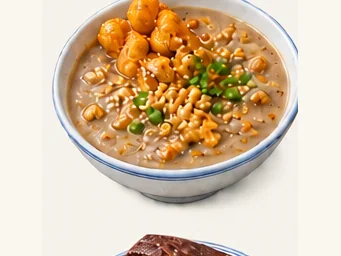
A warming Xi’an breakfast of savory toasted-flour oil tea with fried dough twists, eaten while the twists are crisp-edged or after they soften in the thick bowl.
Tap any red Chinese text to hear it in Mandarin.
What it is
Despite the name, this is not a brew of tea leaves. The base is a savory, thick wheat-flour preparation: flour is toasted or fried with fat, then loosened with hot water and cooked into a smooth, spoonable paste. Salt and seasonings such as Sichuan pepper may be used. Depending on the cook, the fat may be vegetable oil or animal fat; additions can include sesame, peanuts, walnuts, almonds, soybeans, or other small toppings. These are variations, not a fixed citywide recipe.
Xi’an is a familiar place to seek the dish, but it belongs to a broader Guanzhong and Shaanxi oil-tea tradition rather than being an exclusive Xi’an invention. Within the region, oil tea changes by locality and household; Xi’an’s Hui-style breakfast versions are one recognizable expression. The oil-tea base is distinct from the fried dough twist, or mahua (麻花), which is made by twisting strands of wheat dough and frying them.
Flavour and how to eat it
Expect a warm, savory, roasted-wheat aroma with a rich, oily or nutty finish; pepper can add a gentle fragrant bite. The paste is thick and soft, while the mahua starts crisp or chewy and gradually absorbs the hot base, becoming tender and yielding. Some bowls are nearly smooth; regional preparations such as Xi’an’s geda youcha (疙瘩油茶) deliberately retain soft, toasted-flour nuggets. That variation is a reminder that “oil tea” does not describe one uniform texture.
The mahua may be placed into the bowl shortly before serving or softened longer in the hot oil tea. Eat it with spoonfuls of the paste, choosing a shorter soak for more chew or waiting for a softer twist. Ask what fat and toppings the kitchen uses, especially if you avoid meat, have nut or sesame allergies, or need halal assurance; recipes and kitchen practices differ.
To order, show 油茶麻花 yóuchá máhuā and ask 麻花泡软一点 máhuā pào ruǎn yìdiǎn (“let the twists soften a little”) or 麻花脆一点 máhuā cuì yìdiǎn (“keep the twists a little crisper”). Confirm the actual ingredients with the vendor rather than assuming a standard recipe.
Where to eat it
You can find Savory flour tea with dough twists all over Xi’an, so there is no need to seek out one particular restaurant. To find one near you, search for “油茶麻花” in Meituan (美团) or Amap (高德地图) and check recent reviews, distance and opening hours.
More dishes to compare
Explore related local specialties and compare their names, preparation notes and ordering guidance.
Hehuang grain-flour paste 搅团 →
Grain flour is stirred into hot water and cooked until it forms a smooth, cohesive paste. It is served with a savory broth, dressing or vegetables, either hot or cooled according to local style. The base is soft, mild and slightly dense, carrying garlic, vinegar and chili well. The chosen grain affects both color and flavor.
Roujiamo 肉夹馍 →
A round wheat flatbread is split and filled with chopped cooked meat and some of its juices. Pork versions and Hui-style beef or lamb preparations use different meats and seasonings. The bread is firm and toasted outside, with a tender savory filling that can range from lean to richly fatty. Bread styles also vary.
Sources & reading
Recipes and servings vary between kitchens.