

Photo adjustments
Full frame retained; proportionally resized and converted to WebP. No retouching or changes to the photographed subject. Card displays may crop the view.
Explore the region
About Shanghai History Museum
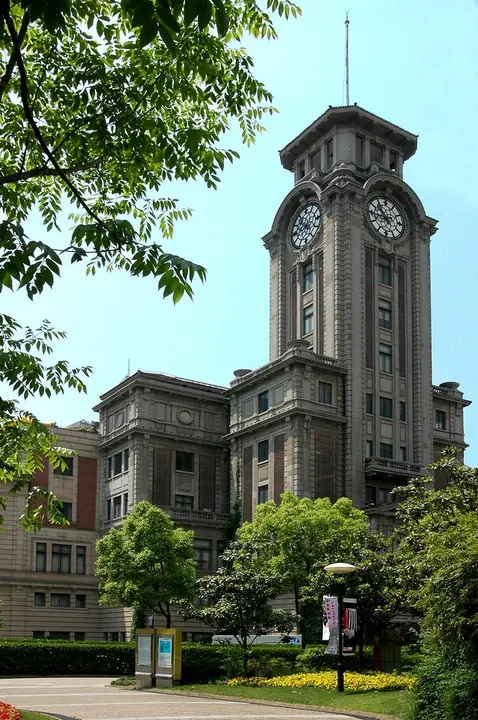
The neoclassical clubhouse and its tall tower are part of the city history the museum interprets.
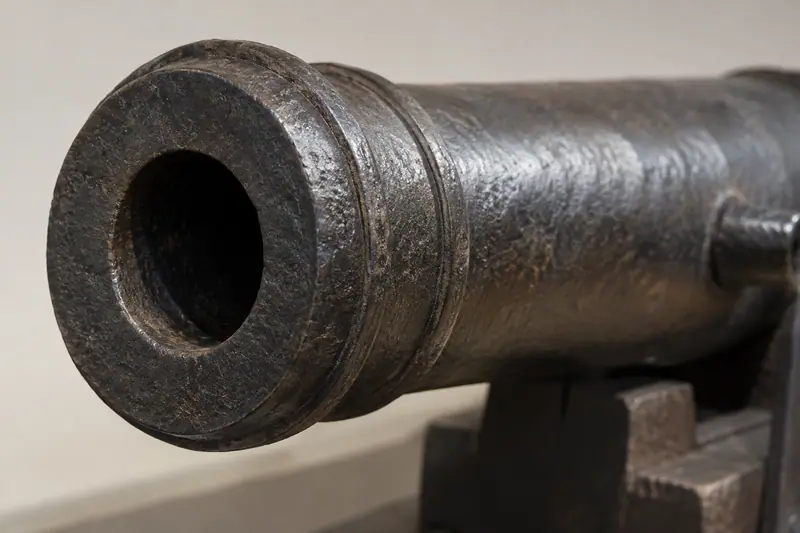
The collections range from early settlement material to the treaty-port and twentieth-century city. Notable objects include a Qing coastal-defence cannon, concession boundary markers and bronze lions associated with the former HSBC building. These objects make changes in government, trade and urban life tangible. Check current gallery arrangements, since an object belonging to the collection is not a guarantee that it is displayed every day.
The museum originated in plans begun in the 1950s and opened as the Shanghai History and Cultural Relics Exhibition Hall (上海历史文物陈列馆) in 1983, renamed in 1991. It reopened in 1994 at the Shanghai Agriculture Exhibition (上海农业展览馆) before closing in 1999, after which its holdings were displayed at the Oriental Pearl Tower (东方明珠广播电视塔). The Race Club building stood vacant after the Shanghai Art Museum moved out in 2012, and its renovation as the museum's home was approved in late 2015, with trial openings in 2017 and full public admission from March 26, 2018.
The complex comprises an east building, the former Shanghai Race Club clubhouse, and a west building, its former administrative offices, linked by a landscaped courtyard, covering a site of 10,000 square meters with a total floor area of 23,000 square meters. Exhibition space totals 9,800 square meters, divided between permanent and temporary displays; the west building also holds an oral-history hall, a retail area for cultural products and a reconstructed old Shanghai photography studio.
The museum holds about 110,000 items, including calligraphy, ceramics, textiles and coins. Notable relics include a Ming-dynasty embroidered album of flowers and insects by Han Ximeng (韩希孟), a running-script scroll by Hou Dongzeng (侯峒曾), a gold-lettered sutra from Qibao Temple (七宝寺) and a large ornamental coin from the Taiping Heavenly Kingdom.
What to look for
- The former Race Club’s tower and neoclassical exterior provide a historic setting.
- Boundary markers, the defence cannon and HSBC lions connect material objects with Shanghai’s urban history.
Background & history
The Shanghai History Museum (Chinese: 上海市历史博物馆; pinyin: Shànghǎi Shì Lìshǐ Bówùguǎn), or Shanghai Revolution History Museum, is a museum dedicated to the history of the city of Shanghai, China. The museum's collections focus on the approximately a hundred years in the history of Shanghai from the opening of the port in 1843 to the communist take-over in 1949. The museum's oldest relics are from 6,000 years ago. It features a cannon used in the first Opium War, a sedan chair, and two bronze lions that used to adorn the Hongkong and Shanghai Banking Corporation on the Bund. Other exhibits reveal the history of art, culture and industrialization in Shanghai. The neo-classical Shanghai Race Club building (1934) that houses the museum, has an imposing 10-storey tall tower which was long a landmark of central Shanghai.
Excerpt from Wikipedia: Shanghai History Museum · Wikipedia contributors · CC BY-SA 4.0. Selected introductory sentences; formatting simplified. Background information, not current visitor-service advice.
Location & getting there
Getting to Shanghai History Museum
Approach 325 West Nanjing Road and identify the former Race Club tower; the museum is close to People’s Square.
Combine your visit
A suggested sequence linking the specific features of this visit.
-
Race Club exterior
Begin with the clubhouse architecture and tower.
-
City-history galleries
Connect historical objects with the development of Shanghai.
-
People’s Park人民公园
Compare the museum building with the landscaped remains of the racecourse setting.
This order is editorial. Confirm access and any transfers between stops; it does not establish a walking route, same-day connection or common admission ticket.
Find Shanghai History Museum
上海市历史博物馆 · 黄浦区
The pin marks the area, not the entrance.
More places nearby
Approximate straight-line distances between map pins, not travel distances.
Moca Shanghai 上海当代艺术馆
Less than 1 km awayMOCA Shanghai is an independent contemporary-art museum inside People’s Park. Its programme includes contemporary art and design, making it distinct from the larger museums elsewhere in the city.
View guide →People's Park 人民公园
Less than 1 km awayPeople’s Park occupies the northern part of Shanghai’s former racecourse, between Nanjing Road and People’s Square. A large pond and planted paths form a green space within the central shopping and museum district.
View guide →Shanghai Urban Planning Exhibition Center 上海城市规划展示馆
Less than 1 km awayShanghai’s Urban Planning Exhibition Center stands beside People’s Square. Its subject is the city itself: models, drawings and displays explain how the built-up area developed and how planners represent its future.
View guide →Sources & visit information
The sources below support the place-specific description and arrival information. Suggested combinations are editorial planning ideas; confirm current opening, entry arrangements and transport services for your date.
- en.wikivoyage.org ↗
- Shanghai History Museum ↗
- Shanghai/Huangpu ↗
- Chinese Wikipedia: 上海市历史博物馆 (revision 94239552, 2026-09-08) ↗
- English Wikipedia: Shanghai History Museum (revision 1372630309, 2026-09-01) ↗
Visitor information adapted and edited from Wikipedia contributors, “Shanghai History Museum” · CC BY-SA 4.0. Source revision 1372630309.
Visitor information adapted and edited from Wikivoyage contributors, listing “Shanghai History Museum” · CC BY-SA 4.0.
Background paragraphs translated and condensed from Wikipedia contributors, "上海市历史博物馆", Chinese Wikipedia · CC BY-SA 4.0. Source revision 94239552.
Background paragraphs condensed from Wikipedia contributors, "Shanghai History Museum", English Wikipedia · CC BY-SA 4.0. Source revision 1372630309.