

Explore the region
About Shuangdun site
Its archaeological remains date back more than seven millennia.
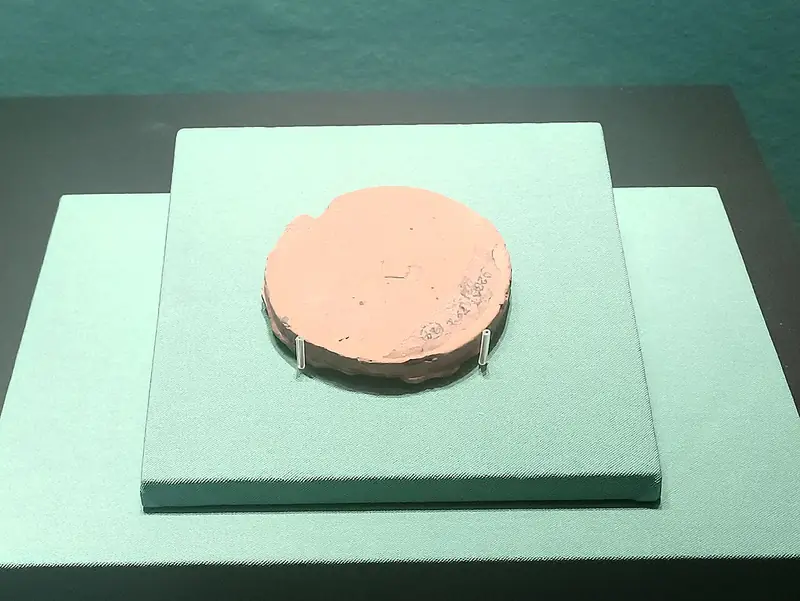
Pottery bearing incised signs is a defining feature of the discoveries. The site gave its name to the Shuangdun archaeological culture.
The site was discovered by the Bengbu Museum in November 1985 during the second national survey of cultural relics, and a rescue excavation followed in 1986. The Anhui Provincial Institute of Cultural Relics and Archaeology carried out two further excavations, in 1991 and 1992; the three digs together covered about 375 square meters within a depression in the site's southeast, and produced large quantities of pottery, stone, shell, bone and horn tools, along with abundant snail and mussel shells and animal bones. In November 2005, a seminar on the site and its finds formally established the name 'Shuangdun culture.'
The site sits on a triangular terrace about 4 kilometers south of the Huai River and 2.5 kilometers north of the Bei Fei River, with a central area of about 12,000 square meters. Among its finds, 607 pottery pieces bear incised symbols, a distinctive feature that gave the site's culture its name. In 2013 the site was listed in the seventh batch of Major Historical and Cultural Sites Protected at the National Level (全国重点文物保护单位).
What to look for
- Neolithic pottery with incised signs distinguishes the discoveries.
- The terrace settlement gave its name to Shuangdun culture.
Location & getting there
Getting to Shuangdun site
Use Shuangdun village in Bengbu’s Huaishang district as the approach area, north of the Huai River. Arrange access to the named interpretation or visitor area rather than entering archaeological ground independently.
- Confirm the visitor entrance and access to the named areas before departure.
Combine your visit
A suggested sequence through the named features described in the source.
-
Site interpretation
Examine Site interpretation as a separate part of Shuangdun site.
-
Designated terrace-site viewing area
Examine Designated terrace-site viewing area as a separate part of Shuangdun site.
The order is an editorial suggestion. Internal opening arrangements and transfers between sectors need checking; no walking duration or access entitlement is implied.
Find Shuangdun site
双墩遗址 · 蚌埠市
The pin marks the area, not the entrance.
More places nearby
Approximate straight-line distances between map pins, not travel distances.
Ming Imperial Tombs (Fengyang) 明皇陵
27 km awayThe Ming Imperial Tombs near Fengyang were built by Zhu Yuanzhang for his parents between 1366 and 1379. They lie south of the county town, separate from the imperial mausoleums near Nanjing and Beijing.
View guide →Shou County City Wall 寿县古城墙
68 km awayShou County’s city wall preserves a complete sense of an enclosed historic town. Its four gates are Binyang, Tongfei, Dinghu and Jinghuai, and their barbicans remain important parts of the defensive layout.
View guide →Shou County 寿县
69 km awayShouxian’s old walled centre preserves a compact view of the region’s urban history. The city walls and moat give the settlement its outline, while Bao’en Temple, the Confucian temple and mosque reveal different religious…
View guide →Sources & visit information
The linked encyclopedia sources support background and place descriptions. Current opening hours, ticket prices, booking rules and transport schedules have not been independently verified for this guide. Confirm them with the venue or operator before travelling.
Visitor information adapted and edited from Wikipedia contributors, “双墩遗址” · CC BY-SA 4.0. Source revision 88915331.
Background paragraphs translated and condensed from Wikipedia contributors, "双墩遗址", Chinese Wikipedia · CC BY-SA 4.0. Source revision 88915331.
Image credits & notes (1)
- Shuangdun site (双墩遗址), Bengbu. Photograph: "安徽蚌埠双墩遗址-十字形刻符陶片-双墩文化-蚌埠市博物馆".Photo: Kcx36 · CC BY-SA 4.0Resized for the web; the photo itself has not been edited. Thumbnails may show a cropped view.
