

Damao Roast Saddle of Lamb 达茂烤羊背
Damao Roast Saddle of Lamb is featured among the local specialties of Inner Mongolia.
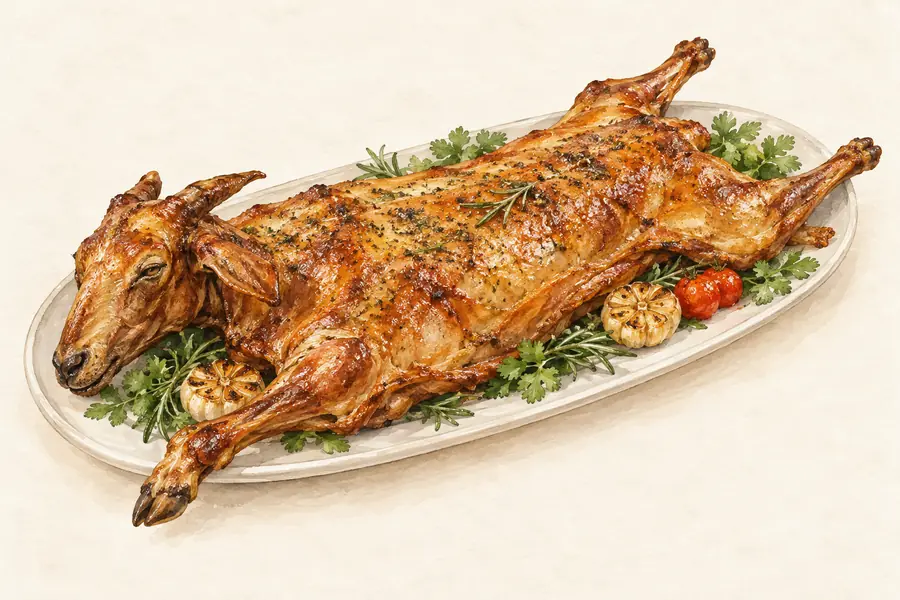
Damao Roast Saddle of Lamb (达茂烤羊背) is a roast back of lamb from Darhan Muminggan United Banner (达尔罕茂明安联合旗), usually shortened to Damao Banner, a herding banner of Baotou (包头) that borders Mongolia to the north.
Where it comes from
The Damao Banner government lists roast lamb back (烤羊背) among the Mongolian foods visitors can try in Xilamuren (希拉穆仁镇), a herding town in the south-east of the banner, 90 km from the banner seat at Bailingmiao (百灵庙镇). It sits on that list with dairy foods, milk tea, hand-held mutton, roast leg of lamb and whole roast lamb. The same government describes the Xilamuren grassland as the first tourist area opened in the autonomous region.
In Bailingmiao itself, People's Daily reported in 2015 that roast lamb back was among more than 40 Mongolian dishes laid out at a food and handicraft fair on Guangfu Square, part of the second 'Aibugai' (艾不盖) culture festival.
The banner has its own lamb: Damao lamb (达茂羊肉) is a national geographical-indication product, and 'Damao Grassland Sheep' (达茂草原羊) was registered as a geographical-indication certification mark in 2008. Inner Mongolia News Network (内蒙古新闻网) describes the fresh meat as bright or deep red, thick and firm, marbled with fat, juicy and free of a muttony smell.
How it is made
Inner Mongolia News Network, in its list of Baotou's ten specialities, describes the Baotou dish Golden Knife Roast Lamb Back (金刀烤羊背) as one that Mongolians make only for very grand, festive occasions. As Mongolian cooks put it, apart from the legs, all of a sheep's meat is on its back, so the dish is a very large one. A dressed lamb back from grassland pasture is marinated for 24 to 36 hours with angelica root (当归) and more than thirty other herbs and natural seasonings, then roasted for about two hours in a purpose-built oven. The fuel must be charcoal from woods such as wild apricot, peach, plum and birch, or from 'zagemu' (扎格木), a plant that grows in the desert. The result is described as crisp outside and tender inside, dry-crisp rather than greasy, with no gamey taste.
Sources & reading
Written from the linked sources and fact-checked against them on 2026-09-24. Recipes and servings vary between kitchens.