


Photo adjustments
Wikimedia thumbnail; fitted to the ranking-card frame.
Explore the region
About Fanjingshan
Mushroom Stone has a broad upper section balanced on a narrower base, while the Red Clouds Golden Summit rises as a separate rocky landmark above the temple area. Weather and visitor controls determine which upper routes can be used. Choose the correct mountain gate before booking and treat summit steps as an optional extension of a high-altitude scenic visit.
Fanjingshan has been considered a sacred mountain by local peoples since antiquity and was first recorded in official histories under the Han dynasty, when it appeared under the name Sanshangu (三山谷); Buddhism reached the mountain around the Song dynasty. By the early Ming the mountain was already known by several names at once, including Jiulong Mountain (九龙山), Fanzeng Mountain (饭甑山), Fanjingshan (梵净山) and Dafo Mountain (大佛山), reflecting its Buddhist prominence at the time; Fanjingshan, meaning “Fantian Jingtu” (梵天净土), or “Brahma's Pure Land”, is now the mountain's official name, while Fanzeng Mountain and Dafo Mountain remain in popular use.
Fanjingshan lies at the junction of Yinjiang, Jiangkou and Songtao counties in Tongren, and is the main peak of the Wuling Mountains; its highest point, Fenghuang Peak (凤凰山), reaches an elevation of 2,572 meters. Its relative isolation has helped preserve a high degree of biodiversity, including species found only in a small area centered on the mountain.
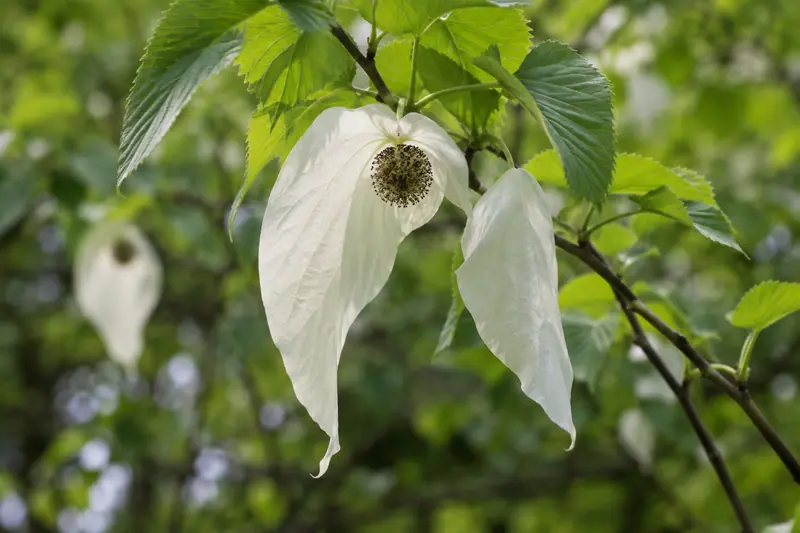
Its original ecology is considered well preserved: the United Nations listed it as a first-tier world ecological protection zone in 1982, and it was inscribed on the World Heritage List in July 2018 at a session held in Manama, Bahrain. The mountain supports rich wildlife and plant resources, including rare species such as the Guizhou golden monkey (黔金丝猴) and the dove tree (珙桐).
What to look for
- Mushroom Stone has a distinctive broad top and narrow base.
- The Red Clouds Golden Summit and Cheng’en Temple create contrasting rock and architectural landmarks.
Location & getting there
Getting to Fanjingshan
The east gate is at Heiwanhe in Jiangkou County; the west gate is by Huguo Temple in Yinjiang County. The operator states that tickets for the two gates are not interchangeable and that sightseeing vehicles carry visitors to the respective walking-route starts. Book the gate that matches your road transfer.
Combine your visit
Suggested order for the visit:
-
Selected gate and mountain transport
Use the booked entrance and official vehicle connection.
-
Mushroom Stone and temple area
Visit the open upper scenic paths.
-
Summit viewpoint, when permitted
Continue only if weather, access and fitness allow.
This is an editorial sequence of named spaces or places. It does not imply a verified walking connection or promise opening, ticket availability or a journey time.
Find Fanjingshan
梵净山 · 铜仁
The pin marks the area, not the entrance.
More places nearby
Approximate straight-line distances between map pins, not travel distances.
Yamugou 亚木沟
13 km awayYamugou pairs a narrow stream gorge with a developed Tujia cultural park. The gorge route uses boardwalks beside the water, letting the close rock walls and vegetation define the natural part of the visit. The cultural park…
View guide →Daming Border City 大明边城
56 km awayDaming Border City is a modern visitor complex beside Tongren’s Jin River, created around themes from Guizhou’s Ming-period frontier history. Its recreated townscape and public river setting provide the physical basis for a…
View guide →Miaowangcheng Village 苗王城
56 km awayMiaowangcheng’s houses and lanes occupy a defensible riverside setting in Songtao. Timber stilt houses follow the slope, while the winding stone passages reflect the old settlement’s enclosed layout. The developed visitor route…
View guide →Sources & visit information
The sources below support the place-specific description and arrival information. Suggested combinations are editorial planning ideas; confirm current opening, entry arrangements and transport services for your date.
- Fanjingshan ↗
- Wikivoyage: Tongren (Guizhou) ↗
- Fanjingshan operator: visitor notice ↗
- Fanjingshan operator: scenic features ↗
- Chinese Wikipedia: 梵净山 (revision 82695953, 2024-05-19) ↗
- English Wikipedia: Fanjingshan (revision 1369133591, 2026-08-13) ↗
Visitor information adapted and edited from Wikipedia contributors, “Fanjingshan” · CC BY-SA 4.0. Source revision 1369133591.
Visitor information adapted and edited from Wikivoyage contributors, Tongren (Guizhou) · CC BY-SA 4.0. Source revision 5203440.
Background paragraphs translated and condensed from Wikipedia contributors, "梵净山", Chinese Wikipedia · CC BY-SA 4.0. Source revision 82695953.
Background paragraphs condensed from Wikipedia contributors, "Fanjingshan", English Wikipedia · CC BY-SA 4.0. Source revision 1369133591.