

Explore the region
About Qingtongxia
The 108 Pagodas give the riverside a distinctive historic landmark, while the Grand Canyon visitor area offers a broader view of the water and surrounding slopes. The modern Yellow River Tower is another destination in the municipality, with its own access. These places should be planned as named stops rather than one undifferentiated city pin.
The exact date the 108 Pagodas (一百零八塔) were built is not recorded, but they are known to predate the Ming dynasty, and stupas excavated there have yielded relics from the Western Xia period. In 1958, construction of the Qingtongxia reservoir required demolishing an ancient temple site and two of the stupas standing in the area to be flooded; the excavation recovered a Western Xia silk banner painting and sutra fragments, and this discovery halted a plan to relocate the entire group of 108 stupas.
The pagodas stand on twelve stepped stone terraces cut into a hillside above the Yellow River, arranged from bottom to top in a triangular pattern that narrows toward the summit. The topmost stupa is the largest, with a hollow chamber, while the other 107 are smaller solid structures, each built around a wooden post inside a mud-brick core faced with a single layer of brick.
The site was first listed as a protected heritage site by the Ningxia region in February 1963, restored between 1987 and 1988 with approval from the State Administration of Cultural Heritage (国家文物局), and inscribed in the third batch of Major Historical and Cultural Sites Protected at the National Level (全国重点文物保护单位) in 1988.
What to look for
- The 108 Pagodas occupy stepped terraces beside the Yellow River.
- The gorge landscape explains the importance of the river corridor.
Background & history
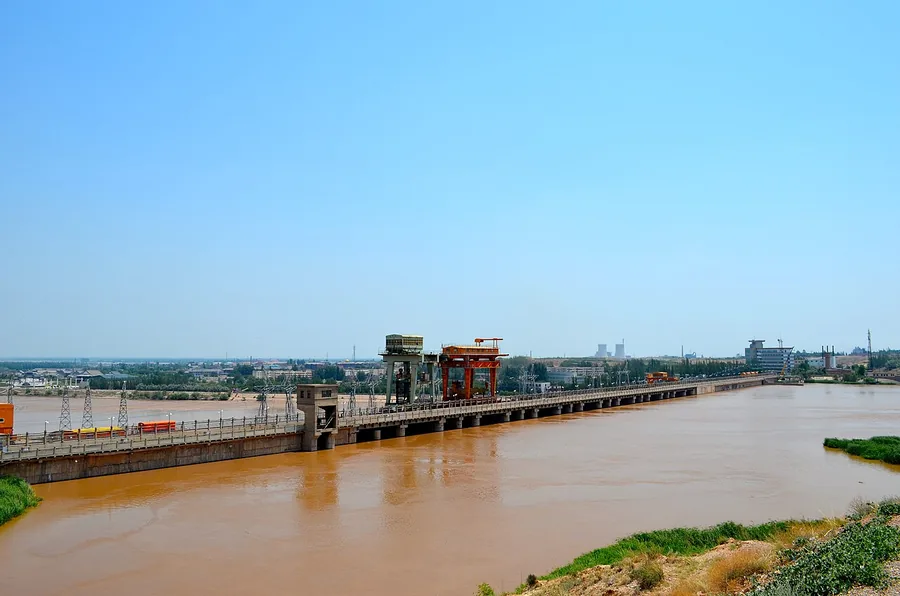
Qingtongxia (simplified Chinese: 青铜峡; traditional Chinese: 青銅峽; pinyin: Qīngtóngxiá; Wade–Giles: Ch’ing-t’ong-hsia; lit. 'Bronze Gorge', Xiao'erjing: ٿٍْطْوثِيَا شِ) is a city in north-central Ningxia, China. Administratively, Qingtongxia is a county-level city within the prefecture-level city of Wuzhong. It is located on the left (northwestern) bank of the Yellow River, opposite and a bit upstream of Wuzhong main urban area, and borders Inner Mongolia to the west. Qingtongxia had 264,717 residents in 2010. Many residents of Qingtongxia are Hui Muslim.
Excerpt from Wikipedia: Qingtongxia · Wikipedia contributors · CC BY-SA 4.0. Selected introductory sentences; formatting simplified. Background information, not current visitor-service advice.
Location & getting there
Getting to Qingtongxia
Choose the Qingtongxia Yellow River Grand Canyon visitor entrance for the gorge and pagoda outing. Confirm which road or boat route serves your ticket; the administrative city centre and Yellow River Tower are separate arrival locations.
Combine your visit
Choose from these complementary stops when planning your visit.
-
Grand Canyon visitor centre黄河大峡谷游客中心
Confirm the chosen river route.
-
108 Pagodas一百零八塔
Visit the protected stepped tower group.
-
Yellow River viewpoint黄河观景处
Finish with the gorge landscape on the same operating route.
This is a suggested combination, not a timed route; confirm the opening and transport arrangements for your date.
Find Qingtongxia
青铜峡 · 吴忠
The pin marks the area, not the entrance.
More places nearby
Approximate straight-line distances between map pins, not travel distances.
108 Pagodas 一百零八塔
2 km awayThe 108 Pagodas form a triangular arrangement on stepped terraces above the Yellow River at Qingtongxia. Their repeated white forms are the main distant impression, but the towers have several different shapes. Western Xia…
View guide →Dong Mansion 董府
9 km awayDong Mansion was built for the late-Qing military commander Dong Fuxiang near Jinjibao. High outer walls enclose a series of residential courtyards whose brick and timber details reward close observation. Animal, plant and…
View guide →Yellow River Tower 黄河楼
18 km awayYellow River Tower is a modern cultural landmark in Qingtongxia, designed with traditional-looking layered roofs and a monumental approach. Its exhibitions interpret the Yellow River through national and Ningxia history, while…
View guide →Sources & visit information
The linked encyclopedia sources support background and place descriptions. Current opening hours, ticket prices, booking rules and transport schedules have not been independently verified for this guide. Confirm them with the venue or operator before travelling.
- Qingtongxia — Wikipedia geographic and historical reference ↗
- 一百零八塔 — Wikipedia geographic and historical reference ↗
- Chinese Wikipedia: 一百零八塔 (revision 93360960, 2026-07-08) ↗
Geographic and historical facts selectively adapted from Wikipedia contributors, Qingtongxia · CC BY-SA 4.0. Source revision 1356887798.
Geographic and historical facts selectively adapted from Wikipedia contributors, 一百零八塔 · CC BY-SA 4.0. Source revision 93360960.
Background paragraphs translated and condensed from Wikipedia contributors, "一百零八塔", Chinese Wikipedia · CC BY-SA 4.0. Source revision 93360960.
Image credits & notes (1)
- Qingtongxia dam across the Yellow River, Ningxia. Photographed on 12 June 2013.Photo: AddisWang · CC BY-SA 3.0Resized for the web; the photo itself has not been edited.
