

Dalian Pan-Fried Starch Jelly 大连焖子
Dalian Pan-Fried Starch Jelly is featured among the local specialties of Liaoning.
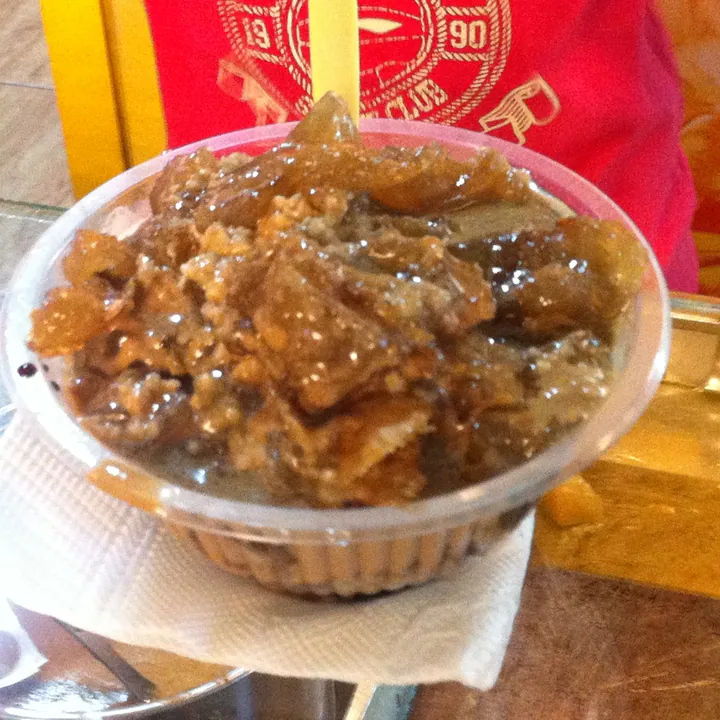

Photo adjustments
Full frame retained; proportionally resized and converted to WebP. No retouching or changes to the photographed subject. Card displays may crop the view.
Dalian Pan-Fried Starch Jelly (大连焖子) is a local snack of Dalian (大连), Liaoning: a jelly made mainly from sweet potato starch, cut into pieces, fried slowly over a low flame and dressed with garlic oil, soy sauce and sesame paste.
Where it comes from
Dalian's version descends from the menzi of Yantai (烟台) in Shandong and was brought over by migrants during the 'Crossing to the Northeast' (闯关东) movement. It was once street food, and the Dalian Modern Museum (大连现代博物馆) has a bronze figure of a woman frying menzi. At the Xinghai Market (星海市集) street fair, one of Dalian's culture-and-tourism projects of 2023, Liaoning Daily named fried menzi among the foods on sale there, which ran from local snacks to trendy products.
How it is made
The base is sweet potato starch; cooks blend in a little potato starch, or mung bean starch. The mixture is steamed into a block, cut up and fried on an iron griddle over a gentle heat. Dalian cooks follow the rule of 'three flips and nine turns' (三翻九转) while frying, which produces the distinctive crisp-fried 'menzi ga' (焖子嘎).
Flavour and texture
Fried menzi is crisp outside and tender within. The aim is to bring out the aroma of the jelly and its dressing, while the pieces keep a certain springiness.
How it is eaten
The dressing is garlic oil, soy sauce and sesame paste poured over the fried pieces. From the 1990s, seafood versions appeared, such as a double seafood platter (海味双拼) and 'three-delicacy menzi' (三鲜焖子), which some restaurants serve as a dish that brings in Dalian's seafood; there are also newer crossover versions with cheese or black-pepper beef.
Sources & reading
Written from the linked sources and checked sentence by sentence against quoted extracts by a separate reviewer on 2026-09-24. Recipes and servings vary between kitchens.