

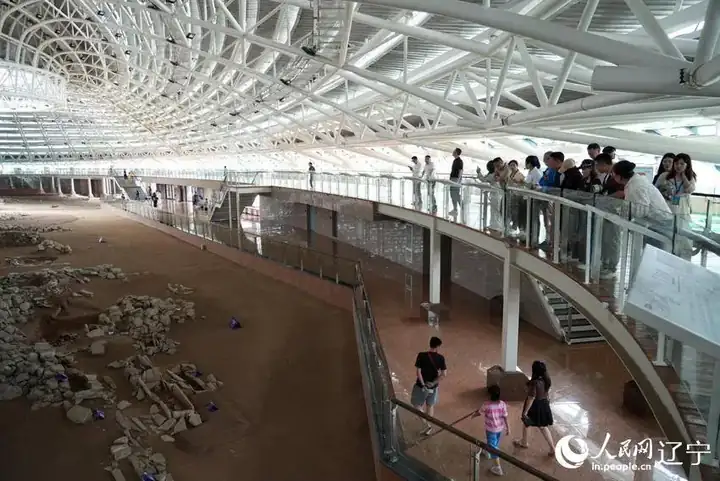
Photo adjustments
EXIF orientation normalized; resized without changing aspect ratio; converted to WebP. No subject edits.
Explore the region
About Niuheliang Archaeological Site Park
Niuheliang is a major Hongshan-culture archaeological complex in western Liaoning. Its ceremonial remains and burials offer evidence of organised ritual life thousands of years before China’s imperial dynasties. The site covers several archaeological locations, so a visit depends on understanding a wider landscape rather than looking for one reconstructed ancient city.
Excavations have revealed features associated with ceremonial platforms, stone-built burial arrangements and objects including finely worked jade. Museum interpretation connects these finds with the development of complex communities in the region. The physical remains and the objects serve different roles: one records the organisation of space, while the other reveals materials, craft and burial practice.
Begin with the museum’s site plan and chronology, then visit the archaeological displays included in the current route. Distinguish an excavated feature from a drawing or reconstruction explaining it. Many questions about prehistoric belief remain matters of archaeological interpretation, so follow the evidence and labels rather than treating an imagined ritual scene as a directly documented event.
What to look for
- Use the site plan to connect the separate excavation areas.
- Compare jade objects with their burial context.
- Distinguish archaeological remains from interpretive reconstructions.
Location & getting there
Getting to Niuheliang Archaeological Site Park
Use 牛河梁国家考古遗址公园 in the Jianping–Lingyuan area. Confirm the museum entrance and the archaeological sections included in the current visit.
- Use 牛河梁国家考古遗址公园 with Liaoning when searching for the visitor entrance.
Find Niuheliang Archaeological Site Park
牛河梁国家考古遗址公园 · 凌源市/建平县
No reliable map pin yet: search by the Chinese name.
Sources & visit information
Place identity, setting and described features checked against the linked institutional sources on 9 September 2026. Suggested observation and visiting sequences are editorial guidance. Current opening arrangements and access to individual interiors must be checked with the venue; this review adds no inferred map coordinates.