


Photo adjustments
Full frame retained; EXIF orientation normalized, proportionally resized to at most 800 pixels and converted to WebP. No generated pixels or subject changes. Cards may crop the display.
Explore the region
About Jin Shangjing History Museum
Jin Shangjing History Museum (金上京历史博物馆) is a museum of Jin-dynasty history in Acheng District (阿城区) of Harbin (哈尔滨), Heilongjiang, 2 km south along Yanchuan Street (延川大街).
Acheng holds the ruins of Shangjing Huining Prefecture (上京会宁府), the Jin capital from 1115 until 1153, when Wanyan Liang (完颜亮) moved the court to Yanjing (燕京). The site, a northern and a southern city with an imperial city modelled on the Northern Song capital at Kaifeng (开封), covers about 6 km² and has been a national key protected site since 1982. The museum has managed the Jin Taizu Mausoleum (金太祖陵) since 2012, and the district government lists the mausoleum site park among its duties.
The museum opened in 1961 as the Acheng County Museum, was turned into a relics office in 1965 and took its present name when it was re-established in 1986. Work on a new building at another site started in 1987. Designed by the architect Qi Kang (齐康) with Jin-style features, it opened on 8 October 1998, and that year its Jin Shangjing history display won an award in the second national selection of the ten best museum exhibitions. The museum was rated a national third-grade museum in 2013 and appears in the third batch of second-grade museums, announced in 2018.
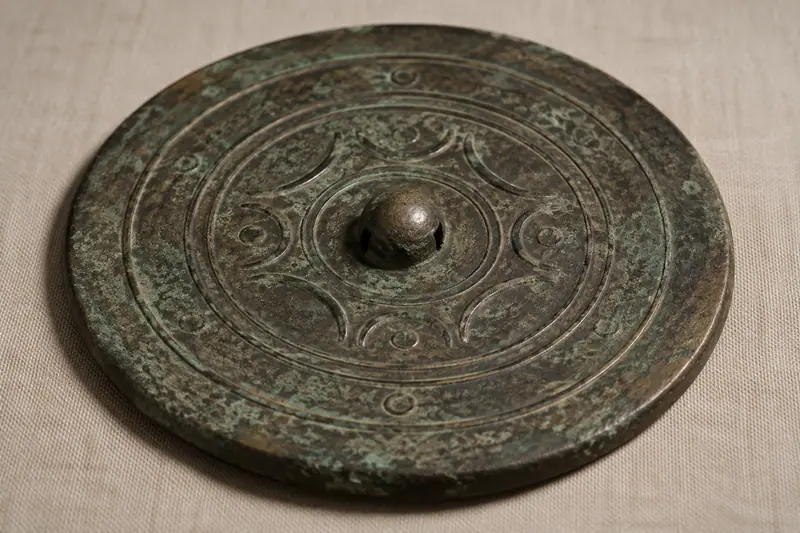
Nine halls, five above ground and four below, follow the rise of the Jurchens (女真), the height of Shangjing, Jin culture and figures, the Wanyan clan's descendants, Shangjing and Zhongdu (中都), the link between Jurchens and Manchus, and Jin bronze mirrors. In 2009 the collection counted more than 1,791 items or sets, 20 of them first-grade national relics. Two galleries sit inside the museum: one opened in 2006 for more than 80 prints and other works donated by Chao Mei (晁楣), and one opened in 2007 for Jin stone implements.
What to look for
- The bronze seated dragon (铜坐龙), a first-grade relic excavated at the Shangjing Huining site
- A double-carp bronze mirror 43 cm across and weighing 12.4 kg
- More than 200 Jin-dynasty bronze mirrors, a hall of their own
- The statue of Wanyan Aguda (完颜阿骨打) in the museum courtyard
- Chao Mei Art Gallery (晁楣艺术馆), with more than 80 prints and over 20 Chinese paintings and calligraphy works
- The Nian family stone implement gallery (粘氏石器馆), showing Jin stone tools
Location & getting there
Getting to Jin Shangjing History Museum
- Search for 金上京历史博物馆 with 哈尔滨市 and 阿城区.
Find Jin Shangjing History Museum
金上京历史博物馆 · 阿城区
No reliable map pin yet: search by the Chinese name.
Sources & visit information
Written from the linked sources and checked sentence by sentence against quoted extracts by a separate reviewer on 2026-09-23. Opening hours, admission and access arrangements are not covered; confirm current visitor information with the site.
Some facts checked against Wikipedia contributors, "金上京历史博物馆" · CC BY-SA 4.0.
Some facts checked against Wikipedia contributors, "会宁府" · CC BY-SA 4.0.
Some facts checked against Wikipedia contributors, "国家二级博物馆" · CC BY-SA 4.0.