
Northeast · Destination guide
Heilongjiang 黑龙江
Heilongjiang occupies China's far northeast, with Harbin as its capital and a landscape that reaches from agricultural plains to forests, wetlands and volcanic lakes. Winter ice imagery is only one part of the province's appeal. Harbin offers architectural streets, music and river life; Qiqihar provides a different food-and-wetland base; Wudalianchi and the Jingpo Lake area belong to separate volcanic regions. Choose the season and regional route together, leaving enough time for the distances and conditions outside the main cities.

Heilongjiang at a glance
- Population
- 30,010,000Year-end resident population, entire provincial-level administrative area · 2025Source ↗
- Income per person
- 32,851Mean annual disposable income per person, all residents · 2025 · CNYSource ↗
- Languages & dialects
- Mandarin and northeastern Chinese speech; Harbin dialect belongs to Northeastern Mandarin (东北官话).Source ↗
- Geography
- Northeastern forests and mountain ranges surround the Songnen and Sanjiang agricultural plains.Source ↗
- Elevation
- Plains generally 50–200 m; plateaus 200–350 m; much mountain terrain 300–1,000 m.Typical landform bands, not absolute minimum and maximum elevations.Source ↗
- Main gateway
- HarbinProvince
Map & places
Explore Heilongjiang
Browse places and sight guides by category, or choose a city below the map to see its location and boundary.
Browse 97 places; 65 have map coordinates. Some listings cover overlapping areas.
Colour-coded categories. Pins are approximate; confirm entrances and routes in Amap or Apple Maps before setting off. District boundaries: © OpenStreetMap contributors (ODbL), simplified, for travel reference only.
Cities, counties & districts in Heilongjiang
Select a city name to show its boundaries on the map above; its details remain available separately.
Top sights in Heilongjiang
- 1Trip.Best #1
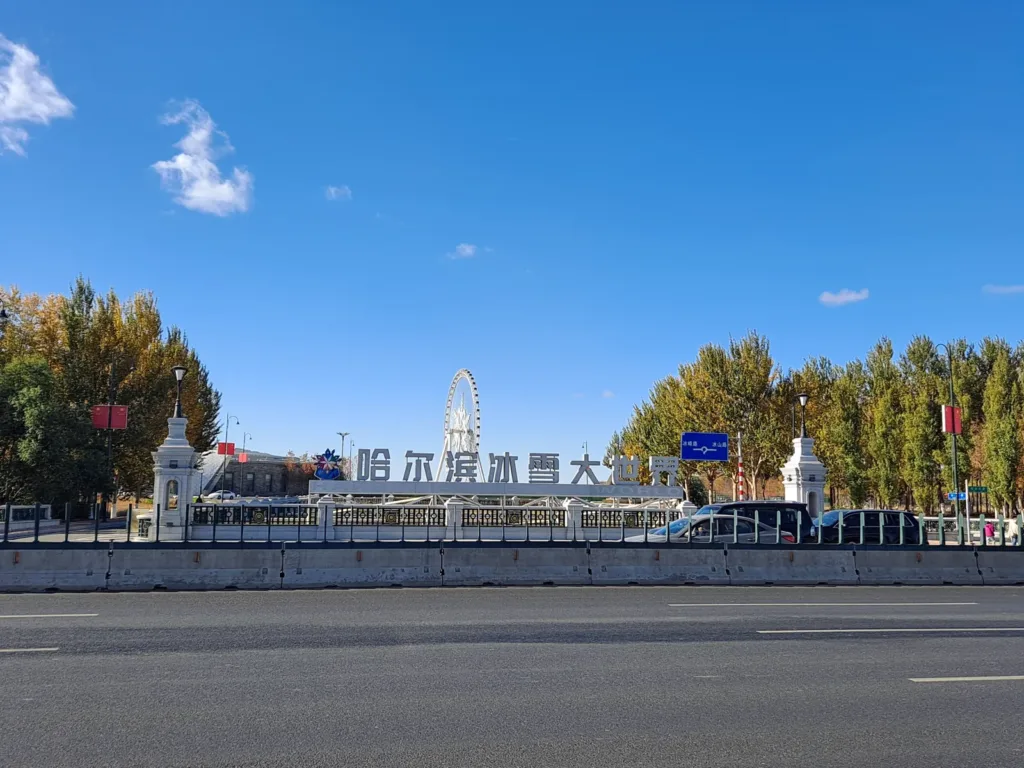
Harbin Ice and Snow World哈尔滨冰雪大世界
Harbin Ice and Snow World is a seasonal outdoor park of large river-ice architecture and coloured night scenes in Songbei District, beside the western side of Sun Island. Its separate Dream Ice and Snow Pavilion brings real-ice and snow displays indoors beyond the outdoor winter build.
- 2Trip.Best #2
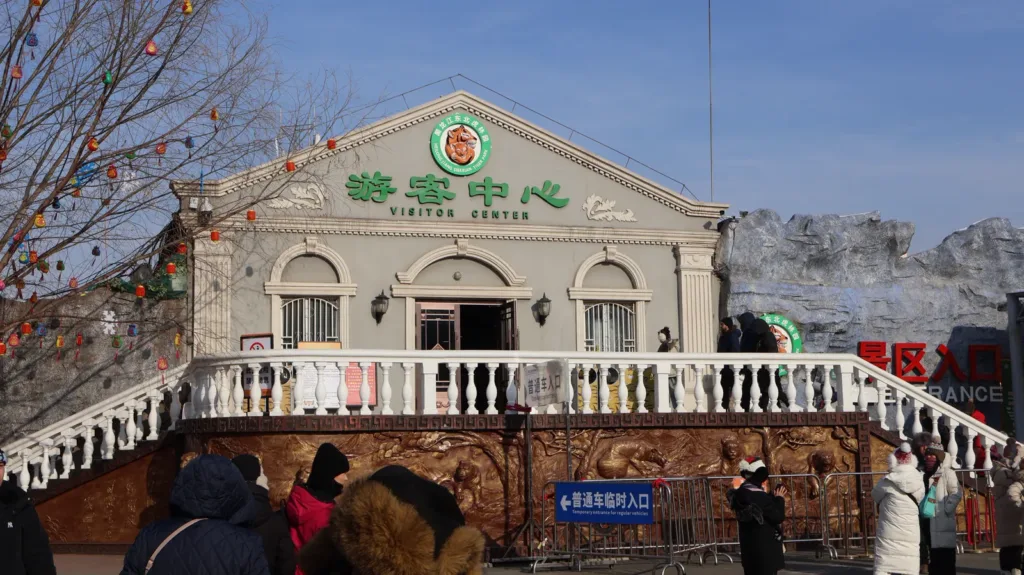
Siberian Tiger Park东北虎林园
Siberian Tiger Park (东北虎林园, Dongbeihu Linyuan) is a managed Northeast tiger park on the north bank of the Songhua River in Songbei, where a protected park vehicle takes visitors through large outdoor enclosures. Its value is a close look at Amur tiger conservation and cold-climate animal management—not a search for wild tigers in a reserve.
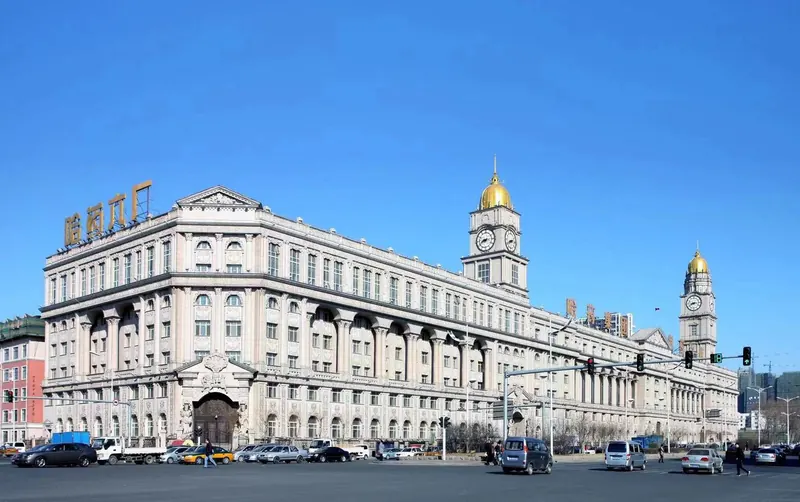 3Trip.Best #3
Hayaoliu Print Museum哈药六版画博物馆
The Hayao Six Print Museum occupies the former Harbin Pharmaceutical No. 6 Factory building in Daowai District, Harbin, known for its Louvre-inspired, palace-style interior. Visitors tour the ornate halls and galleries of Chinese and international prints.
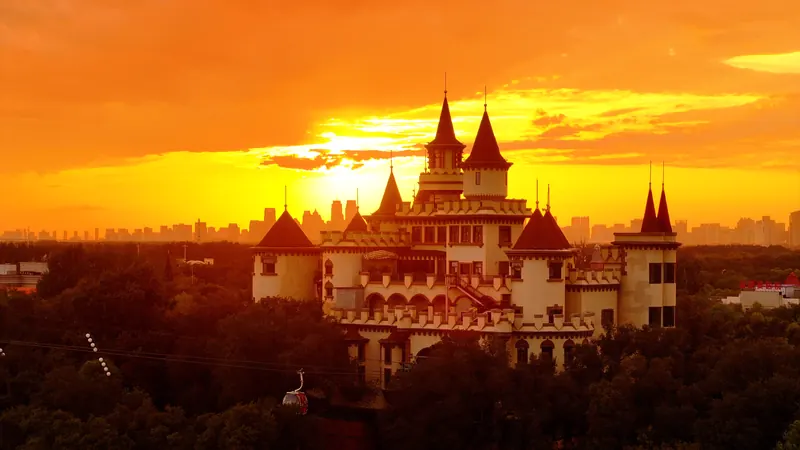 4Trip.Best #4
Harbin Sightseeing Cableway松花江观光索道
The Songhua River Sightseeing Cableway is a cable car crossing the Songhua River in Harbin’s Daoli District, linking Tongjiang Street near Stalin Park and Zhongyang Street with Sun Island between two castle-style stations.
- 5Trip.Best #5
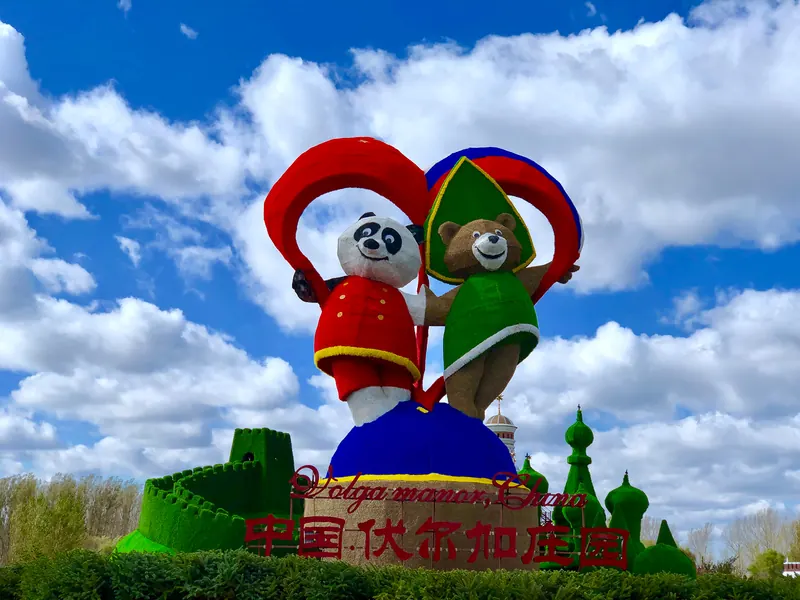
Volga Manor伏尔加庄园
Volga Manor is a Russian-themed landscape on the Ashi River in Harbin's Xiangfang District, with reconstructions recalling the city's older architecture.
- 6Trip.Best #6
Arctic Village北极村
Beiji Village builds its identity around northern latitude and the Heilongjiang border river.
- 7Trip.Best #7
Harbin Polarland哈尔滨极地公园
Harbin Polar Park is a complex of themed animal and science-learning venues in the Sun Island area of Songbei.
- 8Trip.Best #8
Sun Island (Harbin)太阳岛
Sun Island is a broad riverside park on Harbin’s north bank, where open lawns, trees, water and wetland scenery make a slower counterpart to the city centre. Its Sun Lake and Shui Ge Yun Tian pavilion are year-round landscape features; the Sun Island International Snow Sculpture Art Expo is a separate winter-season event.
- 9Trip.Best #9
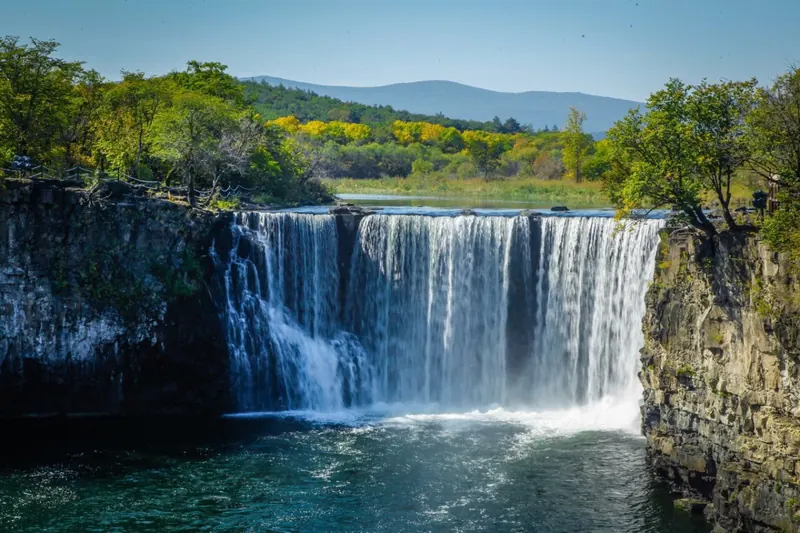
Jingpo Lake镜泊湖
Jingpo Lake owes its long, winding shape to lava flows that blocked the Mudan River. The northern end gives a compact introduction to that volcanic landscape: Diaoshuilou Waterfall drops over dark rock, while the lakeside…
- 10Trip.Best #10
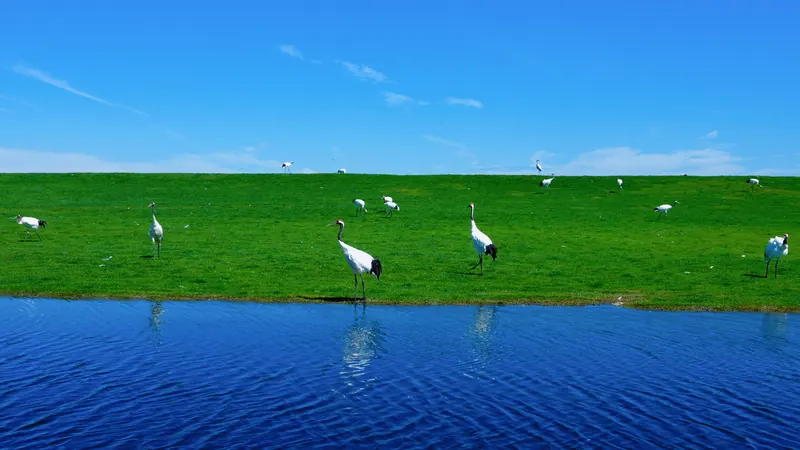
Zhalong Ecotourism Area扎龙生态旅游区
Zhalong is a large reed-marsh wetland landscape near Qiqihar, best known for its connection with red-crowned cranes. Water channels, reedbeds and open feeding areas form the setting. The public visitor area introduces this ecology while occupying only part of a much wider protected wetland.


Heilongjiang travel guides
In-depth articles and itineraries for planning your time in Heilongjiang.
SOON
Itinerary
3 days in Heilongjiang: a first-timer's itinerary
How to split your days between the essential sights, neighbourhood walks and a relaxed evening, with transport tips between each stop.
Coming soonSOON
Food
Where to eat in Heilongjiang
Local dishes worth seeking out, how to order and what to expect.
Coming soonSOON
Transport
Getting around Heilongjiang by metro and taxi
Cards, apps and station tips for moving between sights.
Coming soonSOON
Day trip
Day trips from Heilongjiang
Plan the outward and return journeys and visiting time before mapping out your day.
Coming soonSOON
Neighbourhoods
Neighbourhood walks in Heilongjiang
Discover everyday Heilongjiang on a slow walk.
Coming soonSOON
Seasons
Choosing a season for Heilongjiang
See how visiting changes from spring to winter.
Coming soonLocal dishes
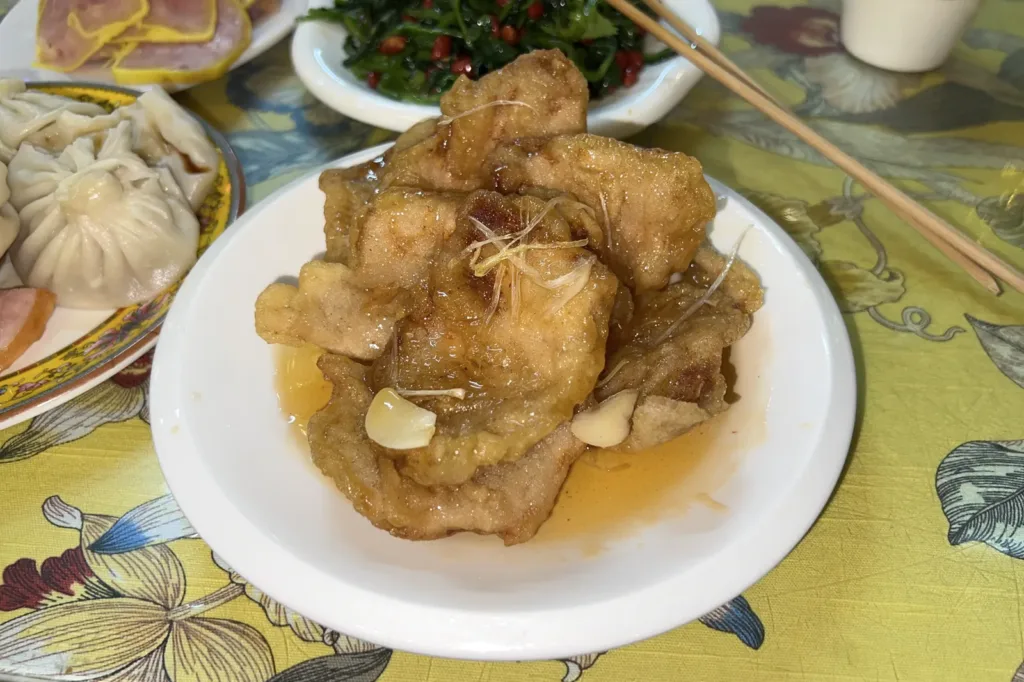
Guobaorou sweet-and-sour pork锅包肉
Guobaorou (锅包肉) is a Harbin-associated northeastern Chinese pork dish: slices are coated in starch, fried until crisp, then quickly tossed with a sweet-and-sour sauce. It is best eaten hot, when the shell still crackles, and recipes vary between Harbin kitchens and elsewhere in Northeast China.
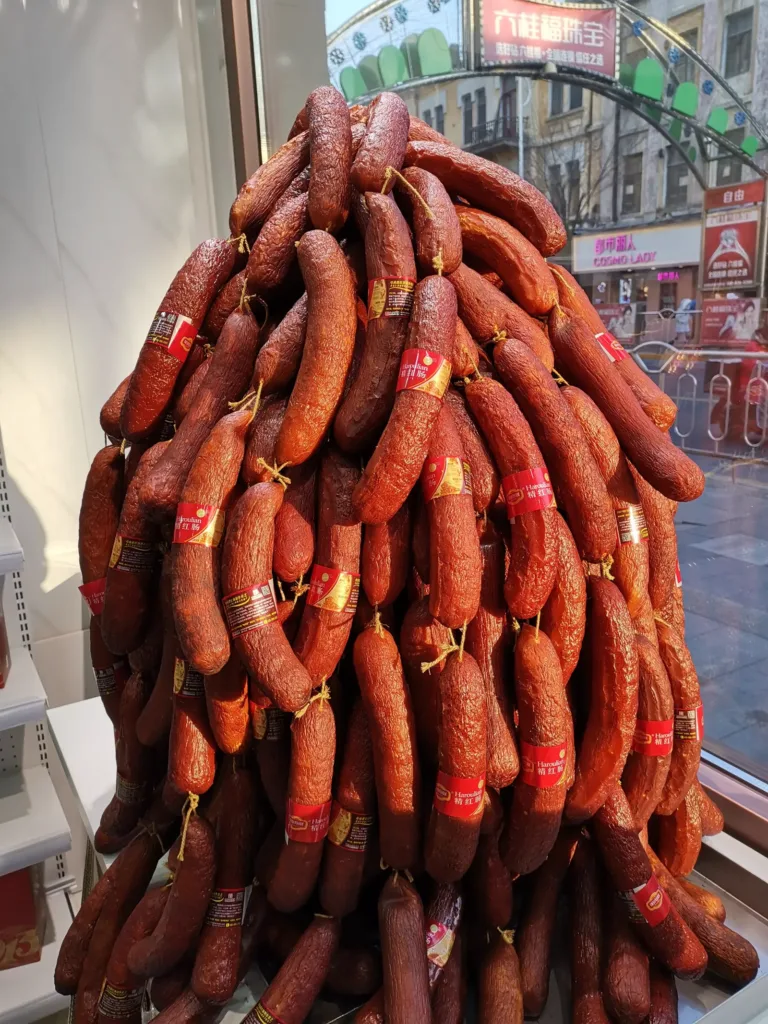
Smoked red sausage哈尔滨红肠
Harbin red sausage (哈尔滨红肠, Ha'erbin hongchang) is a cooked, smoked meat sausage shaped by European food traditions that took root in the city, with a firm slice, dark red casing and maker-specific recipes.
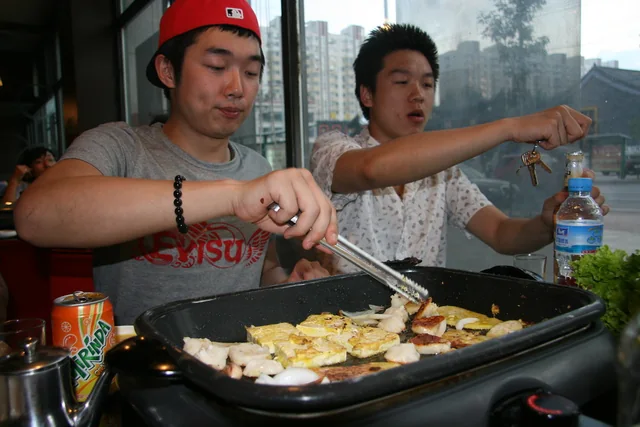
Qiqihar barbecue齐齐哈尔烤肉
Browning gives the meat savory edges while thin slicing keeps the bite manageable. Onion, herbs or dry seasoning can add sharpness and spice.

Qiangmian filled buns戗面包子
AI dish illustration · AI 菜品示意图The bun has a tighter, more substantial crumb than a very airy steamed bun, setting off its moist savory filling. The result still needs fresh steaming to stay tender.

Tofu pudding豆腐脑
The tofu is fragile and silky, while the topping supplies most of the salt, aroma and contrasting texture.
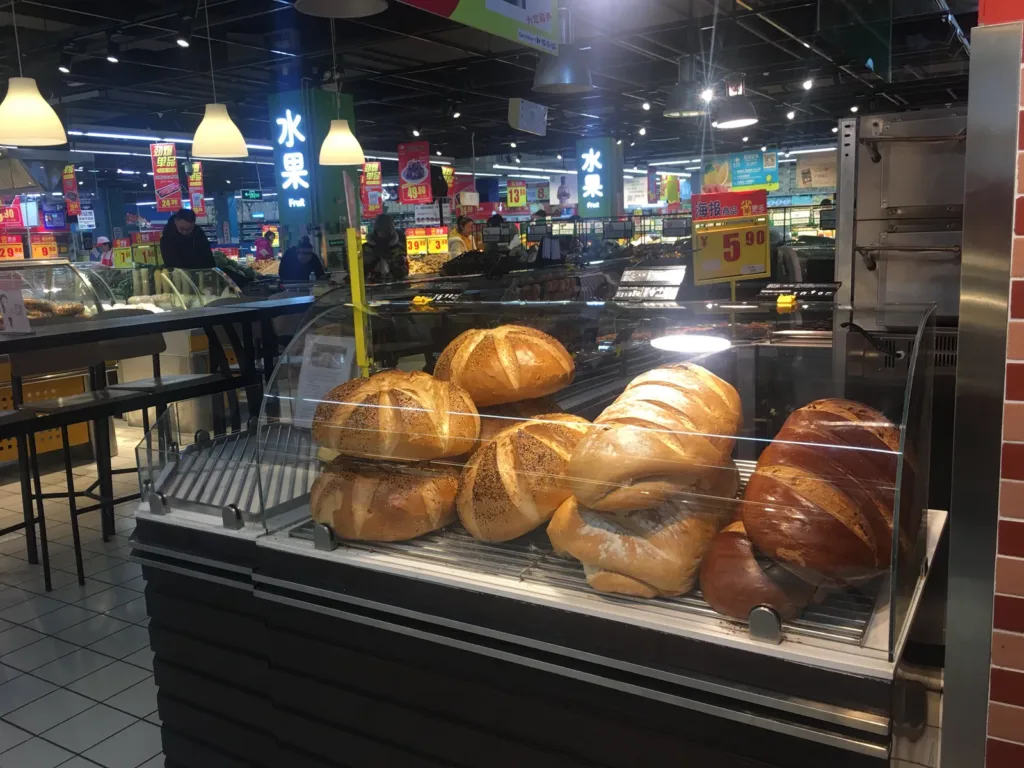
Russian-style large loaf大列巴
Harbin’s 大列巴 (dàlièba, “big bread”) is a large round loaf shaped by Russian baking traditions that arrived with the city’s railway-era migration. A notable Qiulin version uses hop liquid yeast, three fermentations and a hard-wood bake, producing a lightly crisp crust and soft crumb; other bakeries make their own versions.
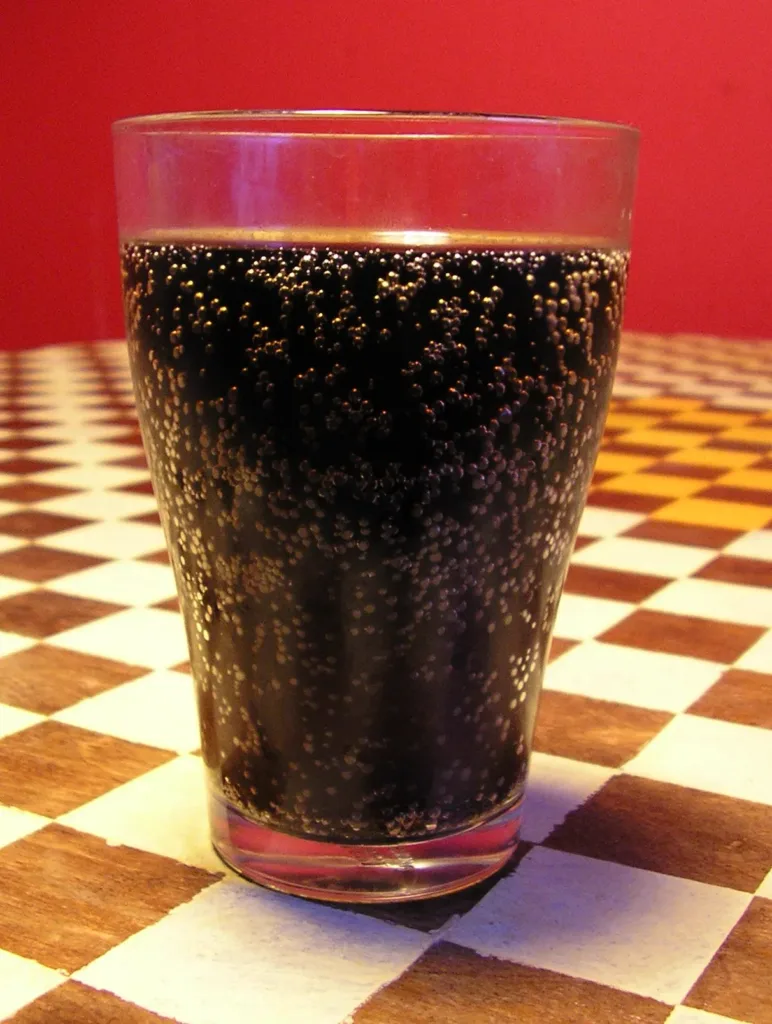
Kvass格瓦斯
Harbin’s kvass is a local drink tradition shaped by Russian foodways; Qiulin’s 大列巴格瓦斯 uses its Russian-style large loaf as a brand-specific base, giving the drink a toasted-bread aroma rather than one universal taste.

Yagou sticky bean buns亚沟粘豆包
Yagou sticky bean buns (亚沟粘豆包) are steamed buns associated with Acheng District, made with a sticky-grain wrapper and a bean filling. Their appeal is the warm, cohesive texture and the winter food tradition behind them, not a single restaurant or fixed recipe.
Arrival, stays & getting around
Arrive, stay & get around Heilongjiang
Check the precise airport or station name on the ticket before arranging the final transfer to your hotel.
Your arrival gateway
Harbin 哈尔滨
This Heilongjiang entry uses Harbin as its selected gateway city. It does not describe transport coverage across the entire region.
Airports
Harbin Taiping International Airport
哈尔滨太平国际机场
Airport west of Harbin; plan an airport road transfer rather than assuming a metro stop at the terminal.
Railway stations
Harbin Railway Station
哈尔滨站
Central rail gateway near the older city districts.
Harbin West Railway Station
哈尔滨西站
Major high-speed rail gateway on the western side of the city.
Metro & city transport
Harbin Metro
哈尔滨地铁
Metro connections serve city sights and rail stations; airport bus travel remains a separate transfer.
Bus stations
Harbin Airport–railway station express bus
哈尔滨火车站—机场快线
A named airport express bus connects the city rail gateway and Taiping Airport; confirm current stops through the airport’s official channel.
More about getting around
Harbin anchors air and rail arrivals, with Qiqihar and Mudanjiang useful onward bases. Nature sites generally need another road transfer after the train. Build in time between an outdoor excursion and your next departure, particularly when winter roads or seasonal access affect the route.
Transport reference review: 2026-09-06. Consult the operator for current services and timetables.
Accommodation
Stay in Heilongjiang
Stay near Harbin's central historic streets for convenient architecture walks and warming breaks. Use Qiqihar or Mudanjiang for their surrounding nature routes, and a scenic-area base for Wudalianchi. In winter, reliable heating and an easy pickup point matter more than a remote view.
Find hotels on Trip.com ↗Change your destination, dates and guests on Trip.com.
Weather
Harbin weather
Loading the current-hour forecast…
Winters can be intensely cold, with short daylight hours and slippery surfaces. Warm-season visits bring much longer days, green landscapes, rain, and insects near wetlands. Carry insulation for extended winter outings and take indoor breaks; northern summer evenings can still feel cool.
Seasons & when to go
Check the city forecast ↗Bookings & travel
Make your travel plans a reality
Stays
Find hotels in Heilongjiang on Trip.com
Change your destination, dates and guests on Trip.com.
Find hotels on Trip.comWhy I recommend Trip.comFlights
Search for flights on Trip.com
Change your destination, dates and passengers on Trip.com.
Search flights on Trip.comWhy I recommend Trip.comTrains
Search for trains on Trip.com
Change your stations, travel date and passengers on Trip.com.
Search trains on Trip.comWhy I recommend Trip.comCars
Browse car rentals on Trip.com
Change your pick-up location and rental dates on Trip.com.
Open Trip.comWhy I recommend Trip.comActivities
Explore activities on Trip.com
Change your destination, dates and participants on Trip.com.
Explore activities on Trip.comWhy I recommend Trip.comFood
Explore local food guides
Browse local dishes, breakfast ideas, snacks and regional cooking.
Explore food guidesWhat to eat in HeilongjiangWritten by China Revealed · Editorially updated 2026-09-07
Maps & transport note
Transport suggestions on this site may be inaccurate or out of date. Confirm your exact destination, visitor entrance, current route and return connection before setting off.
For travel in mainland China, we recommend Amap (高德地图) or Apple Maps (苹果地图) for checking local directions. Both support English. Keep the Chinese place name and full address handy, and compare the result with the venue or transport operator’s latest information.
Do not rely on Google Maps or another overseas map as your only route check for mainland China. Map coverage and features vary, and no app can guarantee an error-free route.
Amap’s English interface depends on the app version and store region. Apple Maps follows your device or app language settings; some place labels may remain in Chinese. Apple states that its map service in China uses AutoNavi (Amap). Features differ in Hong Kong, Macao and Taiwan.
Information checked 2026-09-07.Photo credits (10)
- Harbin Ice and Snow World · HeilongjiangPhoto: Photo by Lin Yang · CC BY-SA 3.0
- Hayaoliu Print Museum (哈药六版画博物馆)Photo: Trip.com
- Harbin Sightseeing Cableway (松花江观光索道)Photo: Trip.com
- Volga Manor (伏尔加庄园)Photo: Trip.com
- Arctic Village (北极村)Photo: Trip.com
- Harbin Polarland (哈尔滨极地公园)Photo: Trip.com
- Jingpo Lake (镜泊湖)Photo: Trip.com
- Zhalong Ecotourism Area (扎龙生态旅游区)Photo: Trip.com
- Qiqihar barbecue (齐齐哈尔烤肉)Photo: kenaxia · CC BY 2.0
- Tofu pudding (豆腐脑)Photo: momo · CC BY 2.0
Sources & useful links (59)
- China National Tourist Office London: Harbin hosted visit
- Heilongjiang foreign affairs: Harbin historical route
- Heilongjiang tourism department: guobaorou
- Government regional portal: red sausage
- Ministry of Culture and Tourism: Qiqihar food route
- Heilongjiang tourism department: Heihe
- National Forestry and Grassland Administration: Zhalong
- UNESCO: Wudalianchi Global Geopark
- UNESCO: Jingpohu Global Geopark
- Heilongjiang — population background
- Heilongjiang — languages background
- Heilongjiang — geography background
- Heilongjiang — Harbin map reference
- Heilongjiang — Qiqihar map reference
- Heilongjiang — Mudanjiang map reference
- Heilongjiang — Saint Sophia map reference
- Heilongjiang — Wudalianchi scenic area map reference
- Heilongjiang — Zhalong wetlands map reference
- Heilongjiang — Jingpo Lake map reference
- Heilongjiang — Sun Island (Harbin) map reference
- Heilongjiang — Harbin Ice and Snow World map reference
- Heilongjiang — Harbin Grand Theatre map reference
- Heilongjiang — Yabuli map reference
- Heilongjiang — Mohe map reference
- Heilongjiang — Huzhong District map reference
- Heilongjiang — Wudalianchi scenic area map reference
- Heilongjiang — Harbin Ice and Snow World map reference
- Heilongjiang attraction ranking source
- Heilongjiang specialty reference — wlt.hlj.gov.cn
- Heilongjiang specialty reference — wlt.hlj.gov.cn
- Heilongjiang specialty reference — wlt.hlj.gov.cn
- Heilongjiang specialty reference — wlt.hlj.gov.cn
- Heilongjiang specialty reference — www.hlj.gov.cn
- Heilongjiang specialty reference — www.hlj.gov.cn
- Heilongjiang specialty reference — wlt.hlj.gov.cn
- Heilongjiang specialty reference — wlt.hlj.gov.cn
- Destination food reference — whhlyt.jl.gov.cn
- People's Daily travel: northeastern sour cabbage and pork
- Beijing tourism: northeastern dishes
- Beijing tourism: northeastern home cooking
- 漠河北红黑小麦发面饼 — local food reference
- Local food reference: 杀猪烩菜
- Local food reference: 手把肉
- Local food reference: 粘豆包
- Local food reference: 朝鲜冷面
- Heilongjiang Culture and Tourism Department: Fujiadian and Chinese Baroque architecture
- Heilongjiang Culture and Tourism Department: Zhalong visitor landscape and crane conservation
- Heilongjiang provincial government: Zhalong crane breeding and managed flight activity
- Heilongjiang Culture and Tourism Department: the city and palace layout at Bohai Shangjing Longquanfu
- Heilongjiang Culture and Tourism Department: Hengdaohezi and its locomotive depot
- Heilongjiang Daily: Hengdaohezi’s railway heritage and historic buildings
- Heilongjiang Culture and Tourism Department: Sanjiangkou and the two river channels
- Tongjiang municipal government: river confluence and local setting
- Heilongjiang Culture and Tourism Department: Daqing Oilfield History Museum and Number Two Courtyard
- Heilongjiang Culture and Tourism Department: historic buildings and oilfield heritage interpretation
- Jiayin county government: Maolangou gorge, waterfall and pool
- Heilongjiang Culture and Tourism Department: Maolangou cascades, rock forms and woodland
- Xinhua: hadrosaur exhibits at Jiayin’s Shenzhou Dinosaur Museum
- Heilongjiang Culture and Tourism Department: Jiayin dinosaur discoveries and provincial museum specimens