

Stir-Fried Cracked Grain 炒碴子
Stir-Fried Cracked Grain is featured among the local specialties of Liaoning.
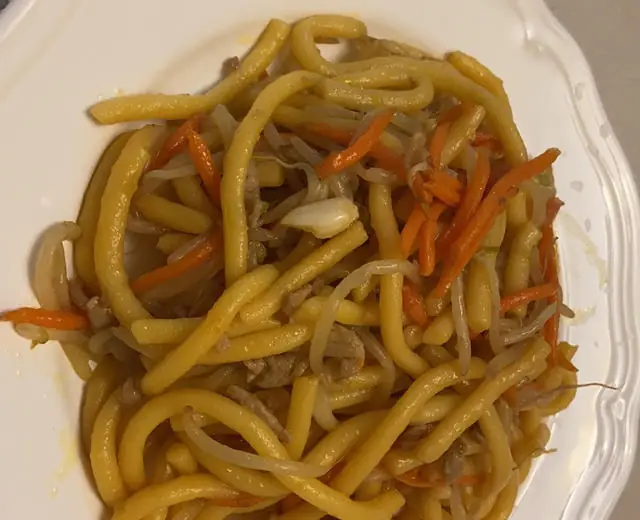
Photo adjustments
EXIF orientation normalized; resized without changing aspect ratio; converted to WebP. No subject edits.
炒碴子 (Stir-Fried Cracked Grain) is an everyday stir-fried dish from Dandong in Liaoning whose middle word is a local term for grain broken into coarse pieces.
A north-eastern word on the menu
碴子 is not a standard dish name in southern China; in the north-east it refers to grain cracked into coarse fragments, which is why the dish has a firm, separate texture rather than the softness of rice or noodles. 炒 is the stir-fry, so the name describes both the base and the technique. Dandong keeps it as everyday food rather than as a banquet item.
The same word attaches to porridges and soups in the region, so a menu may list several dishes sharing it. The fried version is the one to look for when you want a hot pan rather than a bowl.
Cook the grain, then fry it
Coarse grain pieces are boiled or steamed until tender, then drained and stirred in a hot pan with oil, aromatics and whatever else the kitchen is adding. Because the pieces are already cooked, the frying stage is short and mainly about browning and mixing. Overcooking turns them sticky, which is the main way the dish goes wrong.
Ask which grain is used and whether egg, meat or vegetables are included by default. Some kitchens prepare it plainly, with only scallion and seasoning, while others treat it as a full meal in one pan.
Chewy, toasted and filling
Expect a substantial, slightly chewy base with a toasted note from the pan and a savoury seasoning that stays light. It is denser than a noodle dish and much less sweet than fried rice. If you find it dry, ask for a bowl of soup alongside, which is how it is often eaten in the region.
What the pan adds
Egg, scallion, cabbage, carrot and small amounts of pork or sausage are common additions, along with soy sauce and sometimes chilli. Ask what is included if you avoid meat, egg or soy, and ask whether the pan is used for other dishes if cross-contact matters to you.
Gluten-free diners should check the grain: corn-based versions are usually fine, while wheat-based additions are not. A direct question about the base grain is the quickest way to settle it.
One plate, or two to share
Portions are filling, so one plate is a meal for most people and two plates serve three comfortably. Ask whether the kitchen offers a plain version and a version with additions, since prices usually differ. At breakfast it may be offered with soup, and the combination makes a good start to a cold day.
Eat it while it is hot
The dish is best straight from the pan, while the pieces are still separate and the surface is a little crisp. Stir it once to bring the seasoning up from the bottom, and keep the soup on the side rather than pouring it over the plate. If you are sharing, serve it onto small plates rather than eating from the centre.
More dishes to compare
Explore related local specialties and compare their names, preparation notes and ordering guidance.
Dandong yellow clams 丹东黄蚬子 →
Dandong yellow clams are a coastal item served simply, usually steamed or boiled and eaten with a dip, with the price moving with the catch. The grain dish sits at the other end of the same city's menu: cheap, always available and built on stored staples rather than on the day's landing. Ordering one tells you little about ordering the other.
Questions before you order
What is 碴子?
It is a north-eastern term for grain broken into coarse pieces. The dish is made by cooking those pieces and then stir-frying them, which gives it a chewy, substantial texture.
Is it a breakfast dish?
It is eaten at any meal, and in Dandong it often appears as a filling breakfast with soup alongside. Ask the venue when it is served, since hours differ between shops.
Sources & reading
The supplied food list supports this name and regional association. The culinary terms below are explained as menu vocabulary; a local recipe, origin story and venue availability have not been independently verified.