

Hand-Held Boiled Mutton 手把羊肉
Hand-Held Boiled Mutton is featured among the local specialties of Liaoning.
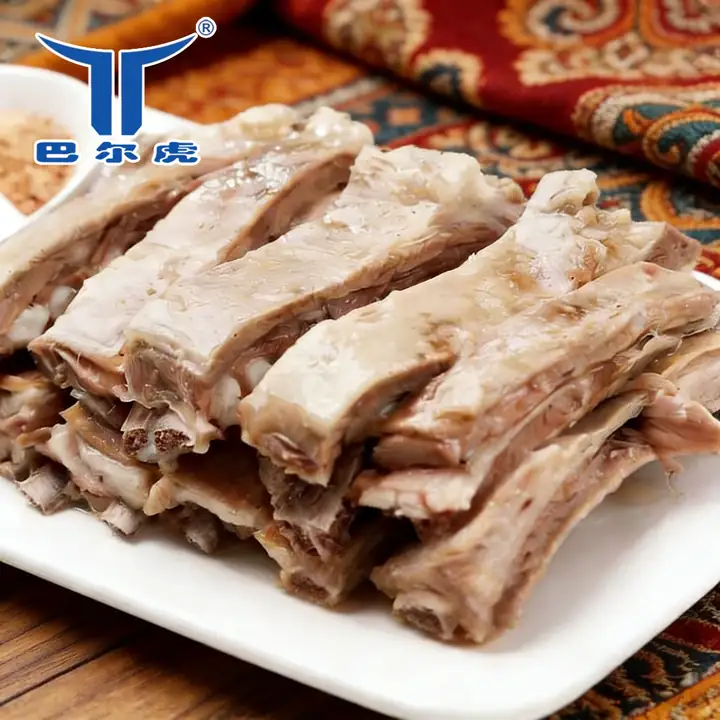
Photo adjustments
EXIF orientation normalized; resized without changing aspect ratio; converted to WebP. No subject edits.
Hand-Held Boiled Mutton (手把羊肉) is bone-in mutton boiled in plain water and eaten with the hands, a herders' way of cooking meat found on the grasslands of Mongolia, Inner Mongolia and north-east China.
How it is made
Fatty bone-in cuts such as leg or ribs go into water with onion and no seasoning beyond, at most, a little salt, and are boiled only until just cooked. Some cooks add ginger and scallion to take away the gamy smell. The meat is then lifted out and cut into small pieces. Beef or horse meat is sometimes cooked the same way.
How it is eaten
The name means meat held in the hand: no chopsticks are used, and diners pick up the pieces and dip them in mashed garlic with vinegar, in pepper salt, or in chilli powder. Chinese Wikipedia notes that the meat is often eaten with milk tea or naan (馕) flatbread, and that it appears at festivals and when guests are received as well as at everyday meals.
Where it comes from
Many herding peoples cook meat this way, among them Mongols, the Ewenki (鄂温克族), Tibetans, the Daur (达斡尔族), the Oroqen (鄂伦春族), Kazakhs and Kyrgyz. Within China it is most common in the north-west and Inner Mongolia, and above all in Mongol and Hui (回族) cooking.
Sources & reading
Written from the linked sources and checked sentence by sentence against quoted extracts by a separate reviewer on 2026-09-26. Recipes and servings vary between kitchens.