

Stir-Fried Meat with Reed Shoots 芦苇笋炒肉
Stir-Fried Meat with Reed Shoots is featured among the local specialties of Liaoning.
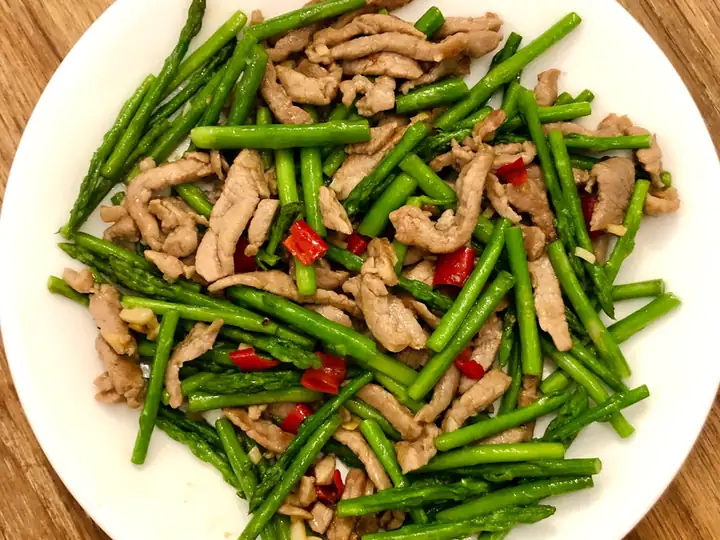
Image notes
Resized for the web; the photo itself has not been edited.
Stir-Fried Meat with Reed Shoots (芦苇笋炒肉) is a Panjin dish whose name lists its parts in order: 芦苇笋, reed shoots, 炒, stir-frying, and 肉, meat, cooked together in one pan and served hot.
How a wok plate is built
Stir-frying is the quickest of the common Chinese techniques: a small amount of oil is heated in a wok, the ingredients go in one after another, and the whole thing is moved constantly over high heat. Cut size decides how quickly each piece cooks, so the shoots and the meat are usually sliced to match. The order in which they go into the pan matters, and overcooking turns tender shoots soft and dull.
Taste and texture
The shoots bring a mild, slightly grassy flavour and either a crisp or a fibrous bite depending on how they were prepared, while the meat supplies the savoury note that carries the plate. Because stir-frying uses high heat and little liquid, the result is drier than a braise and the flavours stay separate. Salt, soy and a little sugar are usually enough to bring the two together.
Where the combination comes from
Panjin sits on the flat coastal plain of western Liaoning, where wide reed marsh and rice fields shape the local table. A dish built on the shoots of reeds and a little meat fits that landscape: it uses what the wetland provides and stretches it with a small amount of protein. The city name in the dish points to where the combination is sold rather than to one single restaurant.
What goes into the pan
Reed shoots can arrive fresh, dried or pickled, and the preparation changes everything: pickled shoots are saltier and firmer, fresh ones milder and juicier. The meat may be pork, beef or chicken, sliced thin so it cooks fast. Oil, ginger, spring onion, soy sauce and sometimes chilli complete the pan. If you avoid soy or gluten, ask about the sauce base.
What to ask
Ask what the meat is and whether the shoots are fresh or preserved, since the two versions taste quite different. The plate is usually home-style rather than a banquet order, so one portion is enough for one or two people alongside rice. If the menu shows a price range, it usually reflects the meat chosen. Ask for less oil if you prefer a drier plate.
At the table
Eat it hot and straight from the plate, because stir-fried dishes lose their texture as they cool. Take a little of the meat with the shoots in each bite rather than eating them separately, and spoon the pan juices over rice. The plate is usually shared, so move a small portion onto your rice bowl and leave the rest in the middle of the table.
More dishes to compare
Explore related local specialties and compare their names, preparation notes and ordering guidance.
Panjin Rice with Steamed Pork Belly 盘锦大米扣肉 →
Panjin Rice with Steamed Pork Belly is the other Panjin name worth knowing: pork belly braised and set over the local rice. That dish is soft, rich and slow, while the shoots here are quick, crisp and light, and both depend on the region's fields and water. Order the pork for a heavy centrepiece and the shoots for a fast vegetable-and-meat plate beside it.
Questions before you order
Are the shoots bamboo?
No. The name refers to reed shoots from marsh plants rather than to bamboo, and the texture is softer and more fibrous.
Is it spicy?
Often not, but chilli or dried pepper may be added. Ask the kitchen to leave it out if you want the plain version.
Sources & reading
The supplied food list supports this name and regional association. The culinary terms below are explained as menu vocabulary; a local recipe, origin story and venue availability have not been independently verified.