

Kazuo Wantuo Starch Jelly 喀左碗砣
Kazuo Wantuo Starch Jelly is featured among the local specialties of Liaoning.
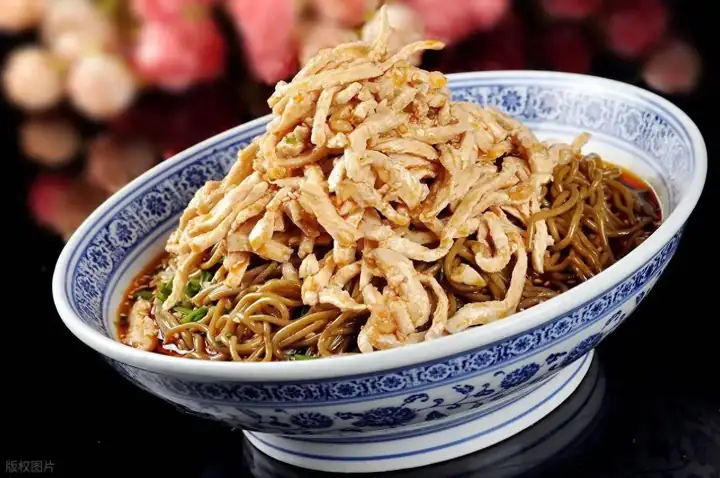
Image notes
Resized for the web; the photo itself has not been edited.
Kazuo Wantuo Starch Jelly (喀左碗砣) is a Chaoyang, Liaoning entry whose name records a shape: 碗 is a bowl and 砣 is a lump or weight, so the portion is formed in a bowl.
Why it is called a bowl weight
The name describes the forming step rather than the recipe. A mixture is set or steamed in a bowl and then turned out as a single piece, which is why the portion arrives with straight sides and a rounded top.
Ask at the counter whether the base is a starch, a grain or a bean paste, and whether the block is served cold with a dressing or warmed and cut into pieces.
Texture and seasoning
Bowl-set foods usually take their character from the dressing, and chilli oil, vinegar, garlic and sesame are the common handles on a cold version. Warm versions lean on broth instead, so ask for the sauce on the side if you want to taste the base first.
Textures are usually slippery or springy rather than crumbly. If a piece feels heavy and gluey, ask for it to be cut thinner. A block served straight from a cold tray is worth letting stand for a few minutes, since the dressing and the base separate more clearly once it is not chilled through.
The Chaoyang setting
喀左 is the short form of the Mongol autonomous area in Chaoyang, western Liaoning, and the name places the snack there. Similar bowl-set pieces appear across northern China under other names. The place name is the useful part: it narrows where the snack is made without promising a particular recipe.
The place name is the specific pointer here: the same words on a menu far away may describe a different base entirely.
What has to be asked
Because the name describes only a shape, the ingredients have to be asked for. If you avoid wheat, starch thickeners or meat stock, put the question before the bowl is dressed.
Ask as well whether the base is made in house or brought in, since that is what decides how fresh the texture feels.
How to order it
Ask for 碗砣, then confirm whether it comes as a cold plate or a hot dish and whether it is served whole or sliced. A single portion is often enough to share as an appetiser.
In markets it is usually sold from a tray and cut to order, so ask for a small piece if you only want a taste, and ask for the dressing separately if you plan to take it away.
At the table
Cold pieces are eaten with chopsticks but should be cut through rather than lifted whole; warm ones go back into broth. If the plate is already dressed, finish it soon, because the sauce softens the block.
A spoon helps with a dressed portion, since chopsticks alone leave most of the oil behind.
More dishes to compare
Explore related local specialties and compare their names, preparation notes and ordering guidance.
Liaoning sea cucumber with scallions 葱烧辽参 →
Liaoning sea cucumber with scallions (葱烧辽参) is the banquet end of the same group, a slow-braised dish built for a formal table. Set beside 喀左碗砣 it shows the range of the region's cooking: a bowl-set snack cut from a tray at a counter against a braised sea cucumber served as the centre of a meal.
Questions before you order
What is 碗砣 made from?
The name does not say. Ask at the counter whether the base is a starch, a grain or a bean paste before ordering.
Is it served hot?
It can be served cold and dressed or warmed through in broth, so the counter is the place to check which version is ready.
Sources & reading
The supplied food list supports this name and regional association. The culinary terms below are explained as menu vocabulary; a local recipe, origin story and venue availability have not been independently verified.