


Explore the region
About Shangchuan Island
Shangchuan Island (上川岛) is the largest island of the Chuanshan Archipelago (川山群岛), lying on the south side of Guanghai Bay (广海湾) off Taishan (台山) in Jiangmen (江门), Guangdong. The mainland is 9.19 km to the northeast, and Xiachuan Island (下川岛) faces it across the water to the west.
Shangchuan is the largest island on the western side of the Pearl River mouth. Shaped like a dumbbell, it stretches 22.54 km from north to south, is 1.2 km across at its narrowest and 9.8 km at its widest, and covers 137.3 km². The ground is Yanshan-period granite, higher at the two ends than in the middle and rising to 494.1 m; apart from small flats in the centre and north it is low hills. Since January 1990 the northeastern tip has been a provincial reserve for macaques, the largest such base in Guangdong.
The historical text Zhinan Zhengfa (指南正法) names Wuzhu Mountain (乌猪山), northeast of Shangchuan, as an important sighting mark for ships sailing to and from the Eastern and Western Seas. In 1513 a Portuguese merchant party came ashore and set up a pillar carved with the arms of the Portuguese crown, and the island became a Portuguese trading base in the Far East until the Portuguese moved to Macau in 1557. The Jesuit Francis Xavier (方济各·沙勿略) caught malaria and died here on 3 December 1552 while waiting for a ship to the mainland. In 1662 the Qing sea ban moved islanders 50 li inland until 1683, and in the Jiaqing era the pirate Zhang Baozai (张保仔) made Shadi harbour (沙堤港) the main base of his Red Flag Fleet (红旗帮).
Blue-and-white porcelain sherds from Ming-era trade with the Portuguese still lie scattered across the Dazhou Bay site (大洲湾遗址) in the island's northwest, known locally as Huawanping (花碗坪). The Guangdong Provincial Institute of Cultural Relics and Archaeology began rescue excavations there on 9 August 2016. In December 2017 the Francis Xavier cemetery and the Dazhou Bay archaeological park were placed in the third batch of national archaeological site park projects. In 2014 Shangchuan was named one of Guangdong's Ten Beautiful Islands (广东十大美丽海岛).
What to look for
- Francis Xavier cemetery (方济各·沙勿略墓园) on Elephant Hill (象山), founded in 1552, rebuilt five times up to 1986, with his stone statue, a chapel and a memorial; a Guangdong provincial protected site since 2015
- The tomb chapel designed by Achille-Antoine Hermitte and completed in 1869
- Dazhou Bay site (大洲湾遗址), south of the cemetery, where Ming blue-and-white sherds lie on the ground
- Ruins of the Xindi Village Catholic church (新地村天主教堂遗址), completed in 1869 and destroyed by the Japanese in 1942
- Guangdong Taishan Maritime Silk Road Museum (广东台山海上丝绸之路博物馆), opened in 2019 in the former Dazhou Primary School
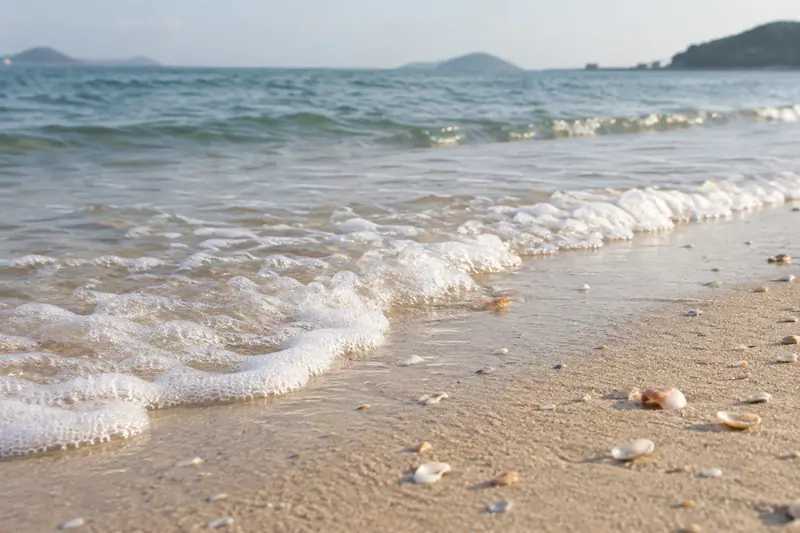
- Feishatan Beach (飞沙滩), about 5 km of natural bathing beach on the east coast, developed as a resort from 1984
- Shadi fishing port (沙堤渔港) at the southern end, one of Guangdong's four major fishing ports, ringed by hills on three sides
Location & getting there
Getting to Shangchuan Island
- Search for 上川岛 with 江门市 and 台山市.
Find Shangchuan Island
上川岛 · 台山市
No reliable map pin yet: search by the Chinese name.
Sources & visit information
Written from the linked sources and fact-checked against them on 2026-09-23. Opening hours, admission and access arrangements are not covered; confirm current visitor information with the site.
Some facts checked against Wikipedia contributors, "上川岛" · CC BY-SA 4.0.
Some facts checked against Wikipedia contributors, "Shangchuan Island" · CC BY-SA 4.0.
