

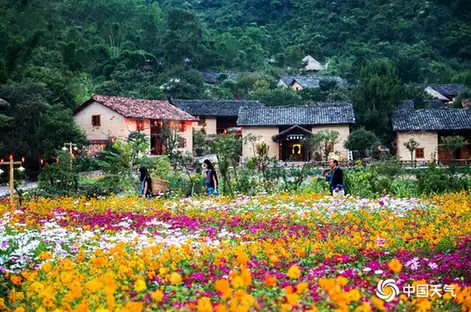
Photo adjustments
EXIF orientation normalized; resized without changing aspect ratio; converted to WebP. No subject edits.
Explore the region
About Geyasigu Baiku Yao Folk Culture Park
The park covers about 9.6 square kilometres and sits 10 kilometres from the Nandan county seat and 25 kilometres from the Xiaoqikong scenic area at Libo, which the county bureau identifies as a World Natural Heritage site. It was planned in three phases with a stated total investment of 500 million yuan, of which the first two phases have been built, including a catering and services area, a courtyard hotel area, a farming-experience area, a cave-theatre area, an ethnic sports area, a pool and barbecue area, and an area where Baiku Yao dress is made and displayed. The county bureau sums up the park's content as rural ecological scenery, the underground river and its karst cave, and Baiku Yao folk custom. Its listed designations include national AAAA-grade scenic area, Guangxi five-star rural tourism area, Chinese ethnic-minority characteristic village and Guangxi ethnic-custom tourism demonstration site.
The bureau records that all construction followed a stated principle of building to the contours and not felling trees, not filling in the river and not demolishing houses, improving living conditions and services within the existing fabric. At the entrance stand detached Baiku Yao courtyard dwellings and granaries; behind them lie fields half-enclosed by a clear stream that runs on into the cave and its underground river. Within the park the county has built a Baiku Yao residents' living-experience display area, a folk-culture transmission base and a handicraft display base, presenting village-dwelling, marriage, funerary and dress customs in living form. A China Culture Daily feature republished by the Ministry of Culture and Tourism quotes the county's all-region tourism development centre describing Geyasigu and Baiku Yao folk culture as the principal vehicles of the county's 'Thousand Yao Villages, Ten Thousand Yao Households' relocation-and-tourism programme, and records that in 2020 the park was named a national demonstration project for tourism-led poverty alleviation under the 'scenic area supporting the village' scheme.
What to look for
- The detached Baiku Yao courtyard houses and granaries at the park entrance
- The clear stream that half-encircles the fields and disappears into the karst cave and its underground river
- The area where Baiku Yao dress is made and displayed, one of the zones built in the first two phases
- The Baiku Yao handicraft display base and the folk-culture transmission base
- The cave-theatre zone, one of the park's completed construction areas
Location & getting there
Getting to Geyasigu Baiku Yao Folk Culture Park
Identify the main visitor approach and any separately managed houses, museums or performances. Ask before entering residential spaces or photographing residents.
- Search for 歌娅思谷白裤瑶民俗区 with 河池市 and 南丹县.
Find Geyasigu Baiku Yao Folk Culture Park
歌娅思谷白裤瑶民俗区 · 南丹县
No reliable map pin yet: search by the Chinese name.
Sources & visit information
The linked sources support the identity and background described in this introduction. Opening hours, admission, activity availability and exact arrival arrangements have not been comprehensively checked. Confirm current visitor information with the venue; the original catalogue locality and editorial review flag are retained.