

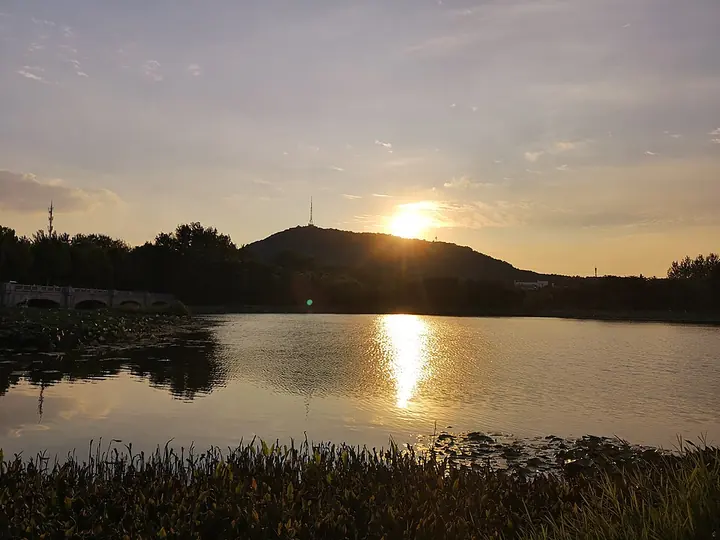
Photo adjustments
Full frame retained; proportionally resized and converted to WebP. No retouching or changes to the photographed subject. Card displays may crop the view.
Explore the region
About Dashu mountain
The summit television tower is a useful landmark, and clear weather opens views across the expanding urban landscape. At the foot, Kaifu Temple adds a religious stop to the forest outing. Choose an ascent and descent that return to the same side of the hill; the surrounding attractions are spread around its base.
A gazetteer, the Luzhou Fuzhi (庐州府志), records that a monk from Sichuan built a hermitage on the mountain and, missing the water of his home region, struck the ground with his staff; the spring that gushed out tasted like the water of Qutang Gorge, so it was named Shu Well (蜀井), giving the mountain its name. A Qing-dynasty scholar instead held that the name comes from the Erya dictionary's use of 'shu' to mean 'solitary', since the mountain stands apart from any connecting ridge.
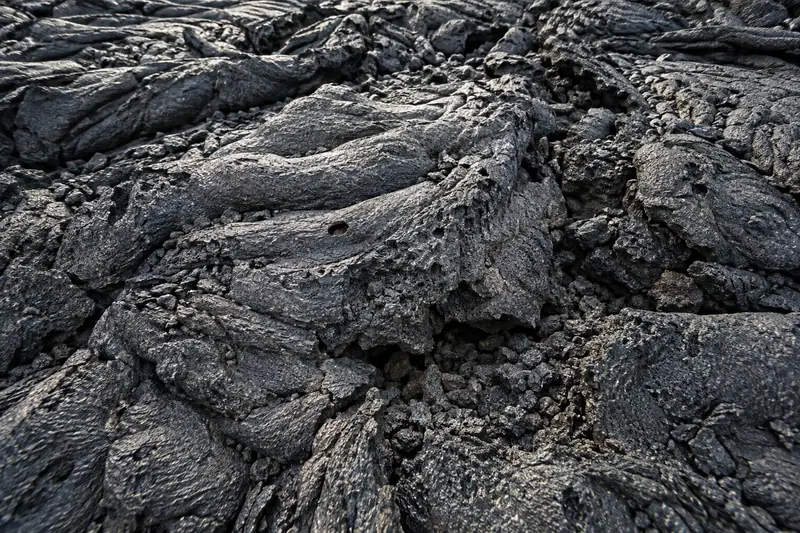
Dashu is an extinct volcano and an outlying range of the Dabie Mountains, oval in plan and formed in the Cretaceous period of the Mesozoic era, about 140 million years ago. Its summit holds two ancient volcanic craters, and its slopes preserve a lava waterfall of olivine basalt along with a volcanic neck and other volcanic remains.
At 284 meters, Dashu is the highest point in Hefei's urban area, and its forest park covers 13,000 mu (亩). 'Dashu after snow' (蜀山雪霁) once ranked first among the Eight Scenes of Luyang (庐阳八景), and 'spring dawn at Dashu' (蜀山春晓) is counted among the Ten Scenes of Hefei (合肥十景). The park became a provincial forest park in 2009 and a national forest park in January 2013.
What to look for
- The wooded slopes and summit views towards Hefei.
- Kaifu Temple at the foot of the hill.
Location & getting there
Getting to Dashu mountain
Approach the forest park from the western end of Changjiang Road or the Huangshan Road side. Pick the entrance closest to the planned descent and arrange pickup there; the zoo and other foothill destinations have separate approaches.
Combine your visit
A suggested sequence linking the specific features of this visit.
-
Forested ascent
Follow an open park path through the wooded hill.
-
Summit viewpoint
Use the television tower area as the landmark for city views.
-
Kaifu Temple
Add the foothill temple after descending on the appropriate side.
This order is editorial. Confirm access and any transfers between stops; it does not establish a walking route, same-day connection or common admission ticket.
Find Dashu mountain
大蜀山 · 合肥市
The pin marks the area, not the entrance.
More places nearby
Approximate straight-line distances between map pins, not travel distances.
Anhui Museum 安徽博物院
6 km awayAnhui Museum’s Shushan branch connects the province’s early settlements with the bronze-working cultures of the Yangtze and Huai regions. The large Zhuke ding, often called the Chu Great Ding, is a defining object in the…
View guide →Three Kingdoms Ruins Park 三国新城遗址公园
9 km awayThis park preserves the remains of the fortified settlement built by Cao Wei outside old Hefei. Surviving wall foundations and excavated features reveal the military site beneath the later landscape. A weapon-casting kiln…
View guide →Lord Bao Park 包公园
11 km awayLord Bao Park commemorates Bao Zheng through buildings set around a central lake. In the shrine, the main hall’s statues and inscribed plaques present the official’s later reputation for upright judgment. The tomb complex gives…
View guide →Sources & visit information
The sources below support the place-specific description and arrival information. Suggested combinations are editorial planning ideas; confirm current opening, entry arrangements and transport services for your date.
Visitor information adapted and edited from Wikipedia contributors, “大蜀山” · CC BY-SA 4.0. Source revision 90901580.
Visitor information adapted and edited from Wikivoyage contributors, listing “Dashu mountain” · CC BY-SA 4.0.
Background paragraphs translated and condensed from Wikipedia contributors, "大蜀山", Chinese Wikipedia · CC BY-SA 4.0. Source revision 90901580.