


Get to know Jinan
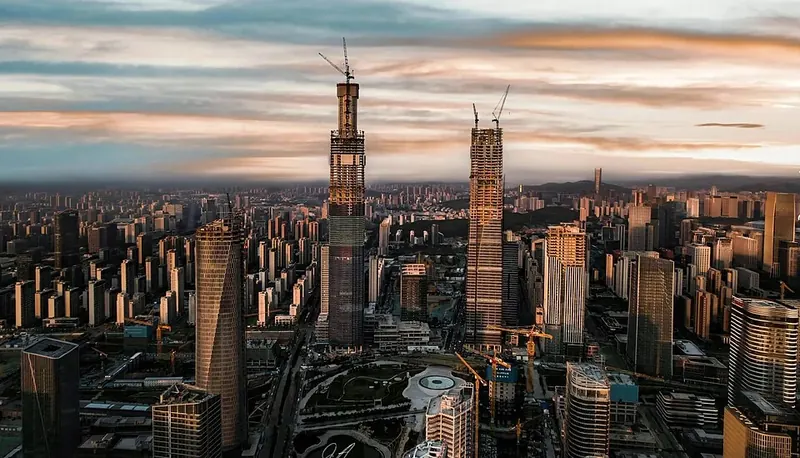
Photo adjustments
Full frame retained; proportionally resized and converted to WebP. No retouching or changes to the photographed subject. Card displays may crop the view.
- Administrative area
- Prefecture-level city · 地级市
- Part of
- Shandong
- Chinese name
- 济南市
- Local areas
- 12 local areas
Area & population
- Area in the source
- 10,247.00 km²
- Population · 2020 census
- 9,202,432
- Administrative seat
- Lixia District
Source: cited geographic source, as of the dates shown.
Jinan is listed as the # 27 city in the world for scientific research as tracked by the Nature Index according to the Nature Index 2025 Science Cities. The city is home to several major universities, including Shandong, Shandong Normal, Shandong Jianzhu, University of Jinan, Qilu University of Technology, Shandong University of Traditional Chinese Medicine and Shandong University of Finance and Economics. Notably, Shandong University is one of China's most prestigious universities as a member of the Double First-Class Construction. The city is rated Beta- (Global second-tier city) by the biannual GAWC ratings in 2020.
Cuisine
Jinan has its own cuisine, the Jinan style of the Shandong cuisine, one of the Eight Culinary Traditions of China. One of its features is the use of soup in its dishes. Modern cuisines in northern China —Beijing, Tianjin and the northeastern regions including Heilongjiang, Jilin and Liaoning— are all branches of Shandong cuisine.
Explore Jinan
Core places to explore, with English and Chinese names.
Jinan 济南
Baotu Spring 趵突泉
Daming Lake 大明湖
Shandong Museum 山东博物馆
Thousand Buddha Mountain 千佛山
Black Tiger Spring 黑虎泉
Lingyan Temple 济南灵岩寺
Qushuiting Street and Baihuazhou 曲水亭街与百花洲
Liberation Pavilion 解放阁
Jingsan Road Old Commercial Port 经三路老商埠
Chengziya Site Museum 城子崖遗址博物馆
Zhujiayu Old Village 朱家峪古村
Baimai Spring 百脉泉
Laiwu Campaign Memorial Hall 莱芜战役纪念馆
Lingyan Temple 灵岩寺
Wufeng Mountain 五峰山
Lixia District 历下区
Shizhong District 市中区
Huaiyin District 槐荫区
Tianqiao District 天桥区
Licheng District 历城区
Changqing District 长清区
Zhangqiu District 章丘区
Jiyang District 济阳区
Laiwu District 莱芜区
Gangcheng District 钢城区
Pingyin County 平阴县
Shanghe County 商河县
Places to explore around Jinan
The skyline of Jinan's central business district (济南商务区), including construction visible at the time of the photograph. Photograph date recorded by the source: 2022-07-17 20:38:06.Jinan济南
Jinan’s old centre is shaped by spring water flowing through pools, lanes and the city moat toward Daming Lake. Baotu Spring shows the water rising from below; Qushuiting Street brings the same theme into a neighbourhood of…
Read the place guide → Baotu Spring Park · 趵突泉
Baotu Spring趵突泉
Baotu Spring rises through three outlets in a rectangular pool framed by historic halls and pavilions. Guanlan Pavilion stands to the west and Laihe Bridge to the east, giving the water a carefully composed architectural…
Read the place guide → The south entrance archway at Daming Lake in Jinan, November 2024.
Daming Lake大明湖
Daming Lake gathers water from Jinan’s artesian springs on the northern side of the old city. Its shores and islands carry pavilions, gardens and memorial halls, making the lake more than an open stretch of water. Lixia Pavilion…
Read the place guide →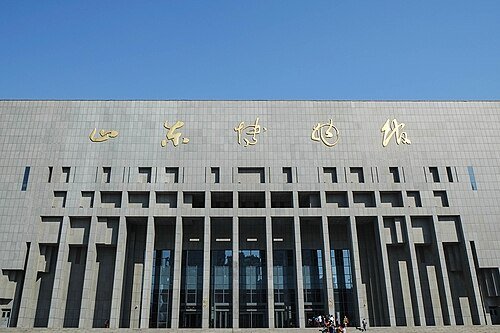 Shandong Museum · 山东博物馆
Shandong Museum山东博物馆
Shandong Museum brings together the province’s early cultures, stone sculpture and natural history in a large modern building east of central Jinan. Dawenkou and Longshan material introduces prehistoric communities, while Han…
Read the place guide → Buddhist cliff carvings on Thousand Buddha Mountain in Jinan, April 2006.
Thousand Buddha Mountain千佛山
Thousand Buddha Mountain rises above southern Jinan with Buddhist carvings cut into its northern slopes. Xingguochan Temple stands partway up the hill, and the cliff behind it retains Sui-period images and small caves. Nearby…
Read the place guide → Black Tiger Spring pool and terrace, Jinan · 济南黑虎泉池与岸台 Photograph date recorded by the source: 1 March 2025, 16:18:58.
Black Tiger Spring黑虎泉
Black Tiger Spring emerges from a limestone cave and is channelled through three carved tiger heads into a stone pool. Water then spills toward Jinan’s old city moat, making the spring easy to understand as part of the city’s…
Read the place guide → Vairocana triad in the Thousand-Buddha Hall, Lingyan Temple, Jinan · 济南灵岩寺千佛殿内三尊佛像与殿内木构 Photograph date recorded by the source: 2009.
Lingyan Temple济南灵岩寺
Lingyan Temple lies in the hills of Changqing, where a major Buddhist complex survives around halls, a pagoda and a burial stupa forest. The Thousand Buddha Hall is especially known for its painted arhat figures, whose varied…
Read the place guide →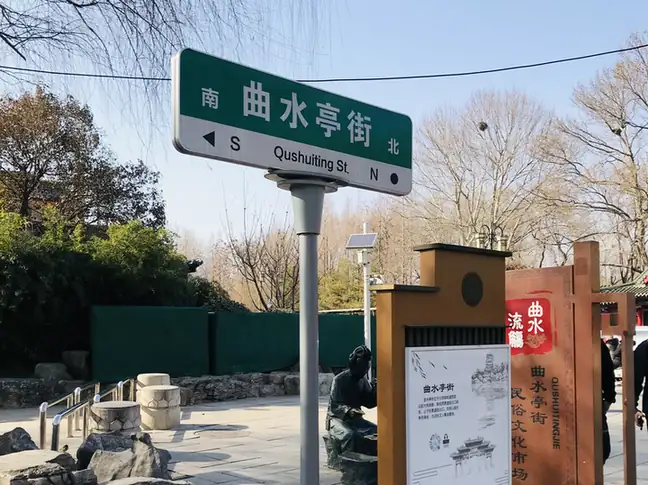 Qushuiting Street and Baihuazhou · 曲水亭街与百花洲
Qushuiting Street and Baihuazhou曲水亭街与百花洲
Qushuiting Street and Baihuazhou (曲水亭街与百花洲) are a spring-fed lane and an adjoining pool in the old city of Jinan, in Lixia District just south of Daming Lake, where water from the city's springs runs between grey-brick courtyard houses.
Read the place guide →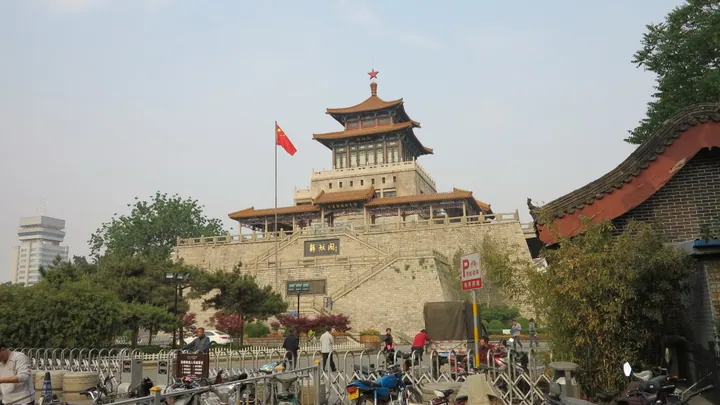 Jiefang Pavilion atop the old city wall remains, with the national flag flying in front, Lixia District, Jinan. · 济南市历下区解放阁及城墙遗址,红旗飘扬。 Source-recorded photograph date: Taken on 24 April 2015.
Liberation Pavilion解放阁
Jinan memorial pavilion on the wall breach where the PLA took the city on 24 September 1948, facing Black Tiger Spring across the moat.
Read the place guide → Jingsan Road Old Commercial Port · 经三路老商埠
Jingsan Road Old Commercial Port经三路老商埠
Jingsan Road and the streets crossing it form the core of Jinan's old commercial-port quarter (老商埠), the grid of numbered roads laid out across what are now the city's Shizhong and Huaiyin districts after Jinan opened itself to trade in 1904. The name covers a whole district rather than a single site, and what it amounts to on the ground is a street plan with individually protected buildings scattered through it.
Read the place guide →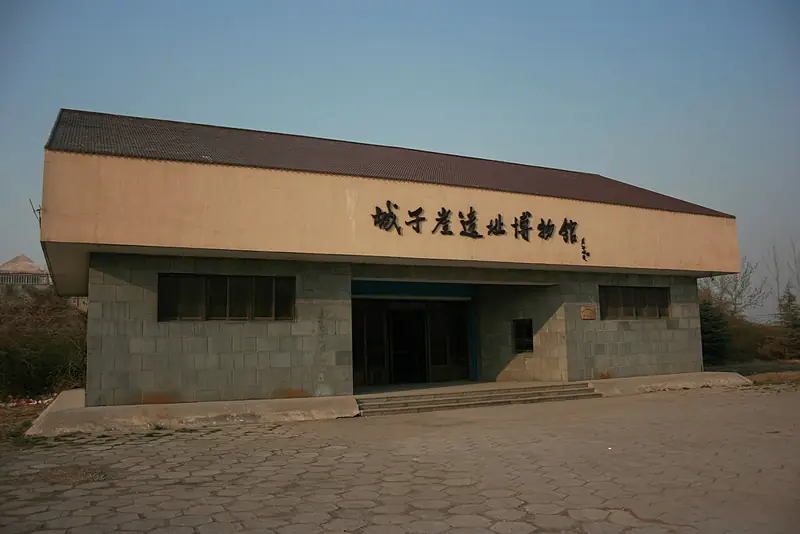 Chengziya Site Museum (城子崖遗址博物馆), Zhangqiu District. Photograph: "Chengziya museum 2009 03 08".
Chengziya Site Museum城子崖遗址博物馆
The Chengziya Site Museum (城子崖遗址博物馆) stands at Longshan in Zhangqiu District, Jinan, on the prehistoric walled settlement where Longshan culture was first identified and from which it takes its name.
Read the place guide →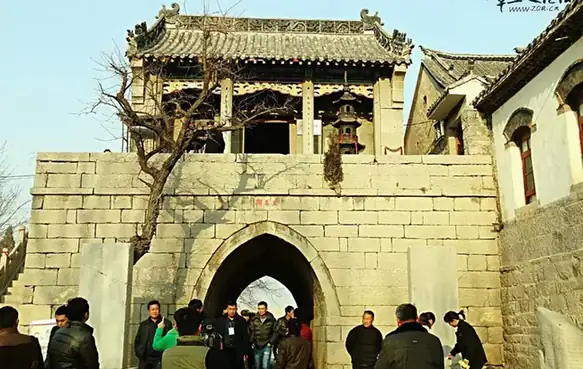 Zhujiayu Old Village · 朱家峪古村
Zhujiayu Old Village朱家峪古村
Zhujiayu (朱家峪) is an old stone-built village in Guanzhuang Subdistrict, Zhangqiu District, on the eastern edge of Jinan. A Shandong provincial publicity article calls it the first ancient village of Qi and Lu.
Read the place guide →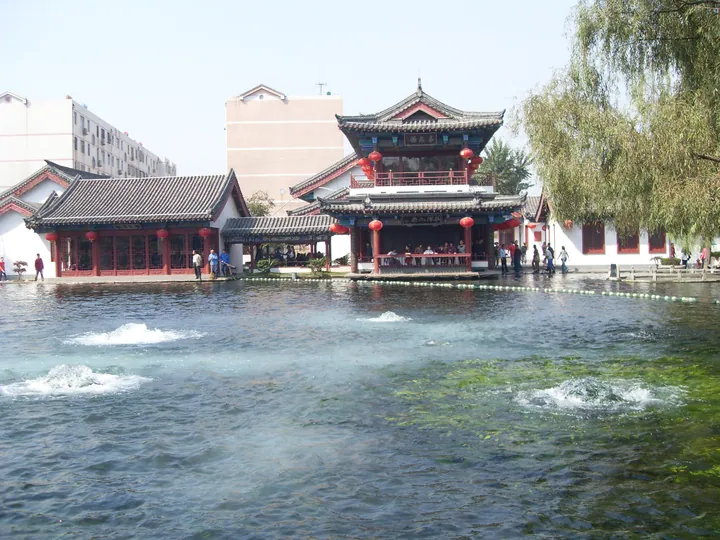 Pavilions and bubbling spring water in Baimai Spring Park, Zhangqiu, Jinan · 济南章丘百脉泉公园亭台与涌泉 Source-recorded photograph date: 2008-10.
Baimai Spring百脉泉
Karst spring in Longquan Temple, Zhangqiu, one of Jinan's 72 famous springs, with Mo Spring and the Li Qingzhao garden beside it.
Read the place guide → The plaza and memorial column of the Lai Wu Zhan Yi Ji Nian Guan (Laiwu Campaign Memorial Hall) in Laiwu District, Jinan · 济南市莱芜区莱芜战役纪念馆广场及纪念碑 Source-recorded photograph date: 2017-08-12 15:56:04.
Laiwu Campaign Memorial Hall莱芜战役纪念馆
Hilltop memorial in Laiwu, Jinan, to the February 1947 Laiwu Campaign, with a martyrs' tower, a battle panorama and a campaign exhibition.
Read the place guide → AI illustration · AI 示意图(仅供参考,非该地点实拍)
Lingyan Temple灵岩寺
Lingyan Temple (灵岩寺) is a Buddhist monastery in the Lingyan valley at Wande Subdistrict, Changqing District, on the north-western flank of Mount Tai in Jinan. Founded in the Eastern Jin period and rebuilt in the sixth century, it preserves a hillside complex of halls, brick and stone pagodas and a large grove of monks' tomb pagodas.
Read the place guide →AI illustration · AI 示意图(仅供参考,非该地点实拍)Wufeng Mountain五峰山
Wufeng Shan (五峰山) is a hill in Wufengshan Subdistrict, Changqing District, Jinan, on a spur of the Mount Tai range, named for the five peaks standing in a row along its crest. Its southern foot carries a Daoist building group that has been a centre of the Quanzhen school since the early thirteenth century.
Read the place guide →Local life & food
Jinan local specialties
济南市特色美食 · 13 specialties to discover
 Bazirou 把子肉
The meat is soft and full-flavored, with yielding fat and a salty, rounded sauce that suits plain rice.
Source ↗Read the dish guide →.jpg)
Photo adjustments
EXIF orientation applied where present; resized proportionally to at most 640 px on the long edge and encoded as WebP. No crop, retouching, recoloring or subject changes.
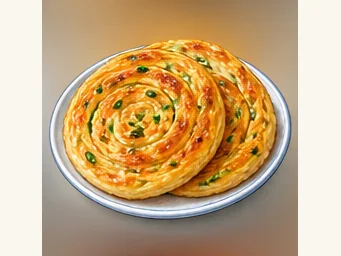 Jinan spiral pastry 济南油旋AI illustration · AI 示意图
The exterior is crisp and fragrant, while the inner coils stay softer and slightly chewy, often with a scallion note.
Source ↗Read the dish guide →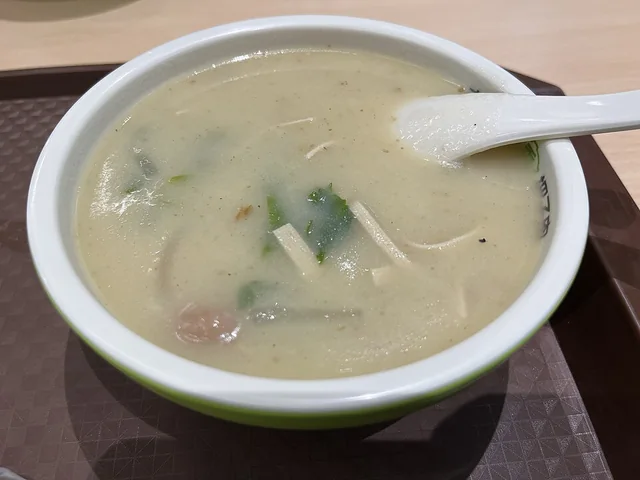 Tianmo 甜沫
The base is smooth and grain-scented, with soft beans or noodles and a peppery savory finish. Ingredient combinations vary between breakfast shops.
Source ↗Read the dish guide →
Photo adjustments
EXIF orientation applied where present; resized proportionally to at most 640 px on the long edge and encoded as WebP. No crop, retouching, recoloring or subject changes.
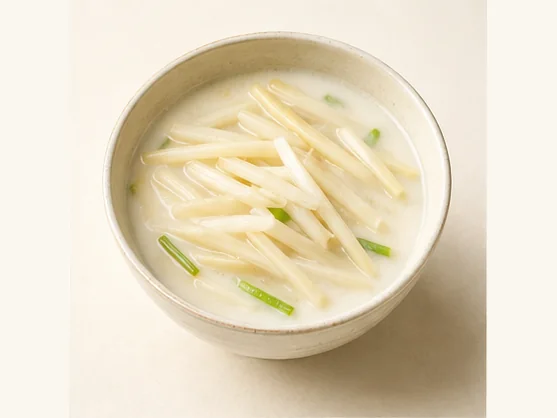 Jinan cattail shoots in white broth 济南奶汤蒲菜AI dish illustration / AI 菜品示意图
Expect mild vegetable sweetness, tender bite and a fuller broth than the clear soups served alongside noodles. The appeal is restrained: the shoots should still be recognisable beneath the savoury liquid.
Source ↗Read the dish guide → Jiuzhuan Braised Pork Intestines 九转大肠
Jiuzhuan Braised Pork Intestines (九转大肠) is a Jinan (济南) dish of pork large intestine, cooked by boiling, frying and braising. Its reddish, glossy finish covers tender meat with a slightly crisp surface.
Source ↗Read the dish guide →
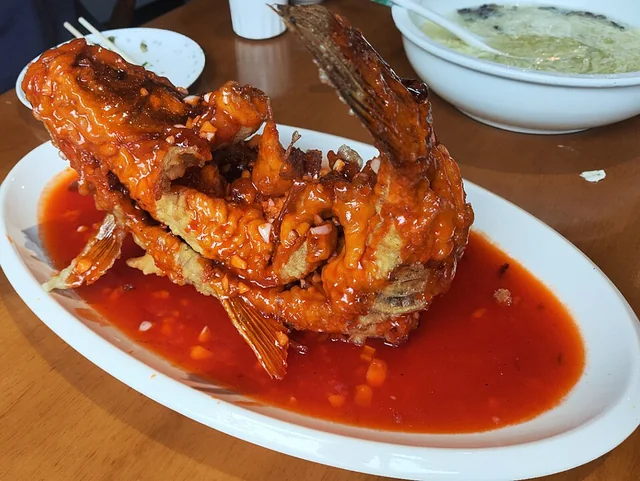 Sweet-and-sour Yellow River carp 糖醋黄河鲤鱼
The dish combines a brittle exterior, tender flesh and a lively balance of sugar and vinegar. Bones remain despite the dramatic presentation.
Source ↗Read the dish guide →
 Caobao Steamed Buns 草包包子Reference photo of a similar dish · 同类菜品参考照片
Caobao Steamed Buns (草包包子) are a Jinan (济南) specialty named after the nickname of their founder, Zhang Wenhan (张文汉).
Read the dish guide →
Photo adjustments
Full frame retained; EXIF orientation normalized, proportionally resized to at most 800 pixels and converted to WebP. No generated pixels or subject changes. Cards may crop the display.
 Mengjia Braised Pork Trotters 孟家扒蹄
Mengjia Braised Pork Trotters (孟家扒蹄) is a braised trotter sold under the Mengjia ('Meng family') name in Jinan (济南), Shandong.
Read the dish guide →Photo adjustments
EXIF orientation normalized; resized without changing aspect ratio; converted to WebP. No subject edits.
All dish names · 全部菜名 (13)
- Bazirou · 把子肉
- Jinan spiral pastry · 济南油旋
- Tianmo · 甜沫
- Jinan cattail shoots in white broth · 济南奶汤蒲菜
- Jiuzhuan Braised Pork Intestines · 九转大肠
- Sweet-and-sour Yellow River carp · 糖醋黄河鲤鱼
- Caobao Steamed Buns · 草包包子
- Mengjia Braised Pork Trotters · 孟家扒蹄
- Jar-Braised Pork · 坛子肉
- Jinan Suguo Layered Braised Pot · 济南酥锅
- Coiled Thread Pastry · 盘丝饼
- Pan-Fried Dumplings · 锅贴
- Huangjia Roast Pork · 黄家烤肉
More dishes from across Shandong are in the Shandong food guide.
Counties & districts in Jinan
12 areas belong directly to Jinan.
12 areas
Lixia District历下区
Lixia District is one of 10 urban districts of the prefecture-level city of Jinan, the capital of Shandong Province.
Explore the area →DistrictShizhong District市中区
Shizhong District (simplified Chinese: 市中区; traditional Chinese: 市中區; pinyin: Shìzhōng Qū) is one of 10 urban districts of the prefecture-level city of Jinan, the capital of Shandong Province, East China…
Explore the area →DistrictHuaiyin District槐荫区
Huaiyin District (simplified Chinese: 槐荫区; traditional Chinese: 槐蔭區; pinyin: Huáiyìn Qū) is one of 10 urban districts of the prefecture-level city of Jinan, the capital of Shandong Province, East China…
Explore the area →DistrictTianqiao District天桥区
Tianqiao District (simplified Chinese: 天桥区; traditional Chinese: 天橋區; pinyin: Tiānqiáo Qū; lit. 'sky bridge') is one of 10 urban districts of the prefecture-level city of Jinan, the capital of Shandong…
Explore the area →Show fewer areas
Licheng District历城区
Licheng District (simplified Chinese: 历城区; traditional Chinese: 歷城區; pinyin: Lìchéng Qū) is one of 10 urban districts of the prefecture-level city of Jinan, the capital of Shandong Province, East China…
Explore the area →DistrictChangqing District长清区
Changqing District (simplified Chinese: 长清区; traditional Chinese: 長清區; pinyin: Chángqīng Qū) is one of 10 urban districts of the prefecture-level city of Jinan, the capital of Shandong Province, East China…
Explore the area →DistrictZhangqiu District章丘区
Zhangqiu (simplified Chinese: 章丘; traditional Chinese: 章邱; pinyin: Zhāngqiū) is one of 10 urban districts of the prefecture-level city of Jinan, the capital of Shandong Province, East China.
Explore the area →DistrictJiyang District济阳区
Jiyang (simplified Chinese: 济阳; traditional Chinese: 濟陽; pinyin: Jǐyáng) is one of 10 urban districts of the prefecture-level city of Jinan, the capital of Shandong Province, East China.
Explore the area →DistrictLaiwu District莱芜区
Laiwu District (simplified Chinese: 莱芜区; traditional Chinese: 萊蕪區; pinyin: Láiwú Qū) is one of 10 urban districts of the prefecture-level city of Jinan, the capital of Shandong Province, East China.
Explore the area →DistrictGangcheng District钢城区
Gangcheng (simplified Chinese: 钢城区; traditional Chinese: 鋼城區; pinyin: Gāngchéng Qū) is one of 10 urban districts of the prefecture-level city of Jinan, the capital of Shandong Province, East China.
Explore the area →CountyPingyin County平阴县
Pingyin County (simplified Chinese: 平阴县; traditional Chinese: 平陰縣; pinyin: Píngyīn Xiàn) is under the administration of Jinan, the capital of Shandong province, People's Republic of China.
Explore the area →CountyShanghe County商河县
Shanghe County (simplified Chinese: 商河县; traditional Chinese: 商河縣; pinyin: Shānghé Xiàn) is under the administration of Jinan, the capital of Shandong province, People's Republic of China.
Explore the area →No areas match this name.
Plan your visit
Getting there
Search for 济南市 in a map app to find stations and your accommodation.
Where to stay →Build your route
Jinan and Baotu Spring are about 1 km apart in a straight line. The linked place guides have entrance and visit details.
Continue with Shandong →More in Shandong
Sources & geographic information
Administrative names and parent areas: Official geographic directory · Reference date 2026-09-06.
Background text adapted from Jinan — Wikipedia contributors, under CC BY-SA 4.0. Text has been shortened and reorganized; source revision 1371945866.
Photo: Jinan · Ucabunx · CC BY-SA 4.0. Full frame retained; proportionally resized and converted to WebP. No retouching or changes to the photographed subject. Card displays may crop the view.

Photo: Baotu Spring · Ermell · CC BY-SA 4.0. Wikimedia thumbnail; fitted to the ranking-card frame.

Photo: Daming Lake · Vitsuha · CC0. Proportionally resized and converted to WebP without cropping, retouching or changing the photographed subject.

Photo: Shandong Museum · Windmemories · CC BY-SA 4.0. Wikimedia thumbnail; fitted to the ranking-card frame.

Photo: Thousand Buddha Mountain · Rolf Müller (User:Rolfmueller) · CC BY-SA 3.0. Proportionally resized and converted to WebP without cropping, retouching or changing the photographed subject.

Photo: Black Tiger Spring · Steven Sun · Steven Sun — Black_Tiger_Spring_20250301.jpg — CC BY-SA 4.0 · CC BY-SA 4.0. Full frame retained; proportionally resized and converted to WebP. No retouching or changes to the photographed subject. Card displays may crop the view.

Photo: Lingyan Temple · G41rn8 · G41rn8 — Jinan_2009_1480.jpg — CC BY-SA 4.0 · CC BY-SA 4.0. The exact downloaded source bytes are separately retained and hashed. Prepared JPEG is proportionally reduced to a maximum 720-pixel long edge; full frame retained, no subject alteration. Final website rendition: full frame retained, proportionally resized to at most 720 pixels and converted to WebP. No additional retouching or subject alteration. Card displays may crop the view.

Photo: Qushuiting Street and Baihuazhou · Source photographer · License not provided. EXIF orientation normalized; resized without changing aspect ratio; converted to WebP. No subject edits.
Photo: Liberation Pavilion · Nyx Ning · CC BY-SA 3.0. Full frame retained; proportionally resized and converted to WebP. No retouching or changes to the photographed subject. Card displays may crop the view.

Photo: Jingsan Road Old Commercial Port · Source photographer · License not provided. EXIF orientation normalized; resized without changing aspect ratio; converted to WebP. No subject edits.

Photo: Chengziya Site Museum · Rolfmueller · CC BY-SA 3.0. Full frame retained; EXIF orientation normalized, proportionally resized to at most 800 pixels and converted to WebP. No generated pixels or subject changes. Cards may crop the display.

Photo: Zhujiayu Old Village · Source photographer · License not provided. EXIF orientation normalized; resized without changing aspect ratio; converted to WebP. No subject edits.
Photo: Baimai Spring · Sdjnljs · Public domain. Full frame retained; proportionally resized and converted to WebP. No retouching or changes to the photographed subject. Card displays may crop the view.

Photo: Laiwu Campaign Memorial Hall · Qi Yinghao · CC0. Full frame retained; proportionally resized and converted to WebP. No retouching or changes to the photographed subject. Card displays may crop the view.

Map data © OpenStreetMap contributors. Pins mark approximate centres, not entrances or boundaries.