

Air-dried beef 风干牛肉
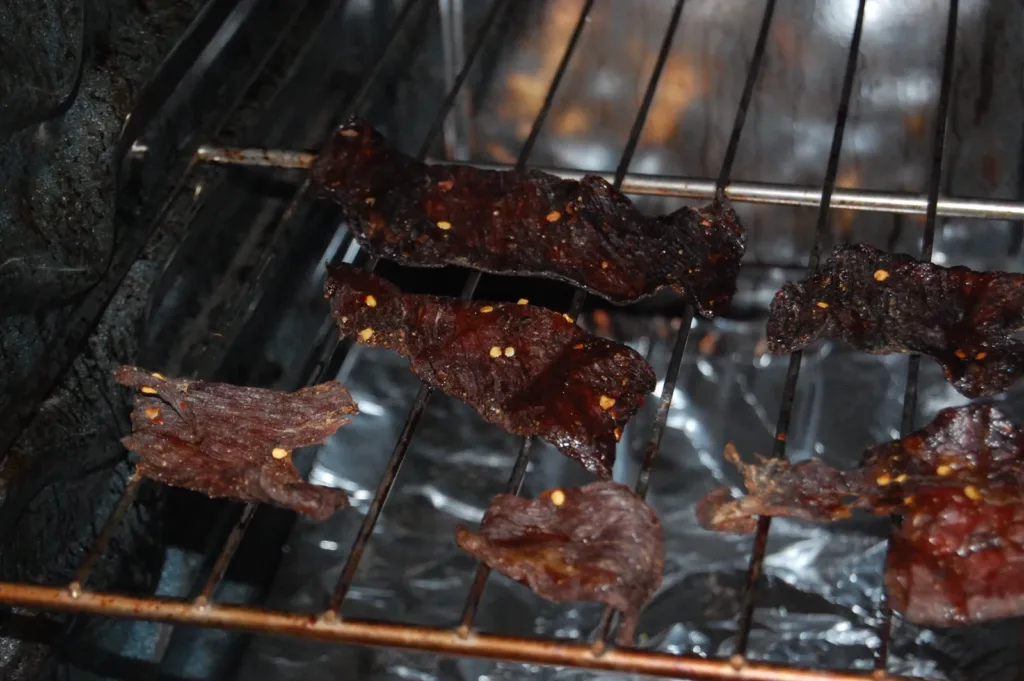
In Hulunbuir, air-dried beef is best understood as a portable Inner Mongolian meat tradition: beef is cut into strips, seasoned, air-dried, and often finished by baking or frying, so the bite can range from firm and chewy to crisp and oily rather than following one fixed recipe.
Tap any red Chinese text to hear it in Mandarin.
Why this dish matters
For a visitor in Hulunbuir, 风干牛肉 Fēnggān Niúròu is a regional meat snack and travel-friendly food, not a dish with one canonical restaurant address. Its interest lies in a preservation method suited to pastoral life: moisture is reduced, the meat shrinks, and the finished strips are easy to carry. The Inner Mongolia cultural-heritage record describes this as part of a wider Mongolian traditional meat practice, so it is more accurate to place Hulunbuir’s version within that broader tradition than to call it a Hulunbuir-only invention.
What “air-dried” means
The defining step is the air-drying itself. The Inner Mongolia local standard says that the product is made from beef that is trimmed, cut along the muscle grain, cured, air-dried, then cooked and packaged; its process allows different finishing methods, including boiling, steaming, baking or frying. The standard is for a regional product category, not a promise that every loose serving in Hulunbuir follows one identical recipe.
The regional quality institute’s explanation also distinguishes this product from a generic cooked-and-dried jerky: Inner Mongolian air-dried beef must include an air-drying stage, while the later step may be baking, frying or another documented treatment. In practical terms, look for the contrast between a dry, fibrous strip and the seasoning or browning added after drying.
How it is prepared
A government reference on Inner Mongolian beef jerky describes one representative method: remove fascia from the beef, cut it into long strips, season it with salt, scallion, ginger and sugar, cure it for about 12 hours, and hang it in a ventilated place for roughly 1–3 days, with the duration changing with season and dryness. The same source describes a baked version and a fried version. These timings are an example, not a universal household or shop specification; commercial products can be made under controlled rooms and with different final treatments.
That distinction matters when you buy a packet or order a serving. 烤制 Kǎozhì styles tend to emphasize a dry, springy chew, while 炸制 Zházhì styles add oil aroma and a crisper surface. Texture is affected by cut, drying level, seasoning and final cooking, so “air-dried beef” is a family of related products rather than one fixed mouthfeel.
How to order and compare it
Show or type 风干牛肉 Fēnggān Niúròu when asking for the dish. You can also try the longer form 风干牛肉干 Fēnggān Niúròugān. Search for 风干牛肉 Fēnggān Niúròu on Meituan (美团) or Amap / Gaode Maps (高德地图); add 呼伦贝尔 Hūlúnbèi’ěr if a national or regional search returns too many results. Treat the results as a way to find current nearby supply, not as a ranking of authenticity.
Before choosing, read the menu or package for the exact style, check recent reviews and current opening information, and ask whether the item is ready to eat or needs heating. If you are buying a packaged product, also check the ingredient list, production date and storage instructions. Do not assume that a spicy, five-spice, baked or fried version is the only local form, and do not infer that a particular shop represents the whole city.
Dietary and practical notes
This is a beef product, so it is not vegetarian. Salt level, firmness and seasoning can vary between producers; anyone avoiding beef, limiting salt, or managing food allergies should ask about the ingredients rather than rely on appearance. The official certification requirements list common permitted seasoning inputs such as salt, sugar and soy sauce, but a shop’s actual recipe and label remain the reliable source for what is in the portion you receive.
Because this is a dish rather than a fixed attraction, it has no single visitor entrance, ticket, station, or return route. Use the Chinese name to locate a currently operating nearby seller after you arrive in the part of Hulunbuir you are visiting.
More dishes to compare
Explore related local specialties and compare their names, preparation notes and ordering guidance.
Zhuozishan smoked chicken 卓资山熏鸡 →
Chicken is seasoned and cooked before a smoking stage gives the skin its characteristic brown color and aroma. The bird is then chopped or pulled into portions for serving. The skin has a concentrated smoky fragrance, while the meat beneath is tender and savory. Different parts offer leaner or richer bites.
Nantun simmered beef ribs 水煮南屯牛排 →
Large bone-in beef ribs are simmered until the meat becomes tender, with relatively straightforward seasoning. They are served in generous pieces that require a little cutting or pulling at the table. The attraction is substantial beef flavor and the contrast between meat, fat and softer connective tissue. This is a boiled-meat preparation rather than a Western grilled steak.
Sources & reading
Recipes and servings vary between kitchens.
Image credits & notes (1)
- Beef jerky strips hanging on a rack during drying; a generic process reference photographed in Toronto, Canada, not in Hulunbuir. Photo: Stefano A. (Flickr user joesixpac), Toronto, CanadaPhoto: CC BY 2.0