

Huizhou Ham Stewed with Soft-Shell Turtle 徽州火腿炖甲鱼
Huizhou Ham Stewed with Soft-Shell Turtle is featured among the local specialties of Anhui.
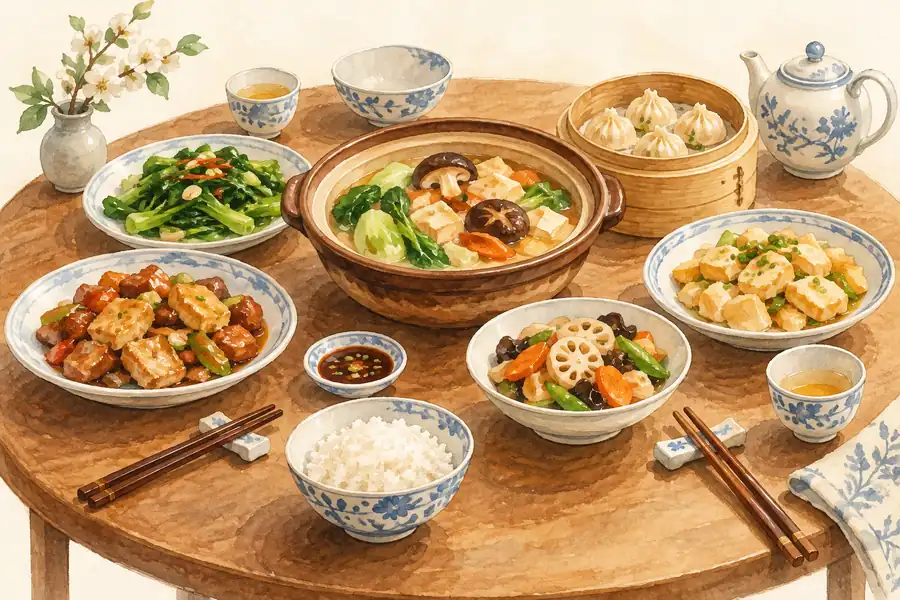
Huizhou Ham Stewed with Soft-Shell Turtle (徽州火腿炖甲鱼) is a clay-pot stew of soft-shell turtle and ham from the old Huizhou (徽州) region, which Chinese Wikipedia equates with today's Huangshan (黄山) city and Jixi (绩溪) county in Anhui and Wuyuan (婺源) county in Jiangxi. It heads Chinese Wikipedia's list of the most representative dishes of Hui cuisine (徽菜), and China Economic Net calls it a traditional Huizhou dish whose original name was "clear-stewed horse-hoof turtle" (清炖马蹄鳖).
Ingredients
The main ingredient is the "sand-bed horse-hoof turtle" (沙地马蹄鳖) of the Huizhou mountains, with ham and a ham bone as the seasoning. China Economic Net explains the horse-hoof name with a folk rhyme: the turtles live in water clear enough to see the sandy bottom, have white bellies free of mud, thick flesh and a raised back, and are about the size of a horse's hoof. It says Huizhou turtles have thick, gelatinous, tender meat with no muddy taste.
China Economic Net's recipe uses 500 grams of turtle, half a ham bone, 70 grams of ham, clear stock and Shaoxing wine (绍酒), with spring onion, ginger, sesame oil, rock sugar and a little ground pepper.
How it is made
The turtle is bled, scalded in water at 80 °C and its skin membrane peeled off, then opened and cleaned; its eggs are kept. The meat is cut into strips about 3.3 by 2 centimetres and blanched. The pieces are laid neatly in a clay pot with four chunks of fat-and-lean ham, a knotted spring onion, crushed ginger and the ham bone around them, and clear stock and Shaoxing wine are added.
The pot is brought to the boil over a strong flame and skimmed, rock sugar goes in, and the stew simmers on a low flame for about an hour; China Economic Net describes it sitting over a charcoal stove. The onion, ginger and bone are removed, the ham is sliced and laid over the turtle in a pattern, and the dish is finished with sesame oil and pepper and brought to the table in its clay pot.
Where it comes from
China Economic Net records that in the early Ming dynasty the gentry of Huizhou sent horse-hoof turtles to Zhu Yuanzhang (朱元璋), the dynasty's founder, and that the turtle was afterwards listed as a tribute item.
Flavour and texture
The finished broth is clear and rich in gelatin, the meat is soft and fragrant, and the soft rim of the shell is smooth. Chinese Wikipedia notes that the dish has no fishy taste.
Sources & reading
Written from the linked sources and fact-checked against them on 2026-09-25. Recipes and servings vary between kitchens.