

Yijiang Mutton 弋江羊肉
Yijiang Mutton is featured among the local specialties of Anhui.
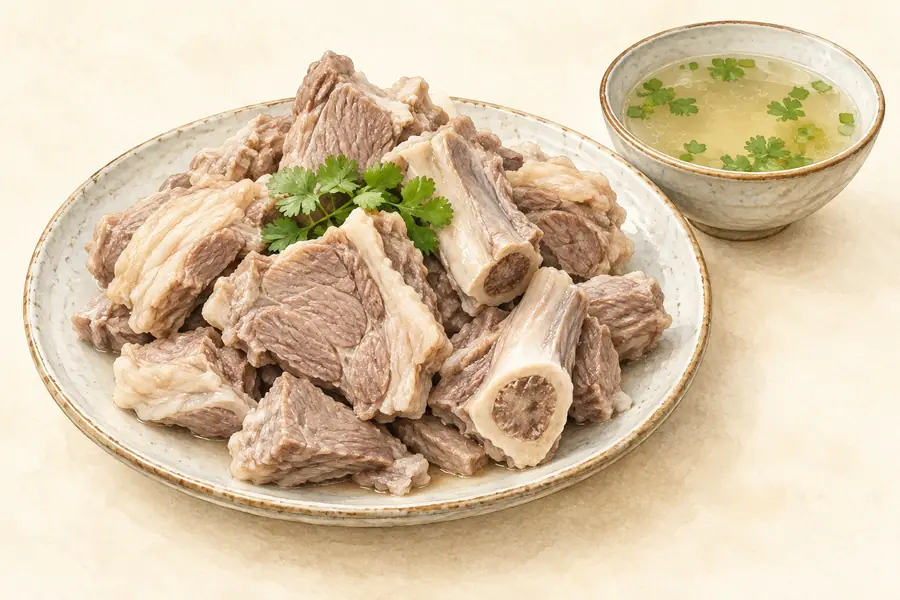
Yijiang Mutton (弋江羊肉) is the mutton of Yijiang in Nanling, Wuhu, an autumn and winter soup simmered from free-range river-embankment goat with ginger, spring onion, soy sauce, water chilli and rock sugar.
How it is cooked
The dish is documented as a long, gentle simmer. Free-range local goat from the hundred-li embankment of the Qingyi river is washed and cut into pieces, put into a pot of cold water, brought to the boil and skimmed, then simmered on low heat with ginger, spring onion, soy sauce, water chilli and rock sugar for about an hour and a half.
The article singles out one step as the reason the dish tastes the way it does: the meat starts in cold water rather than being dropped into a boiling pot, which it says keeps the mutton moist and tender. It also refers to a handed-down formula for removing the gamey smell, without disclosing it.
Flavour & texture
The published description is of mutton that is fragrant rather than gamey, rich without being greasy, and tender enough to melt, with an especially thick, savoury broth. The chilli and rock sugar in the pot suggest a rounded rather than sharply hot seasoning, though no proportions are given.
Wuhu's municipal government page takes a shorter line on the same dish, calling it a well-known local snack with more than a century of history that is both flavourful and inexpensive. The dish was not tasted.
Local roots
The local standing of the dish is documented rather than implied: in 2008 the Yijiang mutton preparation technique was listed in the first batch of county-level intangible cultural heritage in Nanling, and the Wuhu government lists the dish among the city's own famous snacks.
Its season is part of its identity: the local article describes it as an autumn and winter food taken as a hot bowl of soup, which matches a dish built on a long simmer.
Ingredients & dietary needs
The documented ingredients are goat, ginger, spring onion, soy sauce, water chilli and rock sugar, with the water itself doing most of the work. The animal is described as free-range goat raised along the river embankment, which is a claim about sourcing rather than about breed.
Two things are worth checking at the table. Water chilli and soy sauce are both in the pot, so a low-salt or mild version needs to be asked for rather than assumed. The broth is the dish, so anyone avoiding goat has no obvious substitute here, and the source does not describe a vegetarian alternative.
How to order
Order it as a bowl of soup rather than as a plated meat dish, and ask whether it comes with the broth alone or with meat and offal in the bowl. If you want to taste the seasoning clearly, ask for the water chilli to be kept light, since it is simmered in rather than added at the table.
The dish is seasonal, so in autumn and winter it is likely to be on the menu of mutton restaurants in the Yijiang area. Outside that window, availability depends on the shop.
How to eat it & plan a meal
This works as a shared pot or as individual bowls, and the broth is the part to finish, so rice or plain noodles alongside will take up the extra liquid. Because the dish is a winter one, plan it as a warming centrepiece and add lighter dishes rather than another heavy meat; the Nanling Yijiang area is where the dish belongs.
More dishes to compare
Explore related local specialties and compare their names, preparation notes and ordering guidance.
Yeji Mutton 叶集羊肉 →
Yeji Mutton (叶集羊肉) belongs to Yejia district in Lu'an, and the method promoted there is a red braise: goat stir-fried in hot oil and then simmered with spring onion, ginger, spices, soy sauce and sugar. The Yijiang dish is instead a long simmer started in cold water with chilli and rock sugar, served as a broth rather than as a sauce-coated plate. The two names are built the same way — place plus 羊肉 — but the cooking behind them is not interchangeable, so ordering either one means getting that region's version rather than mutton in general.
Questions before you order
What makes Yijiang Mutton distinct?
The local account singles out starting the meat in cold water and simmering it on low heat for about an hour and a half with ginger, spring onion, soy sauce, water chilli and rock sugar. The technique was listed in Nanling county's first batch of intangible cultural heritage in 2008.
When is it eaten?
In autumn and winter, as a hot bowl of mutton soup. The local description frames it as a seasonal, warming dish rather than a year-round plate.
Sources & reading
The supplied food list supports this name and regional association. The culinary terms below are explained as menu vocabulary; a local recipe, origin story and venue availability have not been independently verified.