

Baoluo noodles 抱罗粉
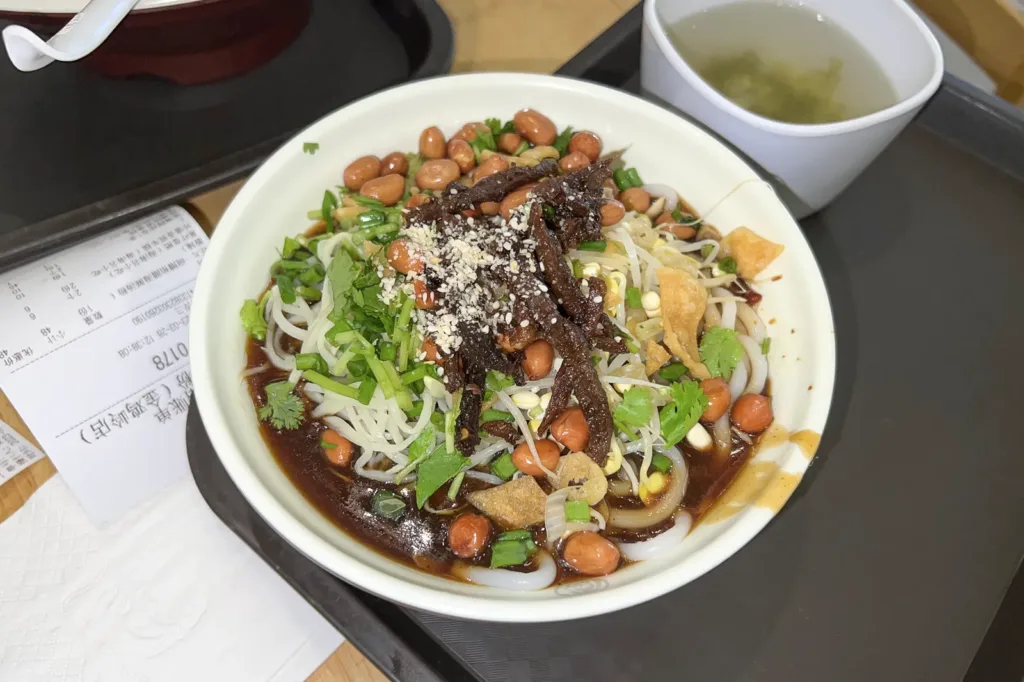
Baoluo noodles are a Hainan rice-noodle dish associated with Baoluo Town in Wenchang. The strands are slightly thicker and more resilient than very fine Hainan noodles. A bowl may arrive as tangfen (汤粉, noodles in broth) or yanfen (腌粉, dressed noodles), with toppings such as dried beef, peanuts, pickled vegetables, bamboo shoots, sesame and herbs.
Tap any red Chinese text to hear it in Mandarin.
What the name tells you
The name refers to Baoluo Town in Wenchang City, not to a particular restaurant or a dish invented in Haikou. Local reporting describes Baoluo noodles as a branch of the island’s wider Hainan-noodle tradition whose method, toppings and soup changed as it became established in Baoluo.
The dish is also part of the region’s living food heritage. Hainan International Communication Network reports that Baoluo rice-noodle making was placed on the Wenchang municipal intangible-cultural-heritage list in 2011. That status describes a recognised local craft; it does not mean that every kitchen uses one fixed recipe.
Texture and preparation
The noodles start with rice. One account describes a traditional process of grinding good-quality rice into a slurry, pressing it into a mass, kneading it repeatedly, and forming the strands. The result is usually rounder, slightly translucent and more supple than fine vermicelli, with enough bite to stay present under broth or sauce.
Recipes vary between kitchens. The reliable point to expect is the contrast between the smooth, springy rice noodle and a strongly seasoned liquid or dressing. Do not assume that a bowl labelled “Baoluo noodles” will contain exactly the same toppings as the next bowl.
Two ways to order it
Soup noodles (汤粉). The older style of broth is associated with beef bones; later versions are also described as drawing on Cantonese-style superior-soup methods. The topping may include dried beef, lean pork, pork intestine or other offal, bamboo shoots, pickled greens and chilli. The broth can taste savoury with a noticeable sweet-and-sour edge rather than simply salty.
Dressed noodles (腌粉 or dry-mixed noodles). Blanched noodles are coated with a thicker savoury dressing and finished with combinations of dried beef, peanuts, sesame, bamboo shoots, pickled cabbage or greens, bean sprouts, herbs and sesame or peanut oil. The toppings provide the bowl’s crunch and chew, while chilli or pepper adds heat if you choose it.
How to order
Show the Chinese name 抱罗粉 Bàoluó Fěn when searching or ordering. Ask whether the kitchen is serving 汤粉 Tāngfěn or 腌粉 Yānfěn; some menus may describe the second style simply as dry-mixed noodles. Before adding condiments, check which toppings are already included.
This is not a dish to treat as automatically vegetarian or allergy-safe. Broth and toppings may contain beef, pork, organ meats, peanuts, sesame, pickled ingredients or other seasonings. If you avoid any of these, ask the staff directly about both the broth and the topping tray.
Where to eat it
You can find Baoluo noodles all over Hainan, so there is no need to seek out one particular restaurant. To find one near you, search for “抱罗粉” in Meituan (美团) or Amap (高德地图) and check recent reviews, distance and opening hours.
More dishes to compare
Explore related local specialties and compare their names, preparation notes and ordering guidance.
Lingshui sour noodles 陵水酸粉 →
Thin rice noodles are dressed with a sour sauce and an assortment of prepared toppings, which may include peanuts, herbs and fish. The ingredients are mixed at serving rather than cooked into one soup. The noodles are soft and slippery, with a tangy, savory coating and crunchy or chewy accents from the toppings.
Xiangou beef hotpot 仙沟牛肉火锅 →
Selected beef cuts are cooked in a shared hotpot, with the restaurant's broth and dipping sauces determining the final flavor. Thin meat slices and firmer offal cuts require different cooking times. The attraction is comparing tender lean meat, richer fatty cuts and other textures as they cook. The broth becomes more savory during the meal.
Sources & reading
Recipes and servings vary between kitchens.
Image credits & notes (1)
- Mixed Baoluofen with beef at Qiansheng Hainanfen in Sanya; a regional reference photo, not a photograph of a Haikou shop. Photo: N509FZPhoto: Creative Commons Attribution-ShareAlike