

Beijing pork and pickled-cabbage casserole 砂锅白肉
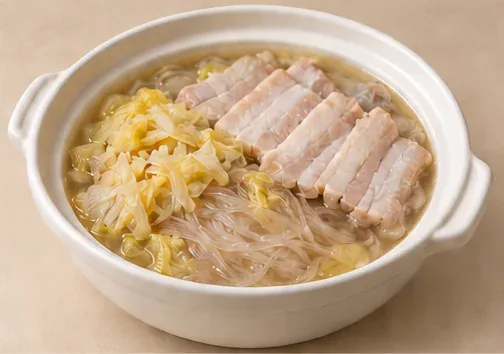
Shaguo bairou (砂锅白肉) is a Beijing-associated casserole of thinly sliced cooked pork, Chinese pickled cabbage and glass noodles warmed together in a light meat broth. At the Beijing restaurant Shaguoju, the documented version uses pork from the rear-end cut; versions and condiments vary, so expect a tangy, pork-rich hot pot rather than one fixed recipe.
Tap any red Chinese text to hear it in Mandarin.
What the name means
Shaguo means an earthenware casserole, while bairou means pale, cooked pork in this dish—not raw meat. The name describes both the serving vessel and the sliced meat. Shaguoju, a long-established Beijing restaurant on Xisi South Street, lists shaguo bairou as its signature dish; Beijing tourism sources associate the casserole with this restaurant and the city’s local cuisine.
This is a distinct Beijing restaurant dish, not a claim that every pickled-cabbage-and-pork pot originated in Beijing. Related sour-cabbage-and-pork dishes are also part of the broader Northeast Chinese food tradition.
What goes into the casserole
The Beijing tourism account of Shaguoju’s house specialty describes thin slices of pork from the rear-end cut, layered over Northeast-style pickled cabbage and glass noodles. Pork belly is another documented home-cooking choice, so the cut is not universal. A recipe version starts with pork boiled until cooked, then chilled enough to slice thinly; cabbage and softened noodles go into the casserole with the pork, aromatics and stock.
The pot is brought to a boil and gently simmered so the cabbage’s tartness, the pork and the broth meet in the same dish. Recipes use bone stock or the pork’s cooking liquid, with scallion and ginger as common aromatics. The precise cut, seasoning and proportions vary between kitchens.
What to expect in the bowl
The broth is pale rather than darkly braised. Its savory pork-and-stock base is lifted by the bright tang of pickled cabbage. Thin pork slices are soft and succulent, with fatty edges in a belly-based version; cabbage turns tender but keeps some bite, while glass noodles are slippery and soak up the broth. The appeal is the contrast between mellow meat, sour cabbage and warm, clear soup—not a thick sauce or a sweet glaze.
How to eat it
The casserole is served hot, often with dipping condiments at the table. A documented Beijing-style set of accompaniments includes sesame paste, fermented chive-flower relish, fermented bean curd, chilli oil, garlic and vinegar. Try the broth and meat plain first, then add a little condiment to a dipping bowl: sesame paste makes the taste rounder, while garlic, vinegar or chilli gives it a sharper edge. These are options, not a compulsory or fixed sauce formula.
Pork and meat broth are defining ingredients. Ask whether the pot includes vermicelli and which dipping sauces are served if those details matter to your order. Useful questions include 有砂锅白肉吗? Yǒu shāguō báiròu ma? (“Do you have shaguo bairou?”) and 肉是五花肉还是后臀尖? Ròu shì wǔhuāròu háishi hòutúnjiān? (“Is the pork belly or a rear-end cut?”).
Where to eat it
You can find Shaguo bairou all over Beijing, so there is no need to seek out one particular restaurant. To find one near you, search for “砂锅白肉” in Meituan (美团) or Amap (高德地图) and check recent reviews, distance and opening hours.
More dishes to compare
Explore related local specialties and compare their names, preparation notes and ordering guidance.
Luzhu bread-and-offal stew 卤煮火烧 →
Wheat bread, tofu and pork offal soak in a savoury broth. This filling bowl is common in traditional snack restaurants.
Lamb hotpot 涮羊肉 →
Thin lamb slices cooked at the table, often paired with sesame sauce.
Sources & reading
Recipes and servings vary between kitchens.