

Changsha rice noodles 长沙米粉
Changsha rice noodles are a breakfast bowl of fresh rice noodles, clear broth and a chosen mazi (topping). The Changsha style is especially associated with flat-cut noodles, long-simmered stock and a choice between toppings cooked ahead and toppings stir-fried to order; you finish the bowl with pickles or chilli to suit yourself.
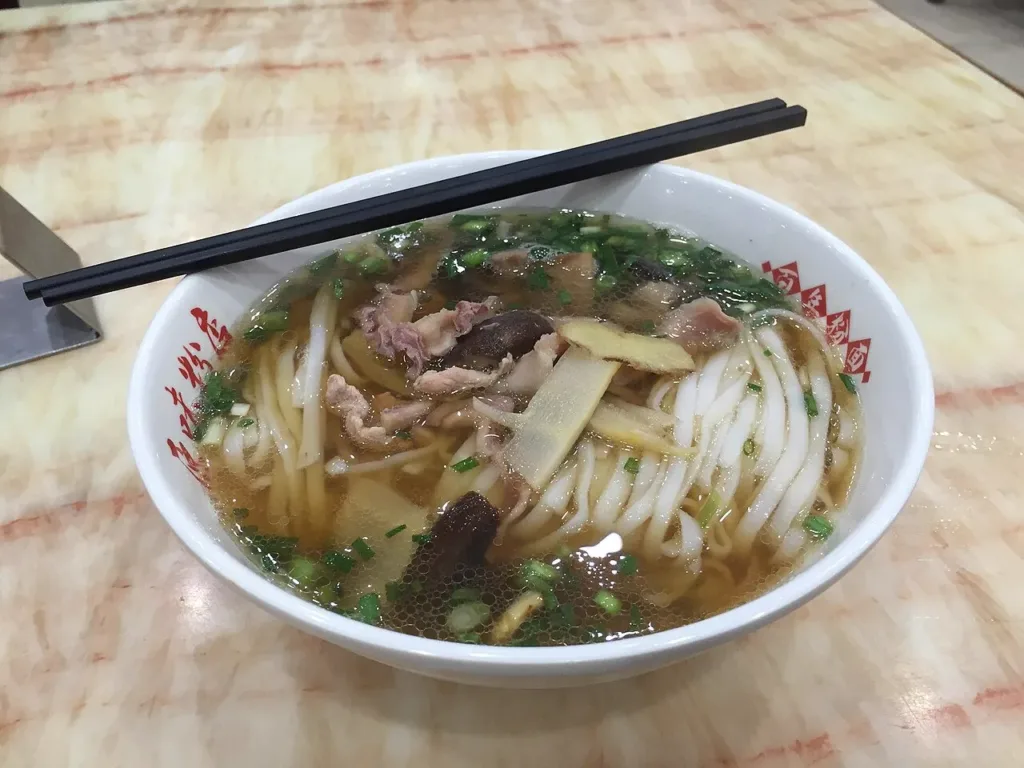
Tap any red Chinese text to hear it in Mandarin.
What you are eating
Changsha rice noodles are a Changsha-associated style within Hunan’s much wider, city-by-city rice-noodle family, not one fixed recipe used across the province. Local reporting usually contrasts Changsha’s preference for flat-cut noodles (bianfen, 扁粉) with round noodles, although both can appear on Changsha menus. The soft, thin strands take on broth easily, but the character of the bowl also comes from its stock, topping and table condiments.
A useful first order is rousi fen (肉丝粉), rice noodles with shredded pork. Depending on the shop, mazi (码子) may include braised beef, minced pork, a pork patty with egg, ribs, pork offal, or pork and green chilli cooked in a wok. These are real menu variations rather than a mandatory list for every bowl.
How the bowl is made
Traditional flat noodles are made from early-season indica rice: the rice is soaked, ground with water, spread as a batter in a steaming tray, cooled, folded and cut into strands. One local account describes steaming the sheet for two or three minutes before cutting it. Many shops now work with freshly prepared noodles that are blanched just before serving, so the hand-made process is a useful way to understand the texture, not a promise about every shop.
The Changsha bowl is built around a clear stock, often made with pork bones and sometimes chicken and simmered for many hours. Seasoning may include soy sauce, salt, scallion and lard before the noodles and hot broth are added. The topping is where the counter becomes more personal: gai ma (盖码) is prepared in advance and placed over the noodles, chao ma (炒码) is stir-fried to order, and wei ma (煨码) is cooked slowly ahead of time. A bowl may be finished with pickled mustard greens, sour beans, chopped chilli, garlic greens or a fried egg, but the exact set varies by shop.
How to order
Start with the Chinese name 长沙米粉 Chángshā Mǐfěn. For a classic introduction, ask for 肉丝粉 Ròusī Fěn and decide whether you want flat or round noodles if the shop offers both. Ask whether a topping is 煨码 or 炒码 if you want to know whether it was cooked ahead or made in the wok; the menu or counter may use simpler wording.
Changsha has an old ordering vocabulary, but you do not need to memorise it. 宽汤 Kuān Tāng asks for more broth, 轻挑 Qīng Tiāo for a smaller portion of noodles, and 过桥 Guòqiáo for the topping to be served separately. 免青 Miǎn Qīng can mean no scallion or garlic greens, while 不要辣 Bú Yào Là asks for no chilli. Plain Chinese is fine if a shop does not use the older terms. Taste the broth before adding the pickles or chilli on the table.
The bowl is not automatically fiery. Traditional Changsha accounts describe a relatively clear, savoury base with chilli and pickles available for the diner to add, although a pre-seasoned topping can already be spicy. That makes it easy to choose a mild bowl, but not safe to assume that every topping can be changed after cooking.
Dietary questions
The noodles themselves are rice-based, but a bowl can contain pork-bone or chicken stock, lard, pork, beef, offal, soy sauce and preserved vegetables. A dish that sounds like “vegetable noodles” is not proof of a vegetarian broth. Ask about the stock, oil, topping and sauces before ordering. If you avoid gluten or have an allergy, ask how the seasonings and kitchen equipment are handled; the appearance of the noodles cannot guarantee a safe meal.
Practical tips
Rice-noodle shops are commonly found in ordinary streets and neighbourhood storefronts, and breakfast is the most characteristic time to eat it, although some shops serve later meals as well.
Where to eat it
You can find Changsha rice noodles all over Hunan, so there is no need to seek out one particular restaurant. To find one near you, search for “长沙米粉” in Meituan (美团) or Amap (高德地图) and check recent reviews, distance and opening hours.
More dishes to compare
Explore related local specialties and compare their names, preparation notes and ordering guidance.
Changde rice noodles 常德米粉 →
Round rice noodles are warmed in hot broth and served with a chosen meat topping. Shops distinguish their bowls through the stock, prepared toppings and condiments as much as the noodles themselves. The strands are smooth and resilient, carrying the broth without a wheat flavor. Beef, pork or other toppings change both richness and seasoning.
Tangyou baba 糖油粑粑 →
Glutinous-rice dough is shaped into small cakes and fried, then coated or simmered briefly in a sweet sugar mixture. The cooking method gives the surface its glossy golden appearance. The outside is lightly firm while the center remains soft and chewy. Sugar adds richness without changing the underlying sticky-rice character.
Sources & reading
Recipes and servings vary between kitchens.
- 米粉大擂台·长沙篇丨最是那碗小清新原汤粉
- 什么是一碗正宗的长沙米粉?
- 湖南味道|长沙经济复苏下的店家摊主们
- Where Spice Meets Bliss: Exploring Changsha Cuisine
- 【红网时刻】千亿米粉江湖 “湖南米粉”加速快跑
- Nearly 1,000 kilograms of rice noodles sold in a day
- Hunan Rice Noodles (Hunan Mifen): Changsha Toppings and Ordering Slang, Changde Beef Noodles, Hengyang and Qifengdu Fish Noodles, City by City
Image credits & notes (1)
- A bowl of rice noodles photographed at Authentic Taste near Changsha Railway Station in Changsha, China, on 24 March 2016. Photo: N509FZPhoto: Creative Commons Attribution-ShareAlike