

Changsha stinky tofu 长沙臭豆腐
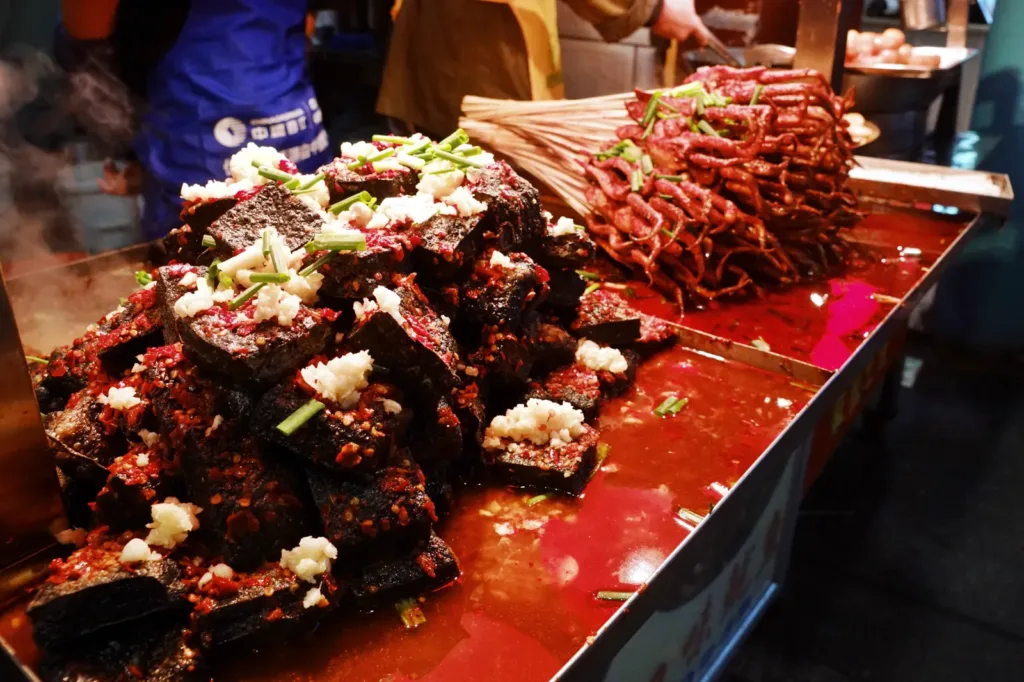
Changsha stinky tofu is a pungent, locally associated tofu snack: tofu is soaked in a seasoned brine, fried until the outside darkens and crisps, then finished with chilli, garlic and other savoury sauce. Its particular pleasure is the contrast between the assertive aroma, a crisp shell and a soft centre—not a single fixed recipe.
Tap any red Chinese text to hear it in Mandarin.
What makes the Changsha version distinctive
In Changsha, you may also hear the snack called chou ganzi (臭干子). The name is blunt, but the eating experience is more balanced than the smell suggests. A square of tofu is brined so flavour and colour move into it, fried, and often opened or pierced so sauce can run into the centre. Local descriptions of the brine mention fermented black beans, mushrooms, winter bamboo shoots and salt; the exact mixture belongs to the maker.
Stinky tofu is not one national recipe: brine, fermentation and finishing methods vary between regions. The Changsha version is best understood as a local style within that wider family.
The national intangible-cultural-heritage register records the Fire Palace method as one Changsha lineage. It describes white tofu soaked in a specially made brine, fried—traditionally with close control of oil and heat—and served with a soup built around chilli and garlic. That is useful context for the city’s food history, but it should not be treated as a universal recipe for every stall selling black tofu.
Flavour and texture
The aroma arrives before the first bite. A good fresh batch should give you a brittle or crisp fried surface and a noticeably soft, mild interior. Chilli oil, garlic, savoury sauce and, in some current presentations, fresh coriander add heat and freshness around the fermented character. Changsha’s version is therefore less about eating a plain cube than about tasting how the brine, frying and finishing sauce work together.
Order a small portion first. If you want to isolate the tofu itself, show 长沙臭豆腐 Chángshā Chòu Dòufu and ask for less sauce or less chilli; the Chinese name is more useful than the English label when ordering. A small serving is also a sensible introduction because this is a deep-fried, strongly seasoned snack rather than a light plain tofu dish.
How to choose and eat it
Do not treat the dark colour as a guarantee about ingredients. Tofu is soy, and brine, sauce, toppings and frying arrangements vary between kitchens. If you have a soy allergy, follow a restricted diet or need a strictly vegetarian serving, ask what is in the brine and sauce and whether the fryer is shared. The classic local association is strong, but the final bowl or plate is still made by an individual vendor.
The Changsha connection
The Fire Palace craft is formally listed under Hunan, with Changsha as the declaring area and Changsha Fire Palace Co. as the protection unit. The register places Fire Palace on Pozi Street and links its food tradition to the small-eating culture that grew around the temple precinct. This supports Changsha’s association with the dish without claiming that the city invented every form of stinky tofu or that one venue owns the whole category.
Where to eat it
You can find Changsha stinky tofu all over Hunan, so there is no need to seek out one particular restaurant. To find one near you, search for “长沙臭豆腐” in Meituan (美团) or Amap (高德地图) and check recent reviews, distance and opening hours.
More dishes to compare
Explore related local specialties and compare their names, preparation notes and ordering guidance.
Xintian vinegar-set tofu 新田醋水豆腐 →
Soybeans are ground into milk, strained and set using an acidic vinegar liquid, then pressed. Xintian makers may fry the tofu before it reaches the table or use it in further cooking. The tofu has a concentrated bean flavor and firm, fine texture; frying adds browned edges, while the finished sauce determines its heat.
Zimei tuanzi 姊妹团子 →
Glutinous-rice dough encloses either a sweet filling or a savory mixture, then is steamed into small dumplings. The two types may have different shapes to help distinguish them. The wrapper is soft and sticky, with a rich sweet center or a savory filling that can include pork and mushrooms.
Sources & reading
Recipes and servings vary between kitchens.
Image credits & notes (1)
- A street stall in Changsha displays dark fried stinky tofu topped with chilli and garlic. Photo: LennartbjPhoto: CC BY-SA 4.0