

Rice-Meal Steamed Pork 粉蒸肉
Rice-Meal Steamed Pork is featured among the local specialties of Chongqing.
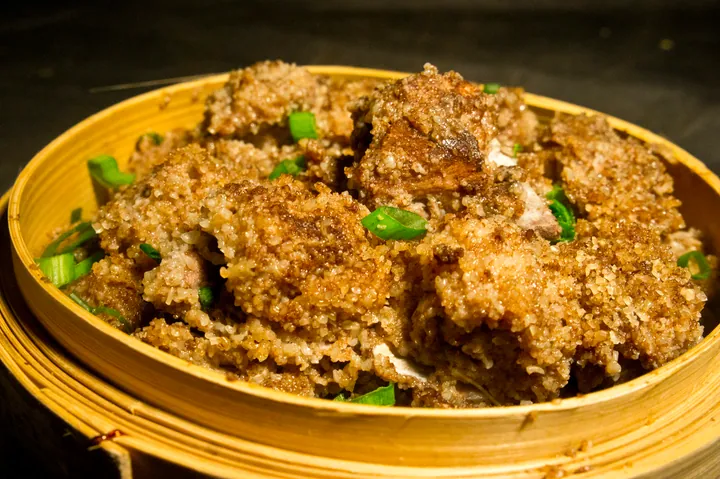

Photo adjustments
Full frame retained; proportionally resized and converted to WebP. No retouching or changes to the photographed subject. Card displays may crop the view.
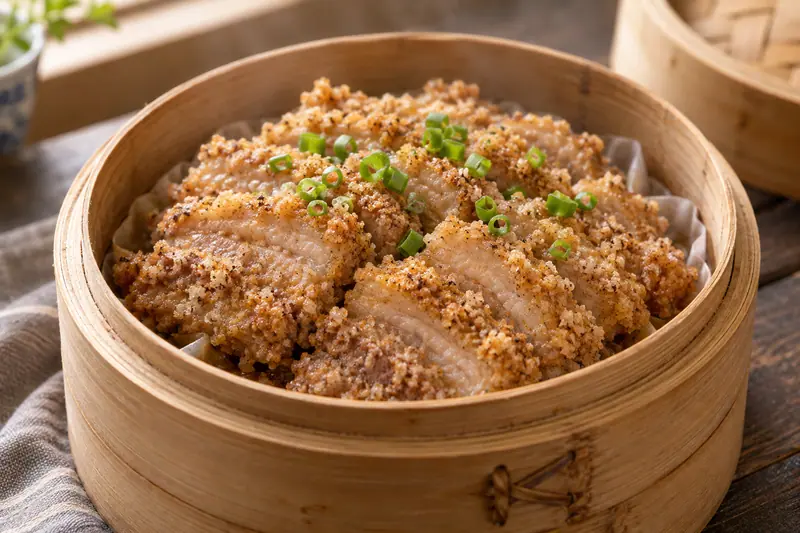
Rice-Meal Steamed Pork (粉蒸肉) is a Chongqing steamed pork dish, and its name states the method: 粉蒸 means coating food in ground rice meal before steaming it.
How it is made
Making the coating comes first. Rice is toasted in a dry wok, sometimes with peppercorn and star anise, then ground to a coarse meal rather than a fine flour, so the grains still have bite. Sliced pork belly is marinated with fermented bean paste, soy sauce, ginger, wine and sugar, then tossed with the meal until every piece is coated. The mixture is packed into a bowl over a layer of vegetable and steamed for a long time, during which the fat renders and soaks into the coating.
Flavour and texture
The coating turns soft, savoury and faintly sweet, tasting of the bean paste and spices it was mixed with, while the pork underneath becomes tender enough to cut with a spoon. Because the fat has gone into the meal, the slices feel rich but not greasy. Toasted rice also brings a light nuttiness, and a peppercorn-heavy mix leaves a mild tingle at the back of the mouth. The vegetable at the bottom is usually the richest mouthful in the bowl.
Local roots and traditions
Rice-meal steaming is a long-standing technique in Sichuan and Chongqing kitchens, used for pork, beef, ribs and even fish, and the assignment lists 粉蒸肉 as a Chongqing entry in its own right. The same method turns up at home tables and at banquets, where the bowl is steamed ahead and brought out at the end of the meal. Which cut, which spice mix and which vegetable the local version uses are not fixed by the assigned record, so ask.
Ingredients and dietary needs
The essentials are pork belly, toasted rice meal, fermented bean paste, soy sauce, ginger and spices; chilli, peppercorn, sugar and cooking wine vary by kitchen. Ask 是猪肉还是牛肉 (pork or beef), 辣不辣 for heat, and 有酒吗 if you avoid alcohol. The dish is pork fat by design and cannot be ordered lean; gluten can appear through soy sauce and bean paste, so ask 用酱油吗 if that matters to you.
How to order Rice-Meal Steamed Pork
Order by saying 粉蒸肉 and then checking the three variables: 粉蒸牛肉 (beef) may be on the same menu, 小份 or 大份 fixes the size, and 辣不辣 sets expectations for the spice mix. Ask 底下是什么 (what is underneath) if you want to know about the vegetable layer, and 可以打包吗 if you plan to take leftovers away, since the dish reheats well by steaming.
How to eat it and plan a meal
Serve it as one dish among several: a spoonful of pork and meal over plain rice is the standard way to eat it, and the vegetable underneath counts as the accompanying vegetable. Because it is rich, one bowl feeds two or three people alongside other dishes. Eat it hot, when the coating is soft; as it cools, the fat firms and the texture becomes heavier, so it is the last dish to linger over.
More dishes to compare
Explore related local specialties and compare their names, preparation notes and ordering guidance.
Shaobai Steamed Pork Belly 烧白 →
Shaobai Steamed Pork Belly (烧白) is the other steamed pork-belly entry on the same Chongqing list, and what distinguishes the two is what surrounds the meat in the bowl – 粉蒸肉 is built on a rice-meal coating, whereas 烧白 is layered differently – so each shop's version has to be checked rather than assumed.
Questions before you order
What is the coating actually made of?
Toasted rice ground to a coarse meal, usually with peppercorn or star anise. It is not a batter and not flour; the grains absorb the pork fat during steaming and give the dish its sandy, soft texture.
Is there a vegetable in the bowl?
Often there is – potato, sweet potato or pumpkin is common under the meat. Ask 底下是什么 if you want to know before ordering, since that layer is usually the richest part of the dish.
Sources & reading
The supplied food list supports this name and regional association. The culinary terms below are explained as menu vocabulary; a local recipe, origin story and venue availability have not been independently verified.