

Rice-Meal Steamed Pork 粉蒸肉
A Chongqing-familiar, regionally shared steamed dish: seasoned pork is coated in toasted, coarsely ground rice, then steamed until the grains turn soft and the meat tender.
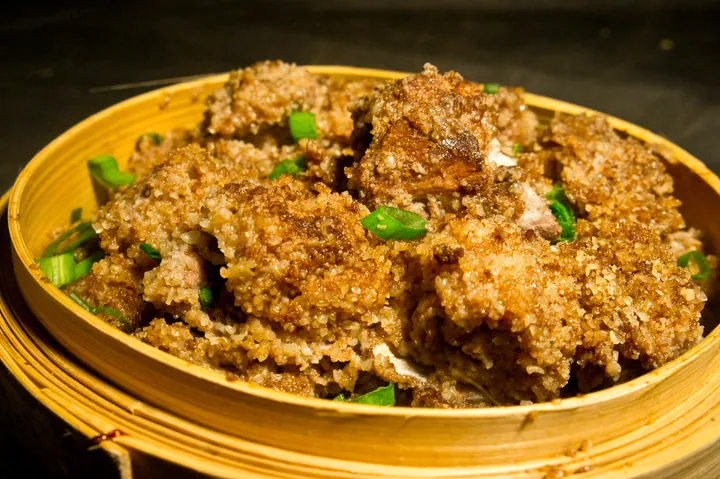
What to expect
粉蒸肉 (fěnzhēng ròu) describes a cooking method as much as a single recipe. Across south-central China, cooks make related versions; Chongqing’s connection is its place in local food culture, not an exclusive claim of origin. Chongqing food writing includes 粉蒸肉 among the steamed dishes served at Sichuan–Chongqing rural banquets, and describes regional “eight-bowl,” “nine-bowl,” and “ten-bowl” traditions built around large bowls of steamed food. The dish also has close relatives made with beef or ribs.
A common pork version starts with slices of pork belly seasoned with ginger, soy sauce and cooking wine. Sichuan-style recipes may add doubanjiang, while the rice coating can be made from toasted plain rice, sometimes mixed with sticky rice. Cooks toast the grains—sometimes with Sichuan pepper, star anise or other spices—then grind them coarsely. The pork is mixed with the grains and steamed in a bowl or steamer. As the rice softens, it absorbs the meat’s juices and rendered fat; the meat becomes tender while the coating stays pleasantly grainy rather than turning into a smooth batter.
Expect a warm, toasted-rice aroma, savory seasoning and soft, yielding pork. The rice coating tastes nutty and moist; a version with doubanjiang or Sichuan pepper can be spicier or gently numbing, but heat is not a fixed rule. Slices may be arranged over potato, sweet potato, pumpkin or taro, which catch the seasoned juices and become soft alongside the meat. Rice type, spices, seasoning and the vegetable bed vary by cook, so no one combination defines every Chongqing bowl.
Eat it hot with plain rice. Take a piece of pork with some of its rice coating, and try the vegetable underneath with the juices. Menus may instead offer 粉蒸牛肉 (rice-meal steamed beef) or 粉蒸排骨 (rice-meal steamed ribs); check the Chinese name before ordering. You can ask: “这是猪肉吗?” (Is this pork?), “辣不辣?” (Is it spicy?), and “底下是什么?” (What is underneath?). The dish is not necessarily fiery, but recipes differ; ask about chili, Sichuan pepper, bean paste and cooking wine if those ingredients matter to you.
More dishes to compare
Explore related local specialties and compare their names, preparation notes and ordering guidance.
Shao Bai 烧白 →
Shao Bai (烧白) is the other steamed pork-belly entry on the same Chongqing list, and what distinguishes the two is what surrounds the meat in the bowl – 粉蒸肉 is built on a rice-meal coating, whereas 烧白 is layered differently – so each shop's version has to be checked rather than assumed.
