

Hechuan Mutton Rice Noodles 合川羊肉粉
A Hechuan specialty built around rice noodles, mutton and a savory broth, with the seasoning and heat varying by kitchen.
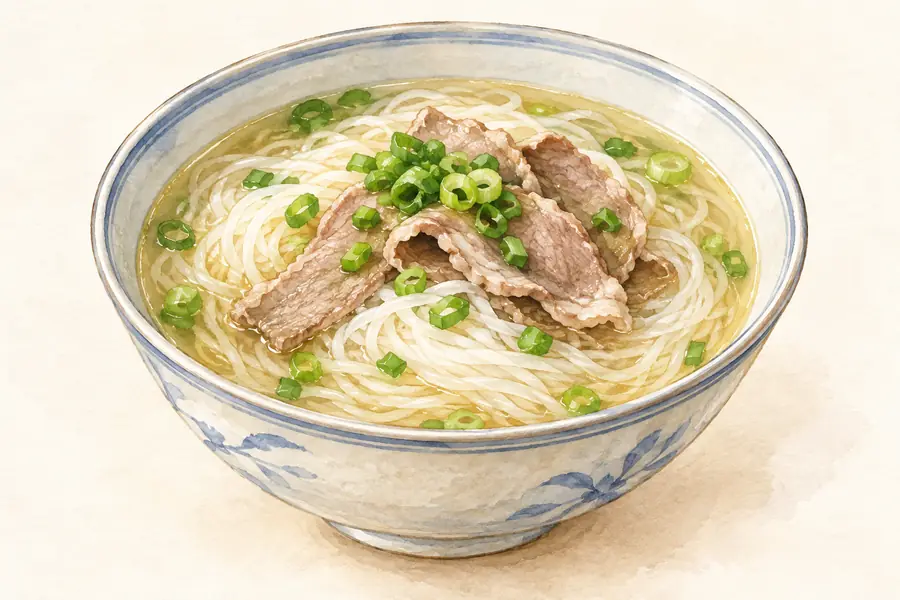
Hechuan mutton rice noodles pair cooked rice noodles with mutton in the bowl and a broth simmered with mutton. A Chongqing report describes the appeal as a three-part freshness: the noodles, the meat topping (臊子) and the soup each contribute their own flavor. This is a Hechuan-local specialty within Chongqing’s broader noodle culture, not a single fixed recipe for every bowl called mutton rice noodles.
One reported Hechuan method uses goat neck or ribs and partly fatty belly meat: the meat is blanched, stir-fried, then braised with seasonings. The same account describes rice soaked and ground into a batter, cooked into a dough, pounded for elasticity and pressed into strands. Another local recipe simmers mutton with aromatics and broth; recipes may use different cuts, bones and seasoning combinations. Hechuan white goat is a locally raised breed whose meat is used in dishes including mutton rice noodles, but that does not guarantee the provenance of meat in any particular restaurant bowl.
Expect a deeply savory lamb-and-spice aroma, tender meat and soft, smooth rice noodles with some spring to the bite. A red-oil bowl can carry chili warmth and Sichuan pepper’s numbing fragrance; garlic, scallion or cilantro may add a fresh, sharp finish. Seasoning, heat level and cuts vary by kitchen; one published home-cook recipe explicitly suggests adjusting spices to taste rather than treating them as a universal formula. Sip the soup as you eat the noodles and meat, and add chili or other table condiments only if offered and wanted. The broth, degree of heat, cuts and toppings are kitchen-specific.
There is no single restaurant or visitor entrance for this dish. Look for 合川羊肉粉 on menus in Hechuan or at restaurants elsewhere that identify their style; this guide does not promise current availability at a particular shop.