

Chongqing hotpot 重庆火锅
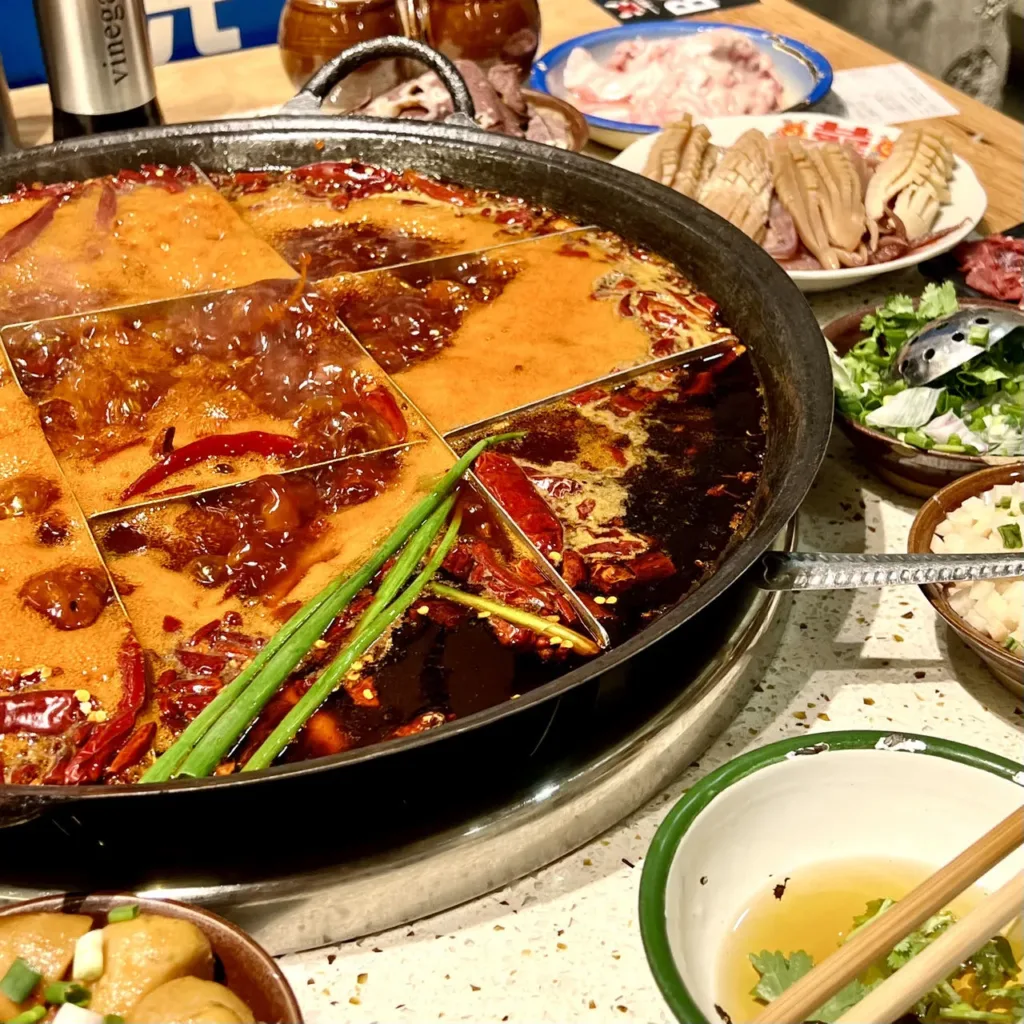
A communal Chongqing meal built around a bubbling, usually chili-red broth, fragrant with Sichuan pepper and often enriched with beef tallow. Diners cook thin-sliced meats, offal, tofu and vegetables at the table; each restaurant’s broth and ingredient selection differs.
Tap any red Chinese text to hear it in Mandarin.
What makes it Chongqing hotpot
Chongqing hotpot is a style of shared, table-side cooking rather than one fixed recipe. A 2026 municipal regulation defines it as a hotpot style originating in Chongqing, with distinctive techniques for frying, simmering and seasoning its base and a representative mala xianxiang profile: numbing, spicy and aromatic. Hotpot traditions are shared across the Sichuan–Chongqing region, and accounts of their early development disagree on a single birthplace; it is safer to describe the dish as deeply rooted in Chongqing without treating every part of hotpot history as settled. Chongqing hotpot preparation was included in the municipality’s representative intangible cultural heritage project list in 2019.
Broth, ingredients and taste
For a classic red broth, cooks commonly melt beef tallow and fry aromatics with dried chilies and Sichuan pepper before adding liquid stock or water. Ginger, garlic, scallion, fermented bean paste, fermented black beans and other spices may be used, but the blend and the balance of oil, heat and numbing pepper vary by restaurant. Chongqing’s government account describes an early preparation using tallow, chili, Sichuan pepper, ginger, garlic and beef-bone stock; contemporary recipes and production methods have continued to change. The city’s own food reporting likewise emphasizes that shops develop their own base recipes and that ingredient choice and frying sequence affect aroma and flavor.
A red pot may smell deeply toasted and savory, with chili warmth followed by Sichuan pepper’s tingling, numbing sensation. Tallow-based broth feels round and rich on the lips; the heat can linger. This is not a universal formula: some places offer lighter oil, mixed fats, a clear broth or a divided yuanyang pot so the table can combine red and mild soup. A nine-section jiugongge pot divides the cooking surface into compartments; it is a layout, not nine required flavors or a fixed ingredient set.
Common choices include thin-sliced beef or pork, tripe (maodu 毛肚), duck intestine (yachang 鸭肠), tofu and tofu skin, mushrooms, leafy greens, bean sprouts and potato. These are options, not a mandatory menu. Meat, offal and vegetables cook at different rates: ask the server how long an unfamiliar item needs, and use separate utensils for raw and cooked food. Diners often dip cooked bites in sesame oil with garlic; chopped scallion or coriander may be added. Rice or a mild side can temper the meal. Ask which fats and seasonings are in the broth and dipping sauce if you have dietary restrictions. A divided pot and a vegetable order do not by themselves prevent cross-contact with meat, seafood or shared utensils.
How to order and eat
Show the name 重庆火锅 (Chongqing hotpot) when ordering. Decide with the group whether you want a full red pot or a divided red-and-mild broth. If you need less intensity, ask for both “less chili” and “less Sichuan pepper,” since the two sensations are different. Broth charges, portion sizes, half portions and menu pricing vary by restaurant; confirm them before ordering rather than assuming a citywide standard.
Order a few dishes first, then add more after you see portion sizes. Let the broth return to a steady boil and follow staff guidance for cooking times, especially for offal and other unfamiliar ingredients. Lift cooked food with clean serving chopsticks or the utensils provided, not the chopsticks used to handle raw food. The meal is social and unhurried: people share the pot, cook in turns and adjust their own dipping sauce to taste.
Practical tips
The dish is also part of a wider Sichuan–Chongqing food culture, even though Chongqing now formally defines its own hotpot style and promotes its distinctive cooking craft.
Where to eat it
You can find Chongqing hotpot all over Chongqing, so there is no need to seek out one particular restaurant. To find one near you, search for “重庆火锅” in Meituan (美团) or Amap (高德地图) and check recent reviews, distance and opening hours.
More dishes to compare
Explore related local specialties and compare their names, preparation notes and ordering guidance.
Maoxuewang blood-curd stew 毛血旺 →
Blood curd, tripe and other chosen meat or vegetable ingredients are cooked in a red, chili-rich broth or sauce. The exact offal mixture varies substantially between restaurants. Soft blood curd contrasts with springy tripe and crisp vegetables, while chili oil and Sichuan pepper create a strong, lingering finish.
Jiucun roasted pork brain 九村烤脑花 →
Pork brain is placed in a small tray with chili seasoning and aromatics, then roasted until cooked through. The tray retains the soft ingredient and its flavored juices. The texture is exceptionally delicate and creamy, while chili, herbs and other seasonings give a forceful contrast to the mild organ flavor.
Sources & reading
Recipes and servings vary between kitchens.
Image credits & notes (1)
- A divided Chongqing hotpot with chili-red broth and ingredients for cooking at the table. Photo: LeeinmPhoto: CC BY-SA 4.0