

Jiangbei Old-Style Hotpot 江北老火锅
A Chongqing hotpot tradition linked to Jiangbei’s historic riverbank stalls and early tripe-and-offal eating. Its history is debated, and today the name describes a local strand of Chongqing hotpot rather than one fixed recipe.
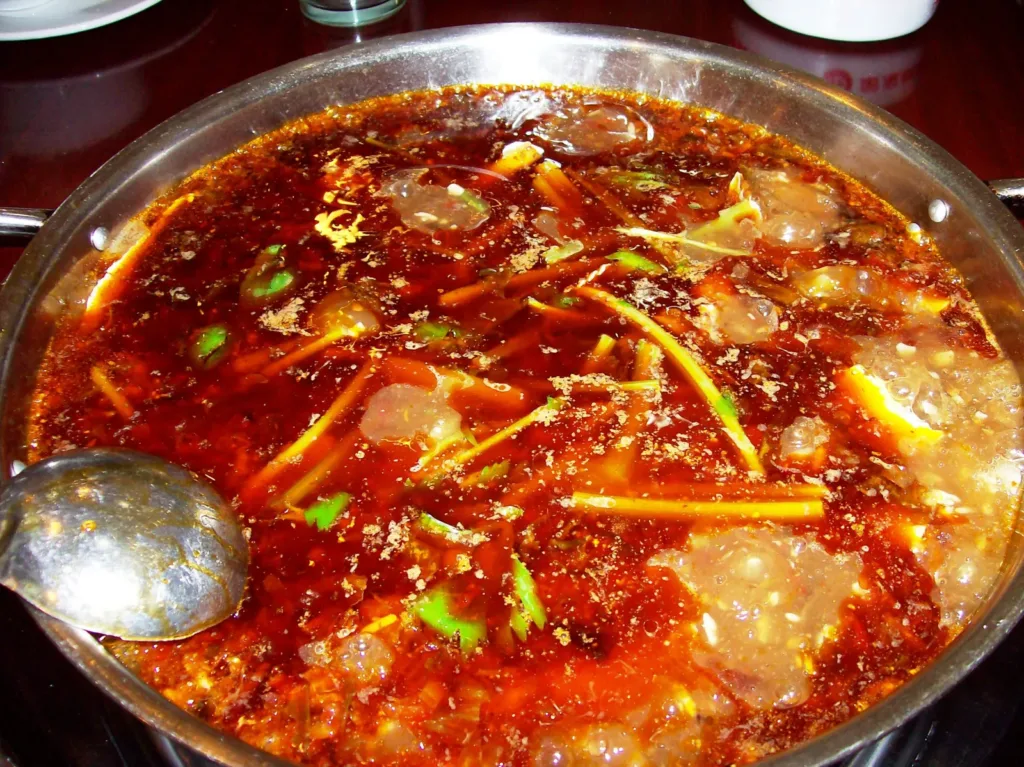
A Jiangbei connection, not a settled birthplace
Jiangbei’s hotpot story belongs to the broader history of Chongqing’s maodu (毛肚, beef-tripe) hotpot. One historical account describes itinerant sellers in Jiangbei carrying a clay stove and a divided metal basin of spicy, numbing, salty broth, then cooking inexpensive buffalo offal for riverside workers. The same account records competing origin stories: it presents a Jiangbei tradition but considers the evidence for a beginning at Luzhou’s Xiaomi Shoal stronger. Jiangbei is therefore a meaningful historical association, not a proven exclusive birthplace or a separate, standardized dish.
What goes into the pot
The old-style red broth is characteristically rich and strongly seasoned. Accounts of early Chongqing shop hotpot describe beef tallow and stock with chile, Sichuan pepper, salt and fermented seasonings; cooks’ proportions and additions vary. The fat gives the broth a deep, rounded mouthfeel, while chile brings heat and Sichuan pepper its tingling, numbing fragrance. Expect a vivid red surface and an aroma that grows more savory as ingredients cook, but the precise oiliness, salt and heat are kitchen-specific.
Tripe and other beef offal—such as liver, heart and tongue—are central to the historical Jiangbei story. Today’s hotpot menus may add pork or beef slices, duck intestine, blood curd, tofu, mushrooms, leafy vegetables and other ingredients. No single meat or vegetable assortment is mandatory across Chongqing.
How to enjoy it
The pot stays hot at the table while diners cook ingredients in the broth and eat them as they are ready. Beef tripe and duck intestine are valued for a springy, crisp bite; thin meat slices turn tender, while tofu and vegetables take on the seasoned broth. Avoid leaving delicate offal in too long, since it can lose its crisp texture. A common dip is sesame oil with minced garlic, though dipping sauces also vary.
Some restaurants use a nine-section jiugongge (九宫格) pot. The divisions help diners keep track of ingredients and can offer different heat zones; they are not a required marker of every old-style hotpot. Split broths, milder options and different combinations of meat, vegetables and tofu are also available, depending on the restaurant. There is no single recipe that defines all hotpot in Jiangbei or Chongqing.
Named techniques elsewhere in Chongqing also differ: a Nan’an district report on the Lu Pai–Ba Dao Tang hotpot heritage craft describes a tallow base made with several kinds of pepper and chile. That is an example of another local tradition, not a Jiangbei recipe or a citywide formula.
Where to eat it
You can find Jiangbei Old-Style Hotpot all over Chongqing, so there is no need to seek out one particular restaurant. To find one near you, search for “江北老火锅” in Meituan (美团) or Amap (高德地图) and check recent reviews, distance and opening hours.
Sources & reading
Image credits & notes (1)
- Chongqing-style hotpot, its red broth bubbling in a round pot. Photo: HawyihPhoto: CC0 1.0