

Chongqing small sweet rice dumplings 山城小汤圆
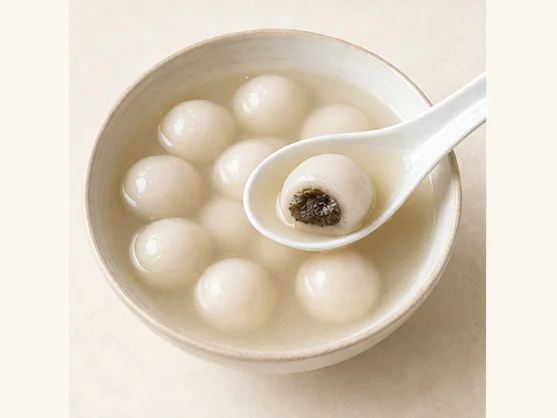
A Chongqing-associated sweet snack of small glutinous-rice dumplings, often filled with fragrant black sesame and served warm. Their tender, chewy skins and rich, sweet centers make them a gentle finish after a spicy meal.
What to expect
山城小汤圆 (shānchéng xiǎo tāngyuán, “mountain-city small tangyuan”) are small sweet rice dumplings associated with Chongqing. Their local identity is real, but the available historical account describes a Jiangnan-style sweet brought to Chongqing rather than a dish proven to have originated uniquely there. A 2011 report attributes an early Chongqing version to Hangzhou-born Yu Guohua, who adapted larger dumplings to about longan size and filled them with pork fat and fragrant sesame. Treat that as a reported food history, not a settled citywide origin record.
Ingredients, making and flavour
The wrapper is made from glutinous rice. In the traditional method described by a third-generation maker of the Yiji brand, whole rice is soaked in running water, stone-ground, then drained in a hanging cloth to make a moist, supple dough; prepared glutinous-rice flour is a modern shortcut. That maker’s filling combines black sesame, powdered white sugar and pork fat. The sesame is cleaned, dried and toasted before grinding; the maker describes raw fat as adding aroma and cooked fat as helping the cooked center turn moist and flowing. These are details of one inherited recipe, not a binding formula for every shop.
The dumplings are wrapped around small portions of filling and boiled. A Chongqing food-history account describes the local style as roughly longan-sized, with a thin skin and a generous center. When cooked, the pale wrapper looks smooth and slightly translucent; it is soft and gently elastic, while the sesame center tastes nutty, sweet and rich. Bite carefully: the hot filling can be hotter than the surrounding broth.
Black sesame is a well-documented traditional filling, but shops may change the balance or offer different fillings and seasonal ideas. One Chongqing family shop profiled in 2019, for example, made old-style dumplings alongside matcha and rose versions. Some menus also serve a sweet, osmanthus-flavoured variation. Ask what is in the filling and serving liquid instead of assuming one recipe. Sesame, peanuts and animal fat may matter to allergies or dietary choices; ask specifically about cross-contact and whether pork fat is used.
How to enjoy them
Order 山城小汤圆 and let one cool briefly on a spoon before tasting, so the wrapper and filling can be felt separately. The small size makes each bite a quick contrast between chewy rice dough and the aromatic center. A warm bowl works as a snack or a sweet finish; unsweetened tea can offset a particularly rich filling. They are often associated with the Lantern Festival and family gatherings, but they are not limited to a festival meal.
Use 山城小汤圆 as the Chinese menu name and confirm the filling when ordering.
Where to eat it
You can find Chongqing small sweet rice dumplings all over Chongqing, so there is no need to seek out one particular restaurant. To find one near you, search for “山城小汤圆” in Meituan (美团) or Amap (高德地图) and check recent reviews, distance and opening hours.
More dishes to compare
Explore related local specialties and compare their names, preparation notes and ordering guidance.
Fuling oil-toasted sweet rice wine 涪陵油醪糟 →
Sweet fermented rice is heated with oil or fat and a mixture of additions that can include nuts, seeds or other crisp ingredients. The contents vary between Fuling makers. The bowl combines soft rice, sweetness and a fermented aroma with richer fat and crunchy bits. It may retain an alcoholic note.
Iced tangyuan dessert 冰汤圆 →
Small glutinous-rice balls are cooked, cooled and served in an iced sweet base with assorted toppings. Some versions use filled balls, while others rely on the surrounding syrup and additions. The rice balls are chewy and soft against the cold liquid, with extra textures from fruit, jelly, nuts or fermented rice.
Sources & reading
Recipes and servings vary between kitchens.