

Tinglai Pickled Vegetables 汀来泡菜
A packaged pickled-vegetable specialty made by Tinglai in Fengjie County, Chongqing, under the Xiangtanzi brand; its local link is specifically to Fengjie and the Three Gorges region.
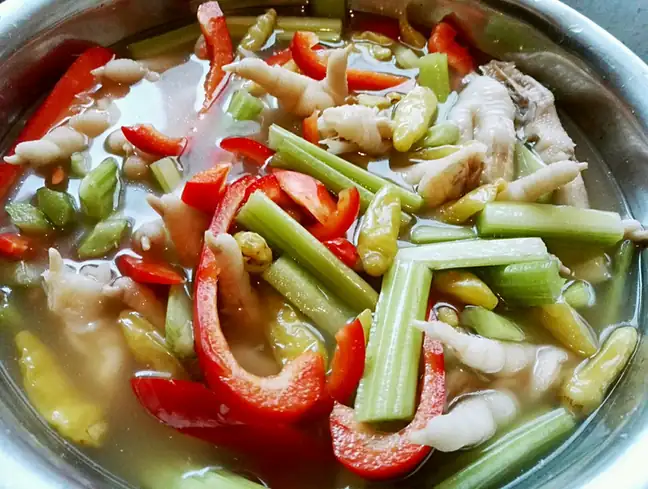
Image notes
Resized for the web; the photo itself has not been edited.
Tinglai Pickled Vegetables are a regional food product rather than a named restaurant dish. The producer, Chongqing Tinglai Green Food Development Co., Ltd. (重庆市汀来绿色食品开发有限公司), is based in Fengjie, in Chongqing Municipality’s Three Gorges region. The company’s own growing bases and partner farms supply vegetables and fungi; a recent county government account names radish, chilli and shiitake among its crops. This is a specific Fengjie producer and brand within a wider Chongqing paocai tradition, not a claim that all Chongqing pickles come from this company.
At the plant, vegetables are washed, salted or pickled, sterilised and packed. The producer retains crock fermentation while using modern aseptic filling. The county government describes the resulting character as aromatic, tangy, crisp and tender, and says the process allows longer keeping without added preservatives. That is a report about this manufacturer’s process, not a guarantee about every pickle sold in Chongqing or every product in its catalogue.
The ingredient and flavour depend on the jar or packaged variety. Radish, chilli and shiitake are documented crops, while the company sells a broader assortment of pickled vegetables, sauces and mushroom foods. Tinglai’s product descriptions include sour, sweet, salty and spicy profiles; treat these as possible styles across its range rather than a single fixed recipe. Fermentation and brining season the vegetables and preserve their bite, while the balance of acidity, salt, sweetness and chilli varies by product.
In Chongqing, paocai is commonly eaten with rice and can accompany a meal or be added to noodles or congee. If you find a Xiangtanzi (乡坛子) package while travelling, check the label for its ingredients, spice level and whether it is ready to eat or intended for cooking; there is no verified single shop, tasting counter or public factory tour to visit. The producer’s Fengjie roots and its traditional crock-fermentation heritage give the product a local connection, but paocai itself is shared across the broader Sichuan–Chongqing food region.