

Dai-style lemon sa with rice noodles 傣味柠檬撒
Dai-style lemon sa with rice noodles is featured among the local specialties of Yunnan.
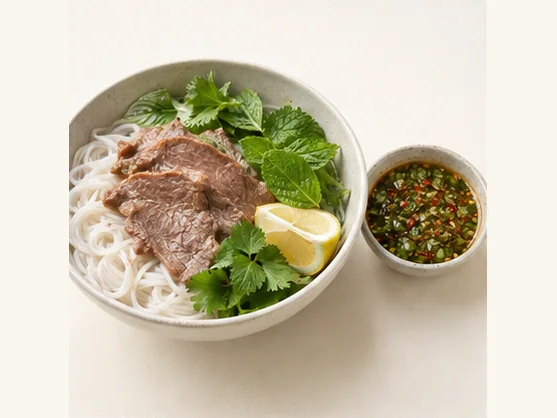
Rice noodles, herbs and a lemon-based dipping mixture come together in this Dai-style meal from western Yunnan. The lemon version gives a bright sour flavour rather than the bitterness associated with some other sa preparations.
How it is made
The noodles and accompaniments are prepared separately from the chopped and mixed dressing. At the table, small bundles are dipped or combined. The preparation of the meat must be checked with the kitchen; lemon juice is not a substitute for cooking.
Flavour & texture
Expect a sharp citrus taste, fresh herbs and chilli, with soft noodles carrying the dressing. The mixture can be intense, so a little dip may season more noodles than its small bowl suggests.
Local roots & traditions
Sa is associated with Dai food traditions in Dehong. Different versions have different sour or bitter elements and meat preparations. Choosing 柠檬撒 specifies the lemon style but does not settle every ingredient or technique.
Ingredients & dietary needs
Rice noodles, lemon, herbs and chilli are typical, with beef or other animal ingredients depending on the recipe. Raw or partly cooked ingredients can occur in the wider sa family. Ask exactly what is served and request fully cooked meat if that is your preference.
How to order Dai-style lemon sa with rice noodles
Show the full name and ask 肉是熟的吗, meaning is the meat cooked? Ask about chilli before ordering and clarify which accompaniments are included. Do not assume a picture of sliced beef proves its cooking state.
How to eat it & plan a meal
Build small bites with noodles and herbs, adding dressing gradually. This is a useful shared dish when the group wants contrasting flavours, provided everyone is comfortable with the actual preparation offered.
Names & local variations
柠檬撒 should be distinguished from 苦撒 and other local variants. The difference is more than a garnish: flavour base and preparation can change, so they deserve separate descriptions.
More dishes to compare
Explore related local specialties and compare their names, preparation notes and ordering guidance.
Zhe'ergen herb salad 凉拌折耳根 →
The tender parts are selected, trimmed, washed and cut into short pieces, then mixed with dressing. Some preparations briefly blanch the plant; others use it raw. The chosen parts and treatment change both the crunch and intensity of aroma. The stems have a clean snap, while the aroma can seem medicinal, earthy or fish-like to a first-time diner. Garlic, chilli and sourness add their own flavours. It is reasonable to enjoy a small taste without expecting to like the herb immediately.
Pineapple rice 菠萝饭 →
Rice is cooked with pineapple flesh and commonly served inside a hollowed pineapple shell. Sticky-rice versions are frequent, though the rice and added sweeteners vary by kitchen. Sweet fruit and gentle acidity brighten a soft, substantial rice base. The pineapple container is part of the presentation rather than a guarantee that every grain is equally sweet.
Questions before you order
What name should I show when ordering?
Show 傣味柠檬撒 for Dai-style lemon sa with rice noodles.